The Backlog Explosion
The product backlog explodes to 147 items with 89 marked high priority. Ayşe Demir, the product manager, tries to impose order but Lukas keeps adding board requests. Developers stop following the backlog entirely, triaging work themselves based on whatever's on fire. Navigator synthesis delivers the verdict: unclear priorities dominate nearly every developer's daily log, work is being started and abandoned constantly, and no one can name the team's actual focus. The planning breakdown becomes impossible to hide.
Monday, 09:12 — Ayşe’s Desk

Ayşe Demir stared at three monitors showing the same catastrophe from different angles. Jira backlog: 147 items. Filter by priority: High. Results: 89.
Sixty percent of the entire backlog marked high priority.
She scrolled through the list. Every department head had flagged their pet features as critical. Claudia in Marketing needed the player analytics dashboard “urgently.” Marcus in Player Support needed custom reporting “immediately.” Lars in Game Design needed character customization shipped “before the content update.” Elif in Live Ops needed bulk event management tools “ASAP.”
And Lukas? Lukas had personally tagged 23 items as “Must Have Q2.”
Q2 started in four weeks.
Ayşe’s stomach dropped. Cold sweat broke across her palms despite the office heating. She opened Navigator, fingers trembling.
Navigator — Ayşe Demir — March 31, 2026, 09:18
Product backlog has exploded. 147 items total. 89 marked high priority. More than half of everything we track screams “urgent.”
I spent all Friday trying to sequence work into something resembling a plan. Every stakeholder insists their features are critical. Lukas marked 23 items as Q2 must-haves on Thursday. We have four weeks of development capacity left in Q2.
The math doesn’t work. 23 must-haves at roughly 5 story points each. That’s 115 points. We deliver about 30 per sprint. Two sprints left.
Nobody wants to hear that.
Developers have started ignoring the backlog entirely. They work on whatever seems urgent in the moment. I don’t blame them. When 89 things are all screaming “high priority,” the backlog becomes meaningless noise.
I’m supposed to be a product manager. Right now I feel like a fucking secretary taking everyone’s wish list and pretending it’s a roadmap.
She hit save. Opened Slack. Eighteen unread messages. Every single one from a different person asking about status on their high-priority feature.
She closed Slack without reading any of them.
09:47 — Development Standup
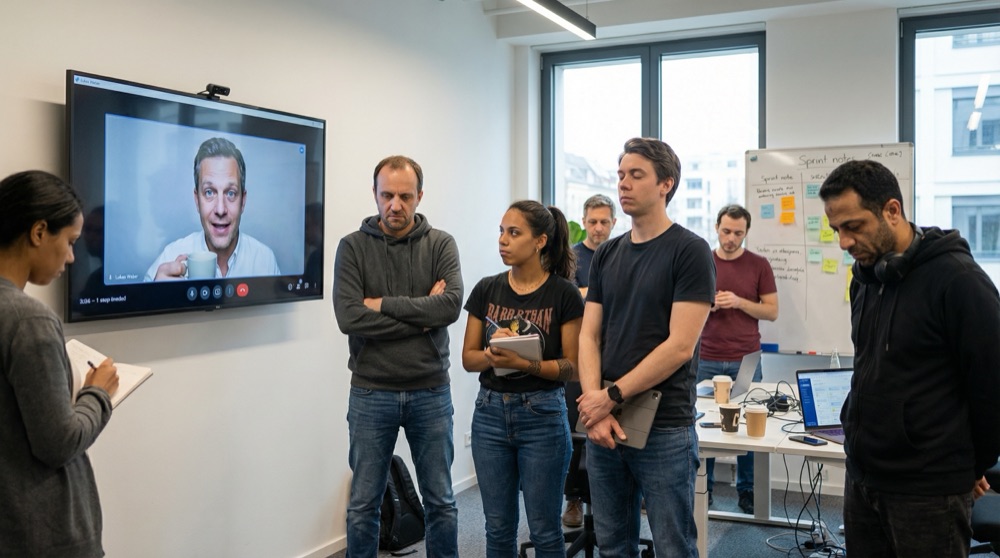
The development team assembled in their usual corner. Lukas appeared on the conference room screen, coffee in hand, looking annoyingly energized.
“Morning everyone!” His voice was bright. “Quick updates, then I have some exciting news.”
Tomasz spoke first, flat and clipped. “Mariana?”
“Finishing the authentication refactor. Should be done tomorrow.” Mariana paused, glanced at her notes. “After that I’m supposed to start… not sure what. Sixteen items in the backlog are assigned to me. All marked high priority.”
“Anton?”
“Performance optimization ongoing. Also supposed to start the character customization feature. Marked urgent last week.” Anton shrugged. “Can’t do both.”
“Hassan?”
Hassan looked like he’d been awake since Friday. “Infrastructure automation from last sprint. Plus five new high-priority deployment requests that came in over the weekend.”
The four juniors gave their updates. Jan had finished his first bug fix. Marta was working through the testing documentation Sofia had helped create. Kerem and Sofia García were pair-reading the authentication module.
“Great progress!” Lukas said from the screen. “So. Exciting news. I spoke with the board Friday. They love where we’re headed. Five new feature requests came out of that meeting. All critical for Q2.”
Silence.
Mariana’s jaw tightened. Tomasz closed his eyes for a beat.
“Lukas,” Ayşe said carefully, “we already have 89 high-priority items. We have four weeks left in Q2. Five more critical features—”
“I know bandwidth is tight.” Lukas smiled. “But these are board-level priorities. Revenue drivers. I’m adding them to Jira now with the Critical tag.”
“Can we align on actual priorities after standup? We need to—”
“Sure, sure. But get these into the sprint planning. Board wants updates next week.”
The call disconnected. Lukas’s face pixelated and vanished.
The development team stood in uncomfortable silence.
“Well,” Anton said quietly, “that’s five more things we’re not going to build.”
Nobody laughed.
10:33 — Near the Coffee Machine
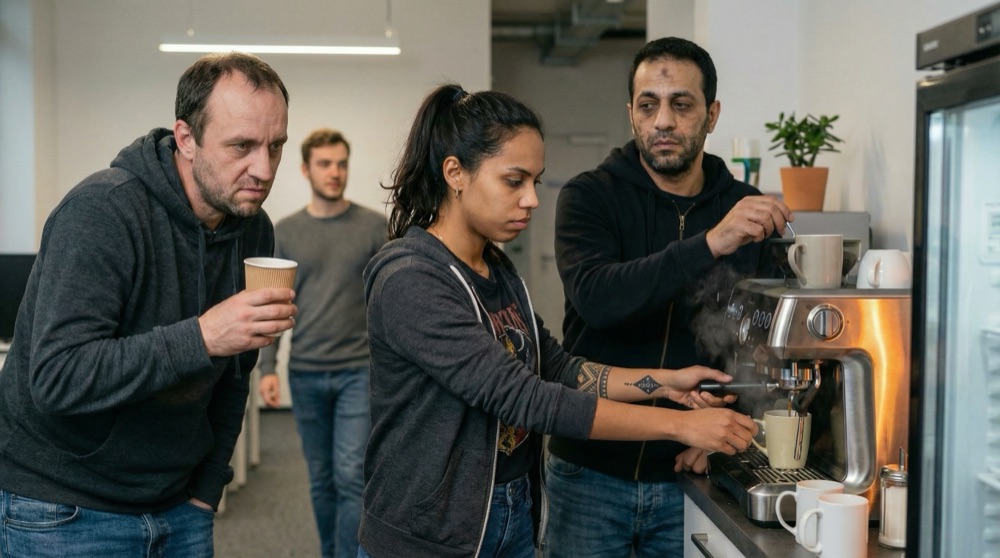
Tomasz, Mariana, and Hassan clustered near the machine. Two of the juniors walked past, read the body language, and kept walking.
“Sixteen high-priority items assigned to me.” Mariana poured espresso with more force than necessary. “I asked Ayşe on Friday which one is actually most important. She said ‘all of them.’”
“That’s not her fault,” Tomasz said. “She doesn’t control what Lukas marks as critical.”
“Doesn’t matter whose fault it is. I still don’t know what to work on after the auth refactor.”
Hassan stirred his coffee slowly. “I have a list of infrastructure improvements marked critical. Every time I start one, someone pings me about a production deployment for another critical feature. I context-switch, lose two hours, nothing gets finished.”
“You know what I’m doing?” Tomasz leaned in, voice low. “Ignoring the backlog completely. I look at what’s actually broken in production. I read the error dashboards. I check what users are reporting through Marcus’s support team. I work on that. The backlog is a fantasy someone writes to feel organized.”
“Same.” Mariana nodded. “I read the Navigator synthesis. I read production errors. I fix what matters. The backlog is noise.”
“Did you see the five new critical features Lukas just dropped?” Hassan asked.
“Five more urgent things.” Tomasz’s voice was flat. “In a backlog of 89 urgent things. The word has lost all meaning.”
They stood drinking coffee. The espresso machine hissed.
“Should we tell Katja?” Mariana asked.
“She knows. She reads our Navigator logs. She sees us logging that priorities are shit.” Tomasz set his cup down. “If she’s not escalating it, there’s a reason.”
“Or she’s tried and Lukas ignored her,” Hassan said.
They finished their coffee in silence and went back to their desks. To work on whatever felt most combustible.
11:24 — Conference Room “Kreuzberg”
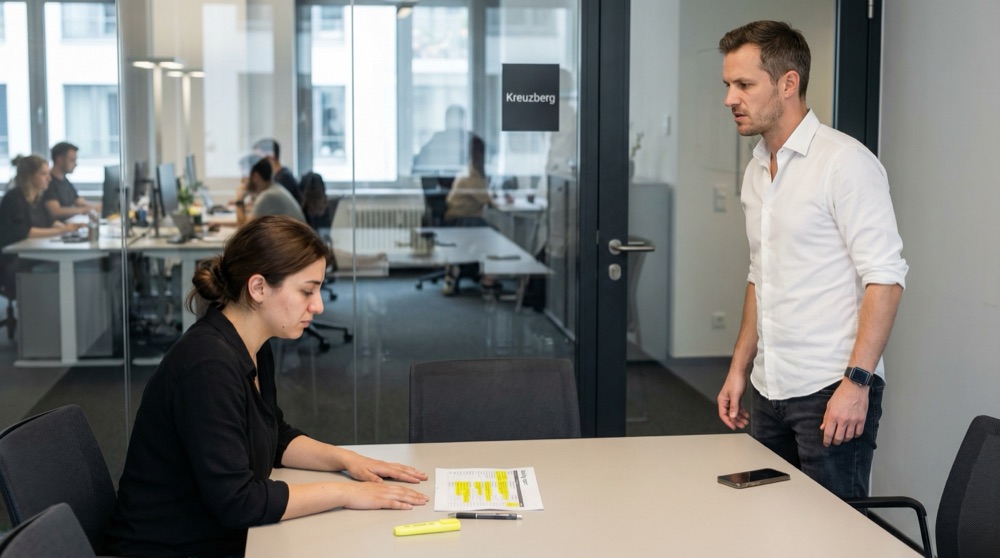
Ayşe sat across from Lukas, a printed backlog report between them. She’d highlighted the numbers in yellow marker: 147 total items. 89 high priority. 23 marked “Must Have Q2.” Plus five new board requests this morning.
“Lukas, we need to talk about priorities.”
“I know, I know.” He glanced at his phone. “Backlog’s getting long. But we’re growing. More players means more features. That’s a good problem, right?”
“No.” Ayşe tapped the report. “This isn’t a good problem. This is noise. Sixty percent of our backlog is marked high priority. That’s not prioritization. That’s everyone shouting equally loudly.”
Lukas set his phone face-down. “So you’re saying the board’s requests aren’t important?”
“I’m saying if everything is important, nothing is important. We have maybe sixty developer-days left in Q2. Optimistically. You’ve marked 23 items as must-haves. That’s roughly 115 story points. We deliver thirty points per sprint.”
“So we work harder.”
Heat flared up Ayşe’s neck. Her throat tightened. “That’s not how software works. You can’t just—”
“Look.” Lukas’s voice sharpened. “I hired you to manage the product, not to tell me we can’t deliver. Find a way. That’s product management.”
Silence.
Ayşe’s hands shook. She pressed them flat against the table, white-knuckled.
“I need you to choose,” she said, voice low and hard. “Five things. Real priorities. Everything else gets deprioritized or pushed to Q3.”
“I can’t do that. The board expects—”
“Then the board needs realistic expectations.” No hedging. No softness. “Because right now, developers are ignoring the backlog and working on whatever seems urgent. We have no plan. We have a wish list that everyone pretends is a roadmap.”
Lukas stared at her. His jaw was tight. The conference room glass made every expression visible to the development floor outside.
“We’ll revisit this Friday,” he said. “I’ll talk to the department heads. We’ll figure it out.”
He stood up and left.
Ayşe sat alone in the conference room. Her vision blurred. Tears stung behind her eyes but she forced them back. Not at a glass-walled table where the whole development floor could watch her break.
Not yet.
14:16 — Navigator Logs Accumulate
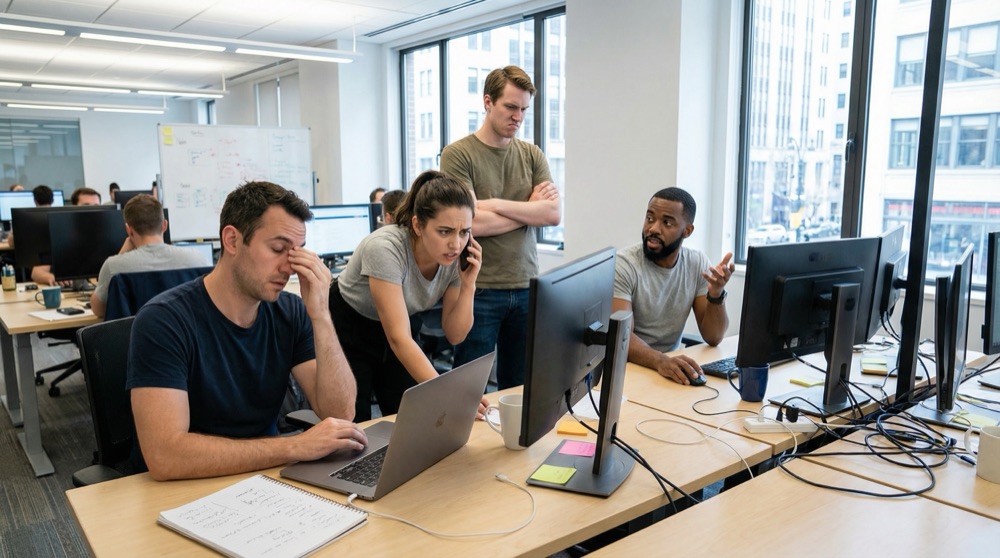
By mid-afternoon, Navigator logs painted a picture so consistent it was almost redundant.
Navigator — Tomasz Kowalski — March 31, 2026, 14:03
Spent morning working on the authentication module refactor support. Lukas pinged me at 11:00 about the “critical” board feature for admin dashboards. Told him Mariana’s already handling the auth work and I’m focused on sprint planning for the juniors.
He said the admin dashboard is more important.
Forty minutes of my day arguing about what’s actually important. I still don’t know. So I went back to what I was already doing.
Priorities change faster than I can context-switch.
Navigator — Mariana Santos — March 31, 2026, 14:11
Ayşe asked me last week to start character customization feature after the auth refactor. Marked urgent two weeks ago.
10:45 Hassan pinged. Deployment pipeline throwing errors. Production issue. Dropped planned work.
Fixed deployment issue. Returned to auth code. Anton pinged. Unity integration broken, blocking his performance work.
Helped Anton. Now it’s 14:00. Zero progress on anything assigned to me in the backlog. But three people got unblocked.
Is this productive? I genuinely don’t know anymore.
Navigator — Anton Petrov — March 31, 2026, 14:18
Performance optimization paused. Lukas asked for character customization update. Told him Mariana was assigned to it. He said I should help her. I’m a Unity specialist. This is backend feature work.
Explained that. He said “we all need to be flexible.”
“Flexible.” Fuck that word. It means doing work I’m not specialized in. Slower than someone who actually knows the code. While my real work sits rotting.
Navigator — Hassan Al-Rashid — March 31, 2026, 14:27
Deployment pipeline automation on hold. Three separate “urgent” production deployments requested today. All different features. All “can’t wait.”
I can’t clone myself. Someone needs to decide what actually ships first.
Nobody has. So I deployed based on who pinged me most recently. That’s not a strategy. That’s fucking chaos.
15:42 — Development Floor
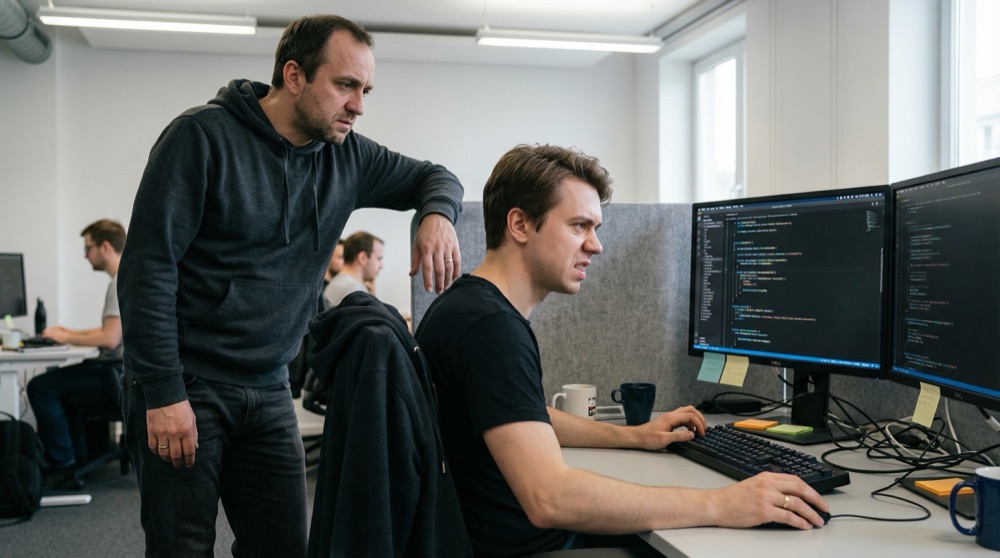
Tomasz pushed back from his desk and walked to Anton’s workstation. Anton was staring at code on his screen, jaw clenched, scrolling through a module he clearly didn’t recognize.
“You good?” Tomasz asked.
“No.” Anton gestured at the screen. “I’m supposed to be optimizing Unity rendering performance. But I’m reading backend code for the character customization feature because Lukas told me to help Mariana. Which makes no sense. It’s not my code. It’s not my domain. I’m working twice as slow as someone who actually knows this module.”
“While your performance work sits untouched.”
“While my performance work sits untouched. Yes.”
Tomasz nodded. “I’m in the same loop. I’m supposed to be cleaning up technical debt from the authentication refactor. But every day brings new ‘critical’ features that need architecture decisions. So I make quick decisions. No proper design. Which creates more technical debt. Which I’m also supposed to be cleaning up.”
“It’s a fucking circle.”
“Yeah.”
They sat in silence for a moment. The development floor hummed with keyboard clicks and the low murmur of people asking each other questions that nobody could fully answer.
“How do you decide what to work on?” Anton asked.
Tomasz thought about it. “I work on whatever will cause the least fire if I don’t do it. I’m guessing wrong about half the time because the definition of ‘fire’ changes every few hours.”
“That’s depressing.”
“That’s Monday.”
Anton turned back to his screen. “Back to backend code I shouldn’t be touching.”
“Good luck.”
“Yeah.”
Tomasz walked back to his desk and opened Navigator.
Navigator — Tomasz Kowalski — March 31, 2026, 15:51
Had a conversation with Anton. We’re both working on the wrong things because nobody can agree what the right things are.
I used to be good at this job. Now I’m mediocre at six different jobs simultaneously.
16:08 — Katja’s Office

Katja opened Navigator’s weekly synthesis. The AI had already flagged the dominant pattern in red:
⚠️ Critical Pattern Detected: Unclear Priorities
Affected: 8/8 developers (100%)
Frequency: 23 mentions across 47 log entries (March 24-31)
She clicked “Ask AI” and typed: What are developers saying about priorities this week?
The chatbot responded immediately:
Top themes from development logs (March 24-31):
- Unclear priorities — 23 mentions, 8 developers
- “I don’t know what to work on next” (Mariana, 3x)
- “Priorities change faster than I can context-switch” (Tomasz, 2x)
- “Deployed based on who pinged me most recently” (Hassan)
- Work abandoned mid-stream — 17 mentions, 6 developers
- Started work interrupted by “more urgent” requests
- Average 2.4 context switches per developer per day
- Frustration with backlog management — 12 mentions, 5 developers
- “The backlog is noise” (Mariana)
- “Ignoring the backlog completely” (Tomasz)
Katja pulled up the backlog in another tab. 147 items. Filtered by priority: 94 high priority now. Lukas’s five new board features had pushed the count up since morning.
She opened her own log.
Navigator — Katja Müller — March 31, 2026, 16:14
Real-time logs show complete prioritization breakdown. Every developer mentioned unclear priorities today. Work is being started, abandoned, restarted based on whoever has Lukas’s ear that hour.
Ayşe tried to establish priorities this morning. Lukas added five more critical board features during standup. “Must have for Q2.” Four weeks left in quarter.
The math is simple: We cannot deliver 94 high-priority features in four weeks. But organizational pressure demands we pretend we can.
Pattern I’m seeing: Leadership sets impossible expectations. Product tries to manage the impossible. Development ignores the plan and works reactively. Everyone frustrated. Nobody productive.
We’re burning energy on prioritization theater instead of actual delivery.
She pulled up Slack and typed a message to Lukas.
 Katja Müller We need to talk about the backlog. This week. It's creating systemic dysfunction in development.
Three dots appeared. Disappeared. Appeared again.
 Lukas Weber Friday. I'm in board meetings all week. We'll sort it out.
Friday. Four days away. Four more days of thrashing.
She didn’t respond.
Tuesday, 10:15 — Ayşe’s Inbox Explodes

Tuesday morning brought the flood. Every department head asking for status on their critical features.
 Claudia Rossi @ayse Any update on the player analytics dashboard? Board asked about it Monday. I told them it was high priority.
 Ayşe Demir Still in backlog. Development at capacity on other high-priority items.
Claudia Rossi It was marked urgent three weeks ago. How is it not started?
 Marcus Thompson @ayse Player support needs custom reporting. We're losing players without proper tooling. Can we expedite?
Ayşe Demir On the list. Multiple critical features ahead of it in queue.
Marcus Thompson Churn keeps climbing. We're losing more players every week. How is retention not the top priority?
 Lars Pedersen @ayse Character customization still not started? The content update ships in six weeks.
Ayşe Demir Aware. Working with Lukas on prioritization.
Lars Pedersen It's been "in progress" for five weeks. We designed it in January.
Ayşe closed Slack. Her hands trembled. Bile rose in her throat, sharp and sour.
Every department head was right. Their features mattered. They’d been waiting weeks. Nothing moved.
But she couldn’t explain that the backlog had ballooned beyond any team’s capacity to process. She couldn’t explain that Lukas added urgent features weekly without removing anything. She couldn’t explain that development had abandoned the formal priority list because it changed too fast to track.
She couldn’t say any of that without throwing the CEO under the bus.
She opened Navigator.
Navigator — Ayşe Demir — April 1, 2026, 10:31
Eight Slack messages from different department heads this morning. All asking why their high-priority features haven’t started. All frustrated. All justified.
I don’t have good answers. “We’re working on other high-priority features” isn’t an answer. It’s an admission that prioritization has collapsed.
I feel like a punching bag. Taking hits from every direction for a backlog I didn’t create and can’t control.
Lukas keeps adding urgent features. Department heads keep escalating. Development keeps ignoring the plan. I sit in the middle, drowning in Slack messages, unable to give anyone a straight answer about when their work will ship.
I’m a product manager with six years of experience. I’ve launched products before. Managed roadmaps. Balanced competing priorities. This should be my sweet spot.
Instead I feel incompetent and useless.
She hit save. Stared at the backlog tab. 147 items. 94 high priority. The number had gone up overnight.
Wednesday, 14:47 — Conference Room “Mitte”

Ayşe sat alone in the conference room, door closed. She’d booked it to prepare for a backlog review meeting with Lukas. He’d canceled twenty minutes ago. Board call ran over. “Reschedule to Friday.”
Friday. Always Friday. The magical day when everything would get sorted.
Her laptop showed the backlog. She’d spent three hours building a priority matrix. Player analytics first. Then custom reporting. Then performance optimization. Then character customization. A sequence that balanced business impact with development feasibility.
But Claudia would complain analytics was too late for the board deck. Marcus would escalate that player churn was the real revenue crisis. Lars would point out that character customization was already designed and just needed development time. Anton would argue performance optimization was already half-done and finishing it first made the most technical sense.
And Lukas would drop three more board requests that superseded everything.
She felt tears burning. Blinked. Took three breaths.
They came anyway. Hot frustrated tears she’d been holding since Monday’s meeting. She covered her face and cried into her palms, breathing ragged, chest tight.
Six years of product management. She’d shipped mobile apps. She’d managed a 30-person development team’s roadmap at her last company. She’d balanced competing stakeholder demands hundreds of times.
But never this. Never where the CEO treated every conversation as a chance to pile more shit onto the backlog. Never where “managed” meant “said yes to everyone.” Never where a product manager had zero authority to say no.
This wasn’t product management. This was complaint routing. She absorbed everyone’s frustration and redirected it nowhere because there was nowhere for it to go.
After five minutes she wiped her face, checked her reflection in her phone camera, and walked out.
Back to Slack. Back to messages she couldn’t answer.
Thursday, 11:15 — Navigator Weekly Synthesis Arrives

Katja’s email notification chimed. Subject: Navigator Weekly Synthesis — Week 9 (Mar 31 - Apr 3)
She opened it immediately.
Key Patterns Detected:
1. Priority Breakdown (Critical This Week)
Nearly every development log this week mentions unclear or conflicting priorities. This is the dominant signal across the entire team. The backlog continues to grow while the proportion marked “high priority” has reached a level where the label no longer carries meaning. Developers describe ignoring the formal backlog entirely and working reactively based on whoever made the most recent urgent request.
2. Product Management Overload
Ayşe Demir’s logs this week are notably more frequent and emotionally charged than in previous weeks. She describes feeling caught between a CEO who keeps adding priorities and department heads who demand progress on features that haven’t moved. Her role has shifted from decision-maker to complaint router. She absorbs frustration from every direction but lacks authority to resolve any of it.
3. Stakeholder Fragmentation
Multiple department heads (Claudia Rossi, Marcus Thompson, Lars Pedersen) escalated independently this week, each believing their features are most critical. There is no visible unified prioritization process. Stakeholders are going around product management and adding priorities directly, creating parallel demand channels that development cannot reconcile.
4. Development Thrash
Task completion has slowed significantly. Developers describe starting work, being pulled to something labeled more urgent, losing context, and starting over. This cycle repeats multiple times per day. Mariana Santos logged: “Zero progress on anything assigned to me in the backlog. But three people got unblocked.” Anton Petrov logged frustration about being reassigned to backend work outside his Unity specialization because “we all need to be flexible.” The pattern is clear: constant re-prioritization is destroying development flow and preventing completion of anything.
5. Onboarding Infrastructure Progress (Positive)
Junior developers (Jan, Marta, Kerem, Sofia García) are beginning to contribute to small tasks. Sofia Mendez’s documentation efforts are showing early results. However, this progress is fragile. Senior developers’ time is increasingly consumed by prioritization chaos, threatening the mentorship capacity that onboarding depends on.
Recommendations:
- Freeze backlog additions until existing high-priority work is reduced to a manageable size
- Establish a single prioritization authority. Currently diffused across CEO, department heads, and product management with no clear hierarchy
- Limit active work to five items. Force-rank the top five. Everything else explicitly deprioritized
- Stakeholder alignment session. All department heads plus CEO must agree on Q2 must-haves before development commits to any more work
Cross-Department Impact:
Development morale is degrading despite increased hours worked. Product management effectiveness is compromised. Every department head is frustrated by the lack of delivery. The CEO continues adding priorities without visibility into what the team can actually absorb. The gap between what leadership expects and what development can deliver is widening each week.
Risk Assessment:
Burnout risk is high across the senior development team. The product manager role is under severe strain. If the current pattern continues, Q2 will end with no priority fully delivered because the organization attempted all of them simultaneously.
Katja read it twice. Nearly every developer logging about unclear priorities. Not one or two frustrated people. The entire team. That wasn’t a team problem. That was an organizational failure.
She checked the time. 11:27. Lukas was between board calls.
She opened Slack.
Katja Müller We need to talk about the synthesis. Today. Not Friday. This can't wait.
Three minutes passed.
Lukas Weber That bad?
Katja Müller The synthesis is in. Nearly every developer logged about unclear priorities this week. Work is being started and abandoned constantly. The team is thrashing. We're burning them alive. 15:30, my office. Bring Ayşe.
Lukas Weber I'll be there.
Thursday, 15:33 — Katja’s Office
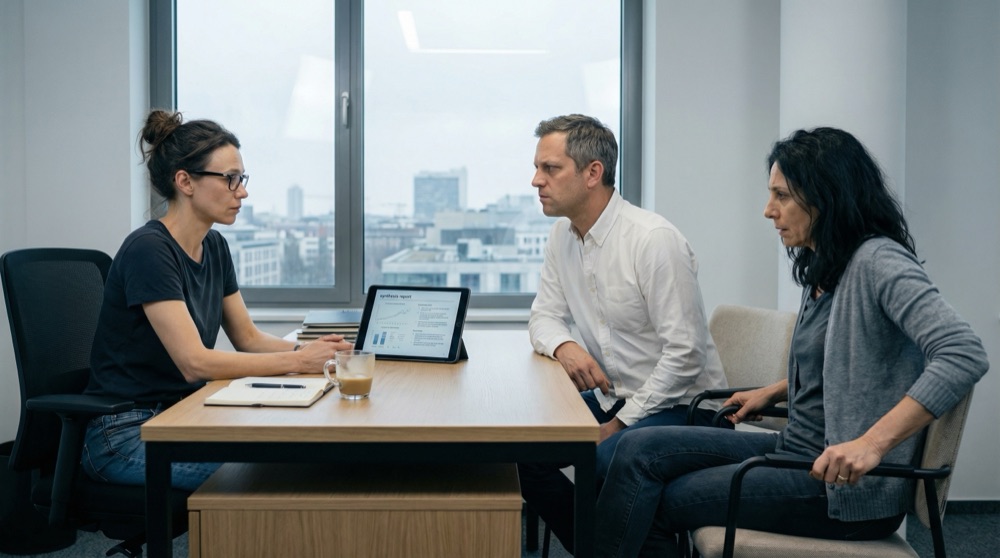
Lukas sat across from Katja. Ayşe perched on the chair beside him, back straight, hands gripping the armrests. The synthesis report was open on Lukas’s tablet.
“This is dramatic.” Lukas set the tablet on Katja’s desk. “Seventy-three percent mention unclear priorities? The backlog has always been long. That’s normal for a growing studio.”
“It’s not normal,” Ayşe said. Her voice was steady but her knuckles were white. “When the majority of a backlog is marked high priority, the label stops meaning anything. Every department head marks their work as urgent because they’ve learned that’s the only way to get attention.”
“So you’re saying the board’s features aren’t important?”
“I’m saying—” Ayşe took a breath. “I’m saying if we try to build 94 high-priority features in four weeks, we’ll deliver zero. The developers have stopped following the backlog. They’re working on whatever seems most urgent in the moment because the official priorities change faster than they can switch context.”
Lukas looked at Katja. She looked back without blinking.
“The synthesis shows work is being started and abandoned constantly,” Katja said. “Every developer described the same thing: begin a task, get pulled to something more urgent, lose context, start over. Multiple times a day. That’s not developers slowing down. That’s developers thrashing. Nothing gets finished because everything keeps getting interrupted.”
“Then they need better focus.”
“They need clear priorities.” Katja’s voice dropped lower. “One source of truth. Right now you’re adding board priorities. Department heads are escalating their own requests. Ayşe is trying to sequence work that keeps changing. Development gets conflicting signals from three directions at once and they give up trying to follow any of them.”
Silence. The Berlin skyline stretched behind the window. Gray sky. Gray buildings. Everything gray.
Lukas looked at the synthesis report again. “What do you want me to do? Tell the board their priorities don’t matter?”
“Yes.” The word came out of Ayşe’s mouth before she could modulate it. Sharp. Almost angry.
Lukas blinked.
“Tell them we have capacity for five features this quarter,” Ayşe continued, voice steadier now. “Ask them to choose five. Everything else moves to Q3. And then you stop adding new critical features every time you have a conversation.”
Lukas’s knuckles were white on the armrest. Same position Katja had noticed last week during the hiring pause conversation. Same defensive posture.
“The board expects—”
“The board expects results.” Katja cut him off. “Right now they’ll get nothing. We’re attempting 94 things and completing zero. That’s worse than choosing five and delivering five.”
More silence. Lukas stared at the window. Something shifted in his expression. Not agreement exactly. More like the look of someone realizing the ground beneath them isn’t as solid as they thought.
“I can’t tell department heads their features don’t matter.”
“You don’t have to,” Ayşe said. “But you have to rank them. Q2 must-haves. Five maximum. Everything else explicitly moves to Q3. Then you defend that decision when people push back. That’s your job.”
“That’s my job?”
“That’s what leadership is,” Katja said. “Making choices. Right now you’re trying to say yes to everyone. It feels collaborative. But the synthesis shows where it leads: chaos. Every team frustrated. No actual delivery. A product manager drowning in Slack messages she can’t answer.”
Ayşe felt heat behind her eyes. She swallowed hard. Not here. Not now.
Lukas sat quietly for a long time.
“Tomorrow,” he said. “Department heads meeting. We choose five Q2 priorities. Everything else gets pushed.”
“And no more board features added mid-quarter without removing something from the five,” Ayşe said.
Lukas looked at her. His jaw was still tight. But he nodded. “No more mid-quarter additions. Unless we cut something first.”
He stood up and left.
Ayşe and Katja sat in silence. The office hummed with distant keyboard clicks and the ventilation system pushing warm air through the ceiling.
“Do you think he’ll actually do it?” Ayşe asked.
“I don’t know.” Katja leaned back. “But if he doesn’t, everything is on record. In the synthesis. In our logs. When this crashes, the evidence exists.”
Ayşe nodded slowly. “Thanks for backing me up.”
“We need each other’s backs,” Katja said. “Nobody survives this alone.”
Friday, 16:44 — Conference Room “Berlin”

The largest conference room felt small with everyone in it. Lukas stood by the whiteboard. Claudia, Marcus, Lars, Priya, Elif, Daniel — every department head filled the chairs. Katja and Ayşe sat against the wall.
“We have four weeks left in Q2,” Lukas said. He uncapped a marker. “Development capacity: approximately thirty story points per sprint. Two sprints left. That’s sixty points. Realistically.”
Claudia opened her mouth. Lukas held up the hand holding the marker.
“I know everyone’s features are important. But we can’t deliver 94 high-priority items in four weeks. So we’re choosing five. Everything else moves to Q3.”
Silence.
“Five?” Lars said. “We designed character customization in January. The art assets are done. The whole content update is built around it.”
“Five,” Lukas repeated. “Must-haves. Revenue drivers or critical infrastructure. Ten minutes to nominate candidates. Then we rank.”
The arguing started immediately. Claudia needed player analytics for the board deck. Marcus needed custom reporting because churn was destroying retention metrics. Lars needed character customization because the entire content update depended on it. Elif needed event management tools for the live ops schedule. Priya needed the data pipeline fixes or analytics would be meaningless anyway. Hassan needed deployment automation or nothing would ship reliably regardless of what got built.
Ayşe took notes. Saying nothing. Letting them fight.
After thirty minutes Lukas forced a vote. Hands raised. Objections logged. Compromises made through gritted teeth.
The final five Q2 must-haves went on the whiteboard:
- Performance optimization (player experience, revenue impact)
- Custom reporting (churn reduction, support tooling)
- Deployment automation (shipping speed, reliability)
- Player analytics dashboard (board visibility, data-driven decisions)
- Character customization MVP (content update dependency)
Everything else — 89 items — officially moved to Q3.
Claudia got her analytics. Lars got a reduced-scope customization MVP. Marcus got reporting. Elif’s event management tools moved to Q3. She wasn’t happy. Her jaw was tight when she nodded.
“My team will be frustrated,” Elif said.
“Mine too,” Daniel added. “QA tooling improvements didn’t make the cut.”
“I know.” Lukas capped the marker. “But now you can tell them what’s actually happening. Not ‘soon.’ Not ‘it’s in the backlog.’ An honest answer: Q3.”
“Honesty.” Claudia’s smile was thin. “What a concept.”
Lukas turned to Ayşe. “Update the backlog. Five items marked Q2 Active. Everything else tagged Q3. Make it visible.”
“And when someone tries to add new priorities?” Ayşe asked.
“They come to me. And the answer is no unless we cut something from the five.”
After the meeting cleared, Ayşe opened Jira. She moved 142 items to “Q3 Backlog.” Five items remained in “Q2 Active.”
The visual difference was striking. Like clearing a cluttered desk and finding the surface underneath.
She opened Navigator for the last time that week.
Navigator — Ayşe Demir — April 4, 2026, 17:02
We did it. Five Q2 priorities. Everything else explicitly deprioritized.
The meeting was painful. Department heads angry. Compromises on scope. Elif’s tools pushed entirely to Q3. Daniel’s QA improvements too.
But we ended with actual priorities instead of a wish list.
Lukas committed to defending these five. No mid-quarter additions without cutting something first.
I don’t know if it’ll stick. But for the first time this week, I feel like a product manager instead of a Slack complaint router.
She closed her laptop and headed into the Friday Berlin evening. The air was cold. She didn’t mind. Cold air felt honest.
Behind her on the whiteboard, five items remained in blue marker. Below them, a long list of crossed-out priorities in red.
Contained. For now.
🎭 This Week's Episodes
Telenovelas show what we can't say in client meetings. The drama is heightened, but the patterns are real.
 La Verdad
The emergency board meeting Don Hernando demanded has arrived. Mariana and the Vulcano Capital team want answers. Alejo has one final card to play....
 When Players Revolt
They fixed the validation bug properly — six hours, no corners cut. But the database migration script Anton wrote Monday night to handle legacy NUL...
Technical Consultancy
Senior Developer Advocate
Embedded into your team as an active contributor, increasing effectiveness and elevating engineering clarity.
Technical Advisor
Peer-style technical assessments before far-reaching decisions; reduce architectural and product risk early.
Product & Delivery
Ship working software to real users earlier. Measure impact and adapt based on evidence rather than assumption.
Custom Software Development
High quality, maintainable software. Short-term augmentation that leaves lasting capability in your own team.
Recent Articles
- When Labor Becomes Cheap, Motivation Becomes Everything (06.04.2026)
- Authentication Methods That Work in 2026 (03.04.2026)
- Developer, Not Engineer. And Why It Matters (30.03.2026)
- The Product Manager Is Dead. Long Live the Product Developer. (27.03.2026)
- Building Products in the Age of AI (23.03.2026)