The Onboarding Disaster
Four junior developers start Monday. No onboarding plan, no documentation, no mentorship capacity. Tomasz is assigned as mentor while already drowning. Sofia logs: 'Asked to help onboard new juniors. I barely understand the codebase myself.' The weekly synthesis reveals the truth: new hires mentioned zero times in production work logs. They're here, but they're invisible. Hiring without capacity is just headcount theater.
Monday Morning, 08:47 — Main Entrance

Four nervous faces clustered near the reception desk. Jan Kowalski checked his phone for the third time — 08:47, the email said 09:00, but arriving early seemed professional. Next to him, Marta Wójcik smoothed her blazer, overdressed for a Berlin gaming studio where half the developers wore shorts year-round.
Across from them, Kerem Yılmaz scrolled through his phone with practiced casualness, while Sofia García (not the Sofia already on the team — that would get confusing fast) clutched a notebook like a life preserver.
The receptionist had greeted them cheerfully: “Welcome! Someone from development will be down to get you soon.”
That was twenty minutes ago.
09:03 — Development Floor

Tomasz Kowalski stared at the Slack message from Katja, willing it to say something different.
 Katja Müller Tomasz, the four new junior devs are waiting downstairs. Can you handle onboarding today?
He typed a response, deleted it, typed again.
 Tomasz Kowalski I've got three production bugs today and sprint planning at 14:00. What's the actual onboarding plan?
Katja Müller HR sent them laptops. Show them the codebase?
Tomasz Kowalski That's not a plan. That's throwing them in the deep end.
Katja Müller I know. Do what you can.
Tomasz’s jaw clenched. There was no onboarding plan. There never had been. When he’d joined three years ago, he’d spent two weeks reading code and bothering people until the patterns emerged. But he’d had ten years of experience to guide him.
These four? Two years max. Combined. They were going to drown.
Tomasz Kowalski On my way down.
He pushed back from his desk. His Navigator log sat open — he’d write this evening what he couldn’t say in Slack.
09:14 — Conference Room “Neukölln”

Tomasz led the four new hires into the conference room named after a Berlin neighborhood none of them had visited yet. They sat expectantly, notebooks out, ready to absorb everything.
“Right,” Tomasz began, pulling up his laptop. “Welcome to the team. I’m Tomasz, Head of Engineering. You’ll mostly be working with our backend systems initially.”
Jan raised his hand like he was still in university. “Will we get an architecture overview? Maybe documentation on the tech stack?”
Tomasz’s laugh came out sharp. “We don’t have architecture documentation. You’ll learn by reading the code.”
“What about a development environment setup guide?” Marta asked.
“Hassan in DevOps can help. Fair warning — he’s already buried.”
Kerem scrolled through something on his phone. “I checked the company wiki this morning. Last update was eight months ago.”
“Yeah.” Tomasz rubbed his face. His head was starting to throb. “The wiki’s dead. Nobody has time to maintain it.”
Sofia (new Sofia, he’d have to start using last names) looked confused. “So what do we work on first?”
Tomasz felt his stomach tighten. Honest answer? He had no fucking idea.
“Get your laptops set up. Clone the repository. Start reading the codebase — main entry point is src/server/index.ts. I’ll figure out tasks for tomorrow.”
Four faces processing this non-answer. The disappointment was visible.
“Any questions?”
Silence.
“Right. I’ll ping Hassan about environment setup.”
He left before they could ask follow-up questions he couldn’t answer.
10:26 — Sofia Mendez’s Desk

Sofia (existing Sofia, backend developer, two years at the company) saw the Slack message and felt her stomach drop.
Tomasz Kowalski Sofia, can you help the new juniors get oriented? They're struggling with environment setup.
She stared at the message. Her hands went cold. Two years at the company. She could write features, fix bugs, deploy code. But “oriented”? She discovered new parts of the codebase every week that made no fucking sense. She still asked Anton how the Unity integration worked. She still waited on Mariana to review anything touching authentication.
Her Navigator log sat open. She typed, fingers shaking slightly.
Navigator — Sofia Mendez — March 24, 2026, 10:28
Asked to help onboard four new junior developers. I barely understand parts of this codebase myself. We have no documentation. No architecture diagrams. No clear patterns to explain.
I’ve been here two years and I’m still discovering modules I didn’t know existed. How am I supposed to teach someone who started this morning?
This feels like the blind leading the blind.
She hit save, then switched back to Slack.
 Sofia Mendez I can show them how to run the dev server and the test suite. Beyond that, they need someone senior.
Tomasz Kowalski Thanks.
It wasn’t helpful. It was a bandaid on a missing limb. But it was all she had.
12:18 — Development Floor, Near the Coffee Machine

Jan and Kerem stood by the coffee machine, speaking Polish in low voices.
“Kurwa, they have no fucking plan for us,” Jan muttered, pouring his third espresso of the day.
Kerem nodded. “I asked Sofia — the one who’s been here a while — where the authentication flow is documented. She laughed.”
“Not sarcastically. Laughed.”
“My recruiter said this was a ‘fast-paced environment with learning opportunities.’”
Jan snorted. “Fast-paced means chaotic. Learning opportunities means nobody has time to teach you shit.”
Marta appeared behind them, switching to Polish seamlessly. “Did you guys manage to get the database seeded? I’ve been reading this migration script for forty minutes and I have no idea what it’s doing.”
“Welcome to the club,” Kerem said darkly. “Nobody knows what anything is doing.”
14:47 — Katja’s Office

Katja scrolled through the day’s Navigator logs. Tomasz had logged at lunch — terse, frustrated entry about losing his morning to unplanned onboarding. Sofia had logged her anxiety about being asked to teach when she still felt like a learner. Hassan had logged a ticket request for four new dev environment setups, added to his existing queue of twelve infrastructure tasks.
Not a single log from the four new hires themselves. HR had never added them to Navigator. They existed in payroll systems but not in the intelligence layer of the company.
She opened a new tab, pulled up the organization chart. 89 people now. Four more starting next week. Another six in the interview pipeline.
Lukas’s strategy: hire faster, ship faster.
The reality showing up in Navigator: hiring faster, onboarding slower, absorption capacity nonexistent.
She typed her own log entry.
Navigator — Katja Müller — March 24, 2026, 14:51
Four junior developers started today. We had no onboarding plan. No documentation. No mentor capacity. Tomasz lost his entire morning trying to improvise an orientation he wasn’t prepared to give.
Sofia (2 years experience) was asked to help onboard people who need someone with 5+ years to guide them. She logged her discomfort — this is setting her up to fail and them to flounder.
The new hires aren’t in Navigator yet. They’re invisible to our actual workflow. They exist on the org chart but not in the delivery reality we’re measuring.
Pattern I’m seeing: We keep hiring for velocity without building capacity to absorb new people. Every new hire creates drag on existing team members who have to context-switch to mentoring without reducing their own workload.
Lukas thinks headcount equals delivery speed. Navigator is showing the opposite.
She saved the log, pulled up last week’s synthesis. Hassan mentioned as blocker in nine different department logs. Tomasz mentioned in eight. Anton mentioned in six.
Now Tomasz was spending mornings onboarding instead of unblocking. Hassan was provisioning environments instead of fixing infrastructure. Anton would be next — someone would ask him to explain the Unity architecture to people who didn’t know C# patterns yet.
The bottlenecks weren’t clearing. They were multiplying.
16:33 — Backend Team Area

Mariana walked past the new hires’ desk cluster and noticed all four staring at code with expressions of profound confusion. She’d seen that look before — usually on her own face three months into a new project.
Jan looked up. “Excuse me, are you Mariana Ferreira?”
“Yeah.”
“Your name is all over the authentication module. Can I ask you a few questions about the session management flow?”
Mariana glanced at her screen — two pull requests waiting for review, a bug investigation half-finished, and a meeting in twelve minutes. Sweat prickled at her temples.
“Maybe tomorrow? I’m buried right now.”
“Sure, no problem.” Jan’s face remained neutral, but she caught the flicker of frustration.
She walked back to her desk, guilt sitting heavy in her chest. The kid had a legitimate question. If she stopped to explain session management properly, she’d lose an hour. And she had promises to keep. Promises she was already late on.
She’d log this for Navigator later. The constant collision between what people needed and what there was time for — that’s what it captured best.
17:54 — Development Floor
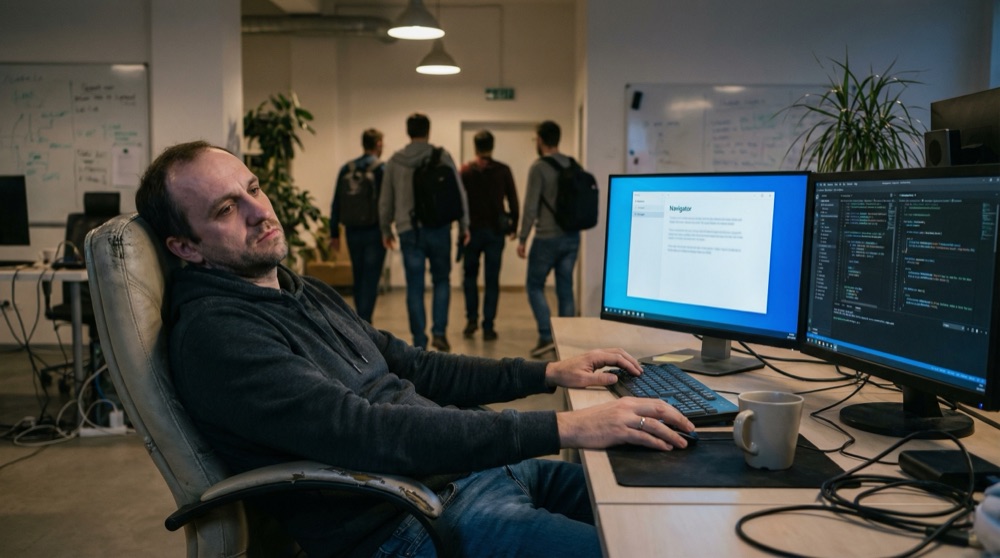
Tomasz watched the four new hires pack up their laptops. First day over. They’d accomplished what, exactly? Cloning a repository? Reading code they didn’t understand? Asking questions that exposed how fucked their onboarding infrastructure was?
Sofia (new Sofia, trying the name García in his head) caught his eye on her way out. “Tomorrow, should we keep reading code, or…?”
“I’ll have tasks for you tomorrow,” Tomasz lied, knowing he’d spend tonight scrambling to manufacture beginner work that wouldn’t require constant hand-holding.
“Okay. Thanks.” She smiled uncertainly and left.
Tomasz pulled up Navigator. His hands were shaking from caffeine and frustration.
Navigator — Tomasz Kowalski — March 24, 2026, 18:02
First day with four new junior developers. Complete disaster.
No onboarding plan. HR sent them laptops and assumed development would “figure it out.” I lost my entire morning improvising an orientation that consisted of: clone the repo, read code, good luck.
They asked reasonable questions I couldn’t answer:
- Where’s the architecture documentation? (Doesn’t exist)
- Where’s the development setup guide? (Outdated)
- What should we work on first? (No fucking idea, will figure it out tonight)
Sofia was asked to help mentor. She’s been here two years and still doesn’t understand half the codebase. Asking her to teach is setting everyone up to fail.
My actual job today: fix three production bugs, prepare sprint planning.
What I actually did: babysat four confused juniors through a first day that taught them nothing except that we’re disorganized.
Lukas wanted to “hire for velocity.” This is friction. Every new person without proper onboarding becomes weight on people who are already drowning.
Tomorrow I need to find them work. More time I don’t have, teaching concepts that should be documented.
I’m a senior developer, not a daycare operator.
He hit save harder than necessary. Opened his IDE. Three bugs. Sprint planning prep. And now, manufacturing beginner tasks for four people who didn’t know the codebase, the patterns, or the domain.
His clock read 18:06. He’d be here until 22:00. Again.
Tuesday, 09:17 — Standup
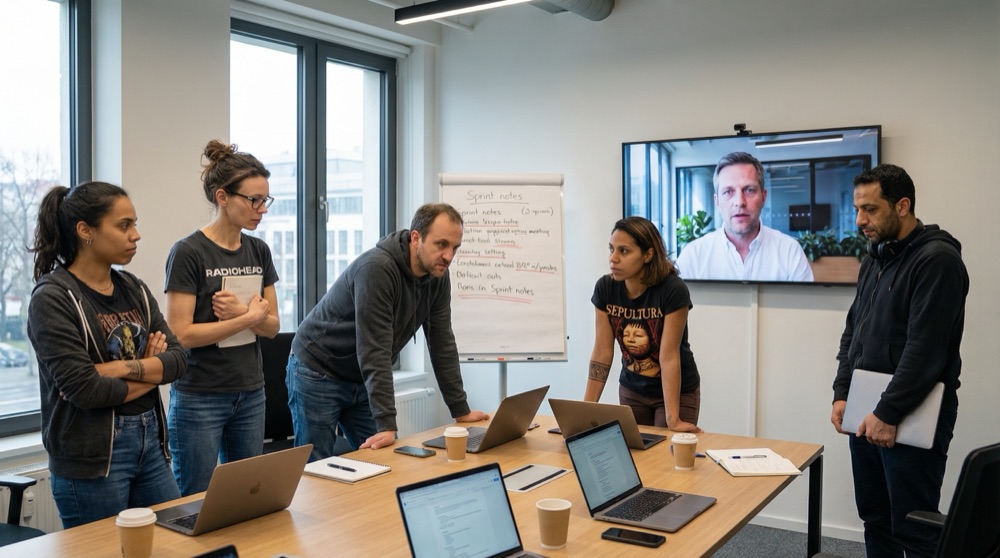
The development team gathered in their usual corner. Lukas joined via video call, his face pixelated slightly on the conference room screen.
“Quick updates,” Tomasz said, trying to keep exhaustion out of his voice. “Mariana?”
“Two PRs up for review, both backend. Investigating the session timeout bug that Marcus flagged yesterday.”
“Anton?”
“Unity builds broken again after yesterday’s merge. Fixing now. Should be done by lunch.”
“Hassan?”
Hassan looked like he’d slept three hours. “Provisioned dev environments for the four new hires. Still working through the deployment pipeline improvements from last week. Also have twelve environment setup requests in backlog.”
“Jan, Marta, Kerem, Sofia?” Tomasz nodded to the new group.
Awkward silence. Jan spoke carefully. “Still getting oriented. Reading through the codebase. Waiting for task assignment.”
“Right.” Tomasz rubbed his face, exhaustion making his eyes burn. “I’ll have tickets for you after this meeting.”
He didn’t have tickets for them. He had three hours of work ahead to manufacture tickets that wouldn’t require constant supervision.
Lukas spoke from the screen, cheerful and oblivious. “Great to have the new team members onboard. We’re building capacity!”
Mariana caught Tomasz’s eye. Her expression said everything: This isn’t capacity. This is overhead. And you know it.
Wednesday, 11:22 — Navigator Weekly Synthesis Arrives
Katja’s email notification chimed. Subject: Navigator Weekly Synthesis — Week 8 (Mar 17-24)
She opened it, scanning the summary section.
Key Patterns Detected:
1. Onboarding Friction (New This Week)
- Four new developers (Jan Kowalski, Marta Wójcik, Kerem Yılmaz, Sofia García) joined Monday, March 24
- Mentioned in logs: 3 total mentions across 2 contributors (Tomasz, Sofia Mendez)
- Mentioned in production work: 0 mentions
- Pattern: New hires are organizationally present but operationally invisible
- Impact: Senior developers spending time on improvised onboarding instead of delivery work
2. Mentorship Capacity Collapse
- Tomasz Kowalski mentioned in 8 different contributor logs (up from 6 last week)
- Context: Assigned as primary mentor for new hires while maintaining existing responsibilities
- Sofia Mendez logged anxiety about being asked to mentor when she considers herself still learning
- Pattern: Mentorship being delegated to people without capacity or sufficient experience
3. Infrastructure Bus Factor (Ongoing Critical)
- Hassan Al-Rashid mentioned in 11 different contributor logs this week
- New hires generated 4 environment setup requests adding to his backlog
- Quote from Hassan (Mar 24): “Provisioned dev environments for four new hires. Still working through deployment pipeline improvements from last week. Also have twelve environment setup requests in backlog.”
- Pattern: Single point of failure being compounded by organizational growth
4. Knowledge Gaps Exposed
- Multiple logs reference missing or outdated documentation
- New hires asking questions that reveal systemic knowledge management failure
- Quote from Tomasz (Mar 24): “They asked reasonable questions I couldn’t answer: Where’s the architecture documentation? (Doesn’t exist) Where’s the development setup guide? (Outdated)”
Recommendations:
- Pause hiring until onboarding infrastructure exists
- Dedicate time for documentation and knowledge capture (currently no capacity allocated)
- Expand DevOps team — Hassan is critical bottleneck for all new hire setup
- Create formal onboarding program before next cohort starts
Cross-Department Impact:
The four new developers generated overhead in Development (environment setup, mentoring time, documentation gaps) but have not yet contributed to delivery work. Current trajectory suggests 2-4 weeks before they become net contributors rather than net consumers of senior developer time.
Katja sat back, read it twice. The synthesis had detected what she’d felt but hadn’t been able to frame cleanly: hiring velocity was creating drag, not acceleration.
Lukas had received the same synthesis. They needed to talk.
Thursday, 10:04 — Katja’s Office

Lukas sat across from Katja, the synthesis report open on his tablet. He’d read it twice. She could tell. His jaw was tight, defensive.
“You saw the synthesis,” Katja said.
“They’ve been here three days. The report makes it sound like a disaster.”
“It is a disaster.” Katja leaned forward. “They’re here, but they’re not contributing. They can’t contribute. We don’t have the infrastructure to absorb them.”
“They’re learning the codebase—”
“By asking questions that reveal we have no documentation. By burning senior developer time we don’t have. Tomasz lost his entire Monday morning improvising an onboarding session he wasn’t prepared to give. Meanwhile, three production bugs sat untouched.”
Lukas set down the tablet. “So what do you want? Fire them?”
“No.” Katja kept her voice level. “I want you to pause the next hiring wave until we build actual onboarding capacity. The synthesis is clear: these four are organizationally present but operationally invisible. They exist in HR systems but not in production work.”
“We have six more interviews scheduled for next week—”
“Cancel them.”
Lukas stared at her. “Katja, we’re funded to scale. Investors expect growth—”
“Headcount isn’t growth.” Katja tapped the synthesis report. “This is evidence. You said hire faster, ship faster. Navigator shows the opposite. Every new hire without proper onboarding drags down people who are already drowning.”
Silence. Lukas looked out the window at the Berlin skyline. His knuckles were white on the armrest.
“How long to build onboarding infrastructure?” he asked finally.
“Four weeks minimum. Documentation, mentorship program, environment automation so Hassan isn’t manually provisioning every damn setup.”
“Four weeks where we don’t hire anyone.”
“Four weeks where we don’t add more weight to a system that’s sinking.”
Lukas rubbed his face. “The board’s going to ask why hiring velocity dropped.”
“Show them this synthesis. Tell them we’re building sustainable capacity instead of burning out our senior developers.”
Silence stretched. Lukas stared at the synthesis report like it might change if he looked long enough.
“Okay,” he said quietly. “Pause hiring. Four weeks. Build the infrastructure.”
Katja felt relief flood through her, mixed with bone-deep exhaustion. One crisis averted. How many more before the system stabilized?
“And Katja?” Lukas looked at her. “The synthesis says Hassan is a critical bottleneck for new hire setup. That’s not just an onboarding problem.”
“No.” Katja’s voice was flat. “That’s a bus factor problem. And it’s been screaming at us for eight weeks.”
“What do we do about it?”
Katja thought about the synthesis reports stacking up. Week after week, same pattern: Hassan mentioned everywhere, single point of failure across all infrastructure.
“We need external help. Someone who’s solved this before. Someone who can embed with the team and fix root causes, not just throw more bodies at it.”
Lukas nodded slowly. “Find them.”
Thursday Evening, 18:33 — Development Floor
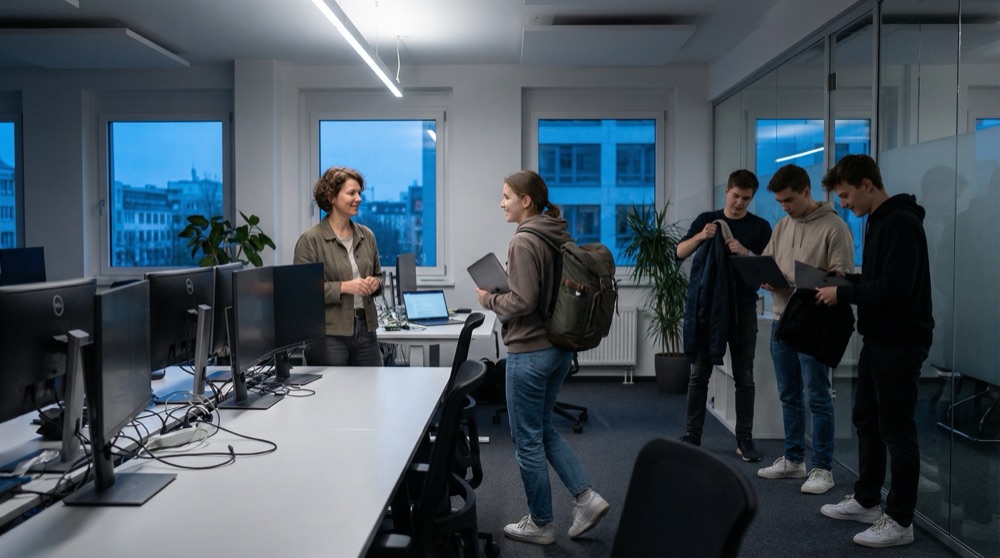
The four new hires packed up their laptops for the fourth day. They’d been assigned actual tickets Tuesday — small bug fixes, documentation tasks, low-priority features. Jan had shipped his first PR Wednesday afternoon, a modest fix to a validation error message.
Marta caught Sofia Mendez on her way out. “Hey, thanks for helping us with the test suite setup yesterday.”
Sofia smiled, genuine this time. “No problem. Sorry I was rushed Monday. Things are always chaotic here.”
“We’re noticing.” Marta laughed. “Is it always like this?”
Sofia considered the question. “Pretty much. But you get used to it. And people are helpful when they have time.”
After Marta left, Sofia opened Navigator before heading home.
Navigator — Sofia Mendez — March 27, 2026, 18:41
Helped the new juniors with test suite setup yesterday. Felt better than Monday when I panicked about mentoring.
They’re smart. They ask good questions. They just need time and guidance, which are both in short supply.
Noticed Tomasz seems less stressed today. Wonder if the hiring pause rumor is true. Someone said Katja pushed back on bringing in more people before we’re ready.
If that’s real, it’s the first time I’ve seen leadership acknowledge we can’t absorb infinite headcount.
She hit save, closed her laptop, and headed out into the Berlin evening.
Behind her, the office lights dimmed. The four new hires would be back tomorrow, slowly finding their footing in a codebase that resisted understanding.
But at least there wouldn’t be four more next week.
Small victories.
🎭 This Week's Episodes
Telenovelas show what we can't say in client meetings. The drama is heightened, but the patterns are real.
 Three Ways to Understand a Country
Stefan drives Sophie to the Pacific for two days. The beach is big enough to make her feel appropriately small. Back at the finca the rain keeps th...
 The Resignations
Nathan Cole resigns on a Monday morning with two sentences and no argument left in his body. By Tuesday his desk is empty and the company's institu...
Technical Consultancy
Embedded Delivery Partner
Embedded into your team as an active contributor, reducing delivery friction and helping important work move cleanly.
Technical Advisor
Peer-style technical assessments before far-reaching decisions; reduce architectural and product risk early.
Product & Delivery
Ship working software to real users earlier. Measure impact and adapt based on evidence rather than assumption.
Custom Software Development
High quality, maintainable software. Short-term augmentation that leaves lasting capability in your own team.
Recent Articles
- When Everything Is Finally Under Control (28.09.2026)
- AI Makes Technical Execution Cheap. Judgment Stays Scarce. (24.09.2026)
- The LLM Will Not Come Back Tomorrow (19.09.2026)
- The One-Person AI Company Is a Greed Fantasy (15.09.2026)
- Test Production Without Leaving a Mess (10.09.2026)