Secretos y Mentiras
Sebastián's secret is exposed — he was sent by Nexus Logistics Technologies to steal LogiMex's code. Mari is devastated: everything was a lie. But Sebastián claims he's changed, that Mari and this team have become more real to him than any paycheck. The developers must decide: turn him in, or give him a second chance? Valentina argues for mercy while Rafa demands justice. Bruno exploits the chaos to implement mandatory 15-minute time-tracking, and when a junior developer fails to comply, he's fired on the spot. Diego finally confesses his love for Valentina to an unlikely confidant — Stefan. And just when the team begins to fracture beyond repair, Valentina's phone rings with news that changes everything.
The Reckoning
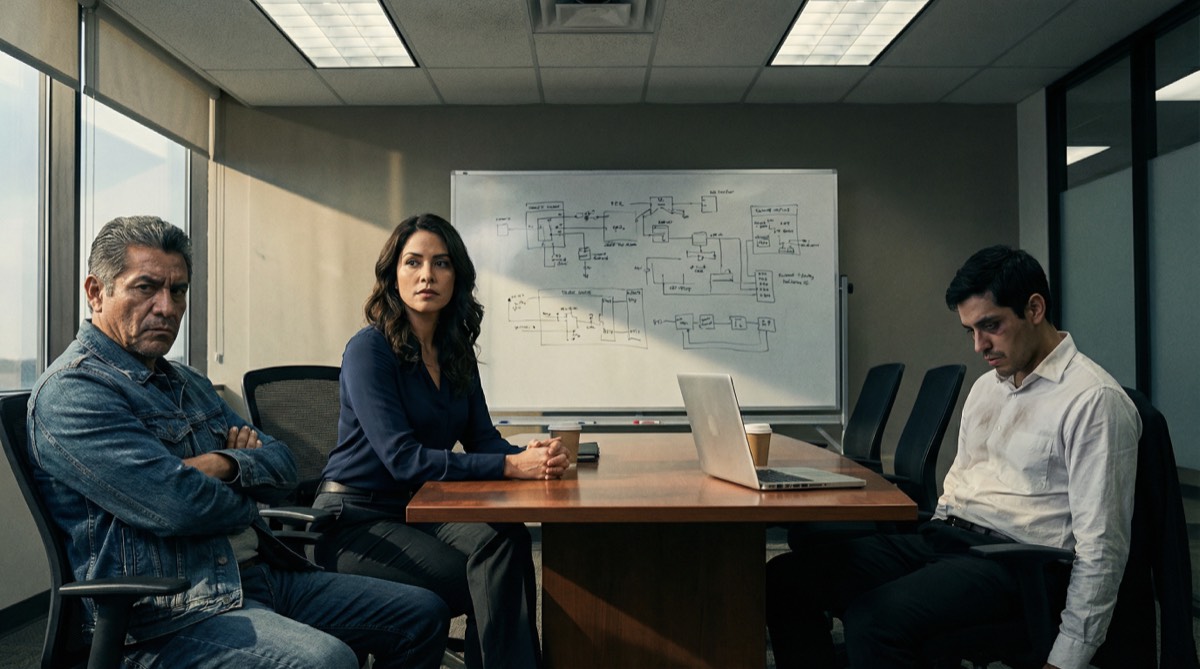
The conference room felt smaller than usual.
Valentina had arrived at 6 AM, before the accountability sessions, before Bruno could claim the space. She’d sent two messages: one to Mando, one to Sebastián.
We need to talk. Conference Room B. Don’t tell anyone.
Mando arrived first, coffee in hand, face carved from granite. He took a seat without speaking and waited.
Sebastián came five minutes later. He looked like he hadn’t slept — dark circles under his eyes, shirt wrinkled, the confidence that usually surrounded him like cologne completely evaporated.
“Sit down,” Valentina said. Her voice was neutral. Professional. The voice she used when she didn’t trust her emotions.
Sebastián sat.
“Tell me everything.”
He did. The job offer that wasn’t really a job offer. The company in San Francisco — Nexus Logistics Technologies — that wanted LogiMex’s secrets. The money they’d promised. The files he’d already sent.
Valentina listened without interrupting. When he finished, the silence stretched like a cable about to snap.
“Why should we believe you’ve changed?” she asked finally.
“Because I’m sitting here.” Sebastián’s voice cracked. “Because I could have finished the job and disappeared. Because—” He looked at his hands. “Because Mari invited me to meet her daughter last weekend. Sofía. She’s seven. She showed me her drawings and asked if I was going to be her new dad.”
His shoulders shook.
“I’ve never had that. A family. Someone who looks at me like I matter. And I realized—” He wiped his eyes roughly. “I realized that no amount of money is worth losing that.”
Mando spoke for the first time. “Pretty words, chamaco. But words are cheap.”
“I know. That’s why I’m asking for a chance to prove them.”
Valentina looked at Mando. Something passed between them — years of experience, hard-won wisdom about people and their capacity to change.
“We’ll take this to the team,” she said finally. “Not Bruno. The real team.”
Sebastián’s head snapped up. “Vale, if this gets out—”
“It stays with us. But we decide together whether you get your second chance.” She stood. “Don’t make me regret this.”
The Judgment
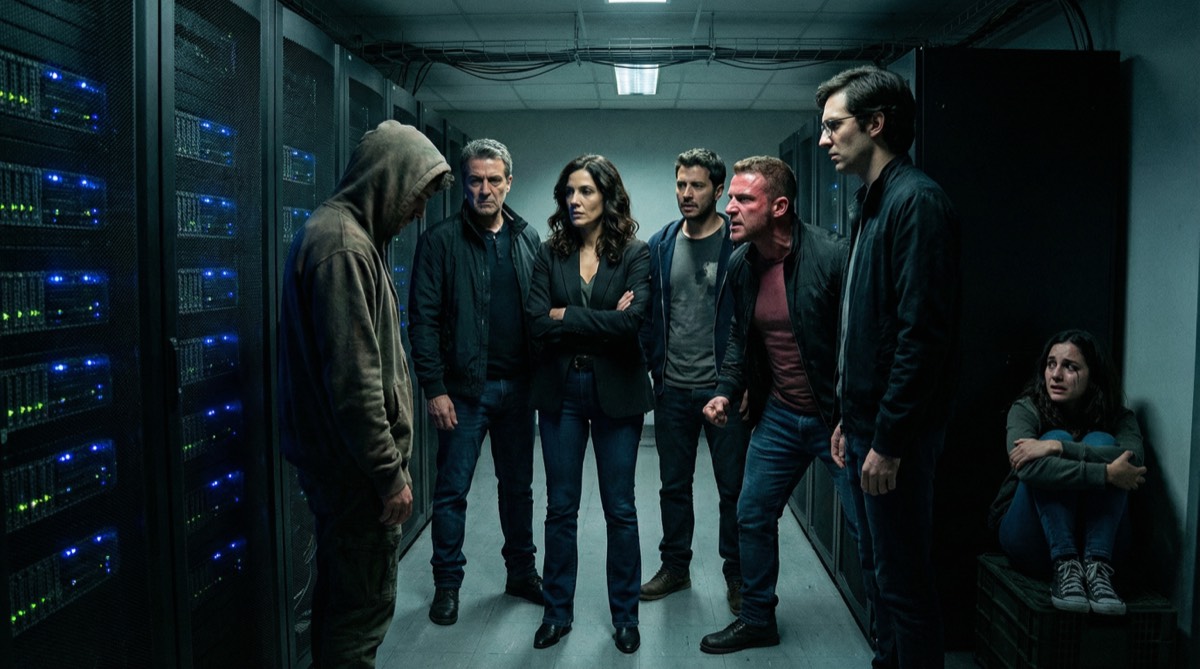
They gathered in the server room after hours — the one place Bruno’s monitoring software didn’t reach.
Valentina had chosen carefully: Mando, Héctor, Rafa, Diego, Mari. The core. The ones whose trust mattered most.
Sebastián stood before them like a prisoner awaiting sentencing.
“He was sent here to steal from us,” Valentina began, laying out the facts with clinical precision. “Nexus Logistics Technologies. San Francisco. They want our migration strategy, our business logic, our client list.”
The room erupted.
“I knew it!” Rafa slammed his fist against a server rack. “I knew there was something wrong with this cabrón!”
“How much did he take?” Héctor demanded. “What did he give them?”
“Some of the migration scripts,” Mando said quietly. “Early versions. Nothing they couldn’t have reverse-engineered eventually.”
“That’s supposed to make it okay?” Rafa’s face was crimson with rage. “He’s a traitor! We should call the police!”
Mari hadn’t spoken. She sat in the corner, arms wrapped around herself, staring at Sebastián like she was seeing him for the first time. Her face had gone white as paper. The blood had drained from her cheeks, and her hands were shaking so badly she’d hidden them under her arms. Nausea churned in her gut.
“Mari…” Sebastián took a step toward her.
“Don’t.” Her voice was ice. Venom. The voice of a woman whose heart was being ripped out through her chest. “Don’t you fucking dare come near me.”
But he kept coming. Because he was an idiot. Because he couldn’t stop himself.
“Real?” The word exploded out of her like something had ruptured, like a dam finally breaking after years of pressure. “Real? You were using me! This whole goddamn time!” She was shaking now, her whole body vibrating with betrayal, bile rising in her throat so fast she nearly gagged. “The dinners where you asked about my life like you actually gave a shit. The conversations where you pretended to care about my dreams. The way you looked at me —”
And God help her, she could still feel that look. The weight of his eyes on her skin like a physical touch. The way he’d watched her across restaurant tables like she was the only woman in Mexico City. The way his gaze had traced the line of her throat when she laughed, lingered on her mouth when she spoke, darkened with something hungry and raw when she’d leaned close enough that he could smell her perfume.
She hated that she could still feel it. Hated that even now, with her heart in pieces on the floor, her body remembered what it felt like to be wanted by him.
“The way you looked at me like I mattered,” she continued, her voice breaking. “Like I was something more than a means to an end. Like every time you touched me —” Her breath caught. Because she could feel it still. His hands in her hair. His mouth against her neck. The heat of his body pressed against hers in her darkened bedroom, both of them breathless and desperate and falling into each other like drowning.
“I was going to introduce you to my daughter. My daughter, Sebastián! My seven-year-old little girl who draws pictures of butterflies and unicorns and asks me every goddamn night when she’s going to meet my ‘nice friend’! And you were going to — what? Steal from us and disappear in the night? Leave us both wondering for the rest of our lives what we did wrong? Leave her asking ‘where did Mama’s friend go?’ until she finally stops asking because children learn to stop hoping?”
“I know. And that’s when I knew I couldn’t do it anymore. When Sofía—”
“Don’t you dare say her name!” Mari’s scream echoed off the server racks. “You don’t get to say her name! You don’t get to use my daughter to make yourself feel better about being a lying, thieving piece of shit!”
“Mari, please—”
“Am I supposed to be grateful?” She laughed — a sound like breaking glass, like a car crash, like everything good dying all at once. “Grateful that you grew a conscience before you destroyed my company and my heart? Grateful that the man I was falling in love with — the man I let into my bed — only partially fucked me over?”
She was close enough now to smell him. That cologne she’d bought him. The scent of his skin underneath. It made her want to scream. Made her want to grab him and shake him and kiss him and destroy him all at once.
She slapped him.
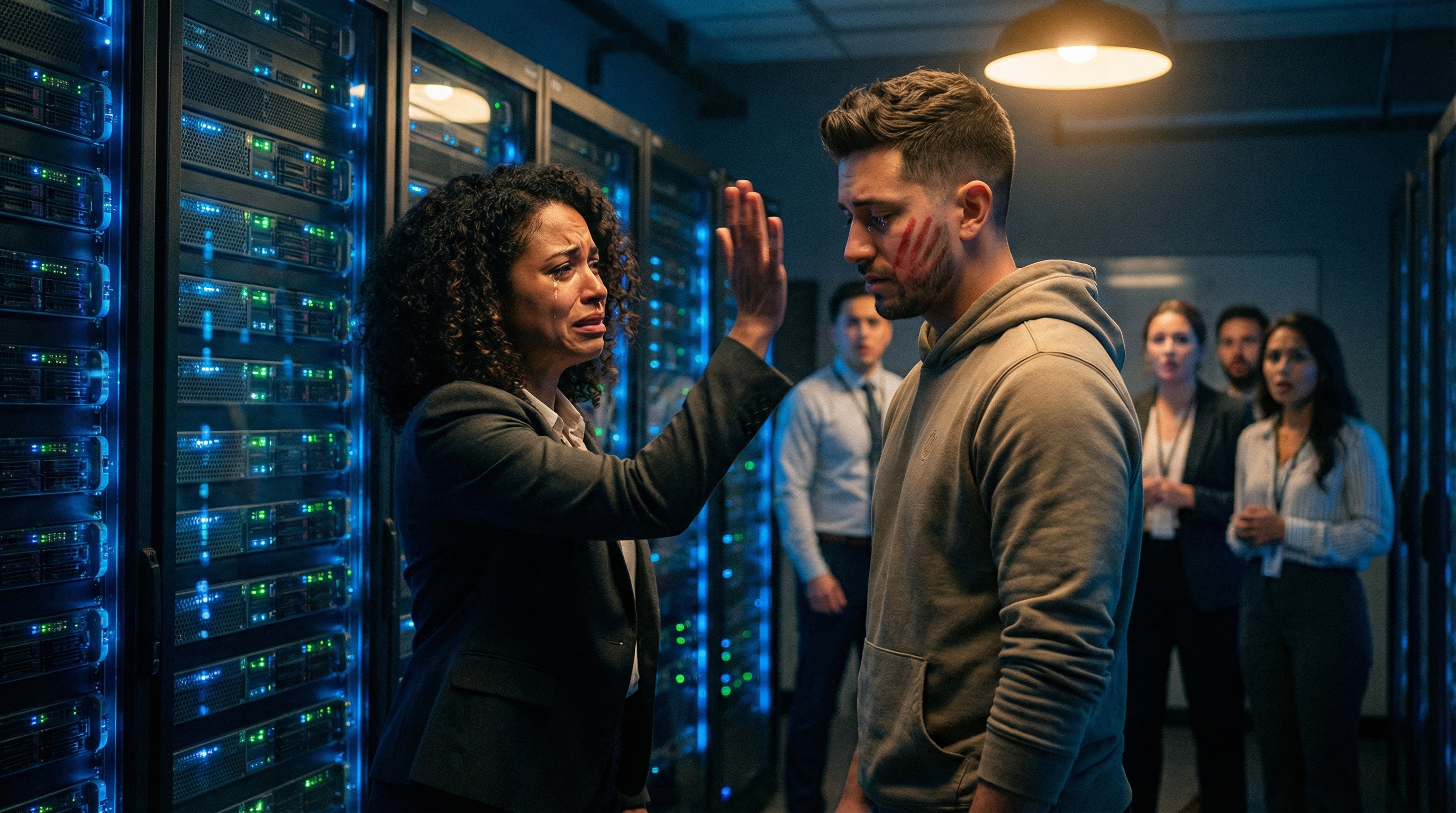
Not a slap — a blow. An open-handed strike that cracked across his face like a whip, snapping his head to the side, leaving a perfect red handprint blooming on his cheek like a brand. Her palm stung from the impact. Her arm was still raised, shaking. She wanted to hit him again. And again. Until the rage stopped burning in her chest.
Sebastián didn’t move. Didn’t raise a hand to defend himself. Didn’t even flinch.
And then Mari’s fury collapsed. Just… crumbled. All at once. Her knees buckled and she fell against him, her fists pounding weakly against his chest as the sobs tore out of her — ugly, gasping, animal sounds of grief.
His arms came around her automatically, muscle memory from a dozen nights when she’d fallen asleep against his chest, and the familiarity of it — the warmth, the solid strength, the way her body fit against his like they’d been designed for each other — made everything so much worse. Because her body was a traitor too. Even now, even with her heart shattered and her trust destroyed, her body still wanted to melt into him. Still remembered what it felt like when those hands had pulled her close with desire instead of pity.
She could feel his heart pounding against her cheek. Fast. Frantic. Like he was terrified she would pull away.
“I was going to tell you,” he whispered into her hair, and she felt his breath hot against her scalp. “I was going to stay. For you. For Sofía. For all of this. I chose you, Mari. I chose this.”
His hand was in her hair now, fingers tangled in the strands the way they’d been that first night when he’d pulled her into his hotel room and kissed her against the door until neither of them could breathe. Until she’d torn at his shirt and he’d lifted her against the wall and they’d barely made it to the bed.
She hated that she remembered. Hated that her body responded to his touch even now.
“How can I believe anything you say?” The words were muffled against his shirt. His scent surrounded her — familiar, intoxicating, devastating. “How can I ever believe anyone again?”
“You can’t. Not yet.” He pulled back just enough to look into her ravaged face. His own eyes were wet. One hand cupped her jaw, thumb tracing her cheekbone with a tenderness that made her want to scream. “But give me time. Give me one chance. Let me show you who I want to be. Who you make me want to be.”
They were so close she could feel the heat radiating off his body. Could see the pulse jumping in his throat. Could remember exactly what he tasted like.
She jerked away from him like she’d been burned.
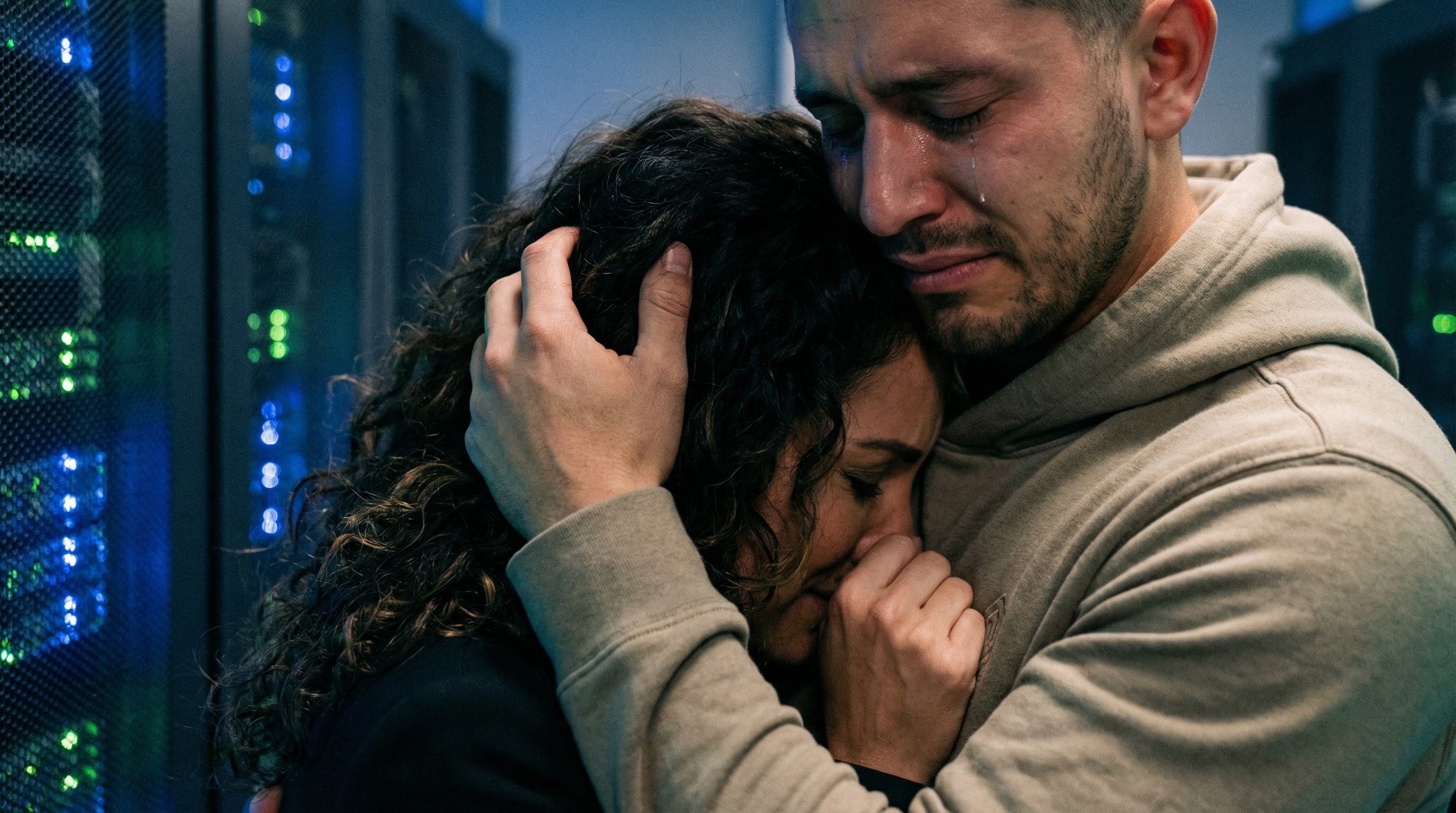
The room was silent.
Valentina stepped forward. “We vote. Everyone here. Do we report Sebastián, or do we give him a chance to make this right?”
“Report him,” Rafa said immediately. “No mercy for traitors.”
“And if we report him,” Mando said quietly, “Bruno finds out. Bruno uses this. Bruno tears apart everything we’ve been building in the shadows.”
Rafa hesitated. That was something he hadn’t considered.
“I’m not saying forgive him,” Mando continued. “I’m saying we handle this ourselves. We watch him. We test him. And if he fails?” His eyes met Sebastián’s. “We end his career personally.”
Héctor nodded slowly. “I vote we give him a chance. God knows I’ve needed a few second chances in my life.”
Diego, quiet until now, spoke up. “He came to us. He could have run. He didn’t.” He shrugged. “That counts for something.”
They all looked at Mari.
She wiped her eyes. Stepped back from Sebastián. Studied his face like she was reading code, looking for bugs.
“One chance,” she said finally. “One. And if you waste it?” Her voice hardened. “I’ll destroy you myself.”
Sebastián nodded, unable to speak.
Valentina let out a breath she didn’t know she’d been holding. “Then it’s decided. Welcome to probation, Sebastián. Now prove you deserve it.”
The Tightening
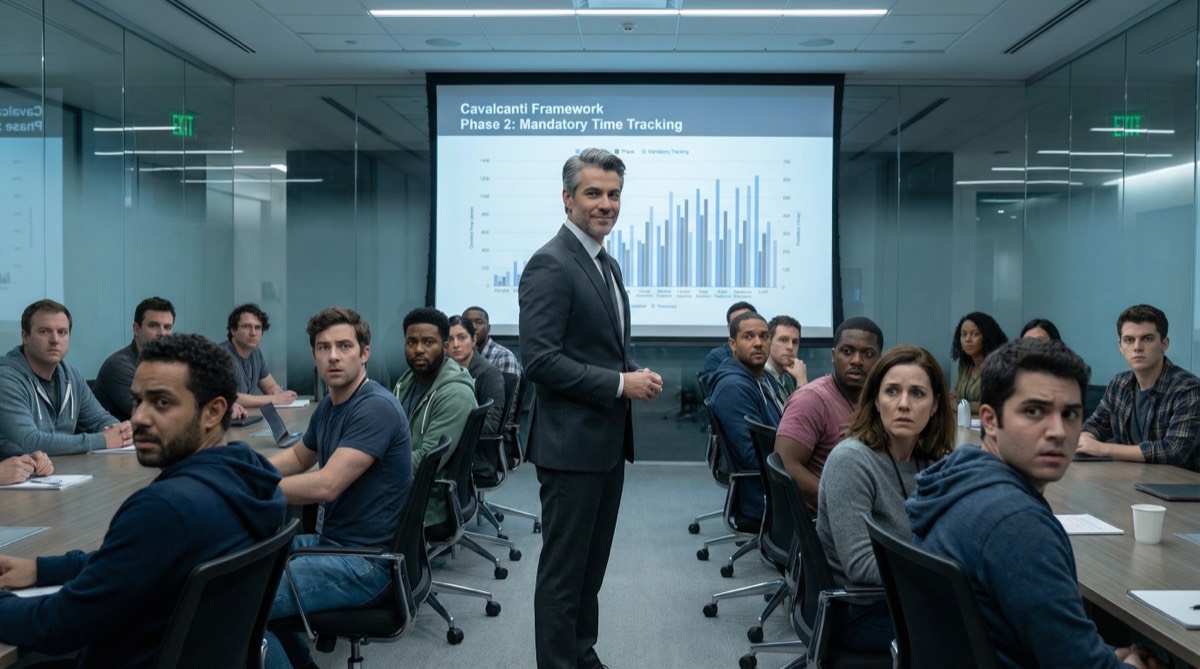
The next morning, Bruno called an all-hands meeting.
He stood at the head of Conference Room A, surrounded by charts and graphs that meant nothing and everything at the same time.
“Yesterday’s events have made one thing crystal clear,” he said, his voice smooth as oil. “We have a control problem at LogiMex.”
Valentina felt her stomach drop. He can’t know. There’s no way he knows.
“Not a specific incident,” Bruno continued, and she allowed herself to breathe. “But a systemic failure of accountability. When people work in the shadows, when there’s no visibility into their activities, mistakes happen. Betrayals happen.”
His eyes swept the room. Did they linger on Sebastián? Valentina couldn’t tell.
“Which is why, effective immediately, I’m implementing Phase Two of the Cavalcanti Framework.” He clicked to a new slide. “Mandatory time-tracking. Every fifteen minutes, you will log your current task in our new system. Every deviation from your assigned work items will be flagged. Every unexplained gap will require a written justification.”
The developers exchanged horrified glances.
“This isn’t surveillance,” Bruno said, reading their faces with practiced ease. “It’s support. When you work in a system of total transparency, nothing can be hidden. Nothing can fester. Nothing can—” he smiled— “surprise us.”
“This is insane.” The voice came from the back — Gabriel, a junior developer. Young, idealistic, not yet beaten down. “You want us to stop coding every fifteen minutes to fill out forms?”
Bruno’s smile didn’t waver. “I want you to demonstrate that you’re coding. A subtle distinction, Gabriel. But an important one.”
“And if we refuse?”
“Then we’ll have a conversation about your fit with the team.”
Gabriel opened his mouth to argue, but Valentina caught his eye and shook her head. Not now. Not here.
He sat back down, fuming.
The First Casualty
It happened faster than anyone expected. Faster than anyone could have prepared for.
Three days. Three fucking days of the new system. Three days of stopping work every fifteen minutes to log activities like some kind of demented time-tracking hamster wheel. Three days of Bruno’s AI analyzing patterns, flagging “anomalies,” generating reports that nobody had time to read because they were too busy filling out the goddamn reports.
Gabriel was called into Bruno’s office on a Thursday afternoon.
Valentina watched him go. He was twenty-four years old. Two years at LogiMex. The kind of developer who stayed late because he loved the work, not because anyone asked him to. His face was pale but defiant — the face of a young man who had finally understood that the world was unfair, and had decided not to flinch in the face of it.
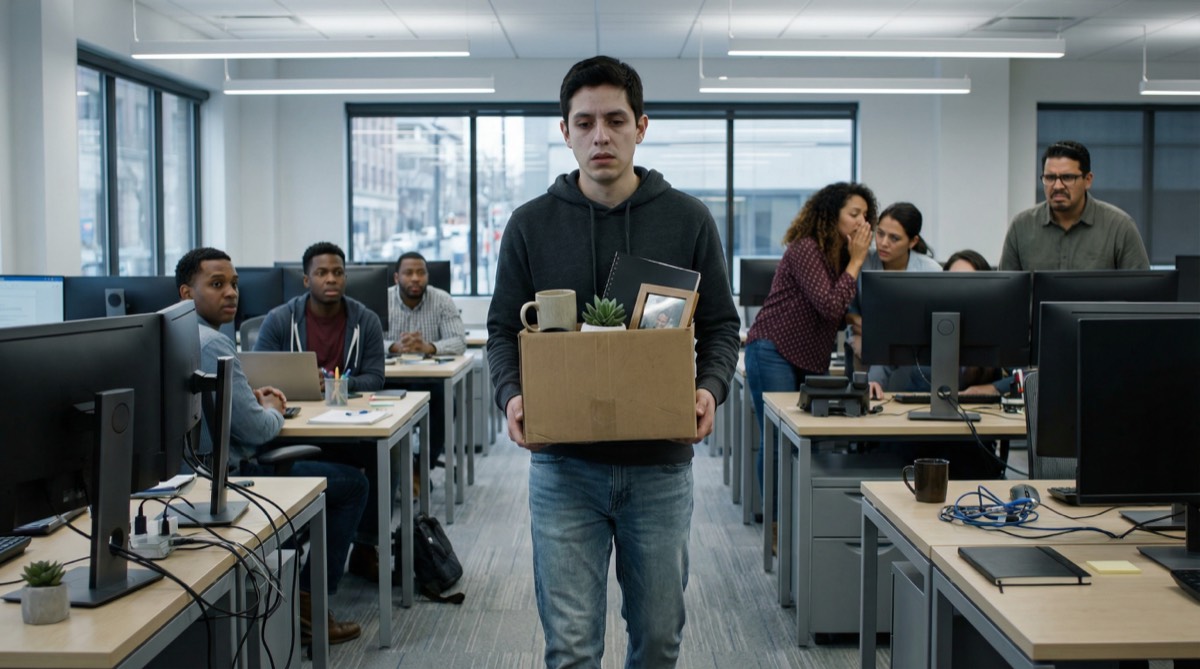
Twenty minutes later, he walked out carrying a cardboard box.
His desk. Two years of his life. Reduced to a single cardboard box. Photo of his girlfriend. A coffee mug that said “World’s Okayest Developer.” A small cactus he’d named Señor Prickles.
The office went absolutely silent. Someone stopped typing mid-keystroke. The silence of witnesses at an execution.
“What happened?” Mari’s whisper was barely audible.
“Three late reports.” Gabriel’s voice was hollow. Gutted. The voice of someone who had just learned that everything they believed about hard work and loyalty was a lie. “Ten minutes each. I was debugging a production crash. You know — the thing we’re actually paid to do? But I forgot to log my status updates for thirty minutes.” He laughed — a terrible, empty sound. “He said it demonstrated a ‘pattern of non-compliance.’ That I was ‘resistant to the framework culture.’”
“That’s BULLSHIT!” Diego stood up so fast his chair flew backward. “You were saving the goddamn company! I was there! The payment system was down and you were the only one who knew how to—”
“It doesn’t matter, Diego.” Gabriel shook his head. His eyes were wet, but he was holding it together. Barely. “Don’t you understand? The framework doesn’t care about context. It doesn’t care that I saved a half-million pesos in lost transactions. It only cares about metrics. About compliance. About the appearance of control.”
He looked around the room — at the pale, shocked faces of people he’d worked beside for two years. People he’d debugged with at midnight. People he’d celebrated deployments with. People who were now watching him walk out the door and wondering who would be next.
“Good luck,” he said quietly. “All of you. You’re going to need it.”
He walked to the elevator. The doors closed. And Gabriel was gone.
Nobody moved. Nobody spoke. The only sound was the hum of the fluorescent lights and the soft whir of computers — machines that didn’t care about human beings either.
He walked out.
The silence that followed was heavier than any server could hold.
The Confession
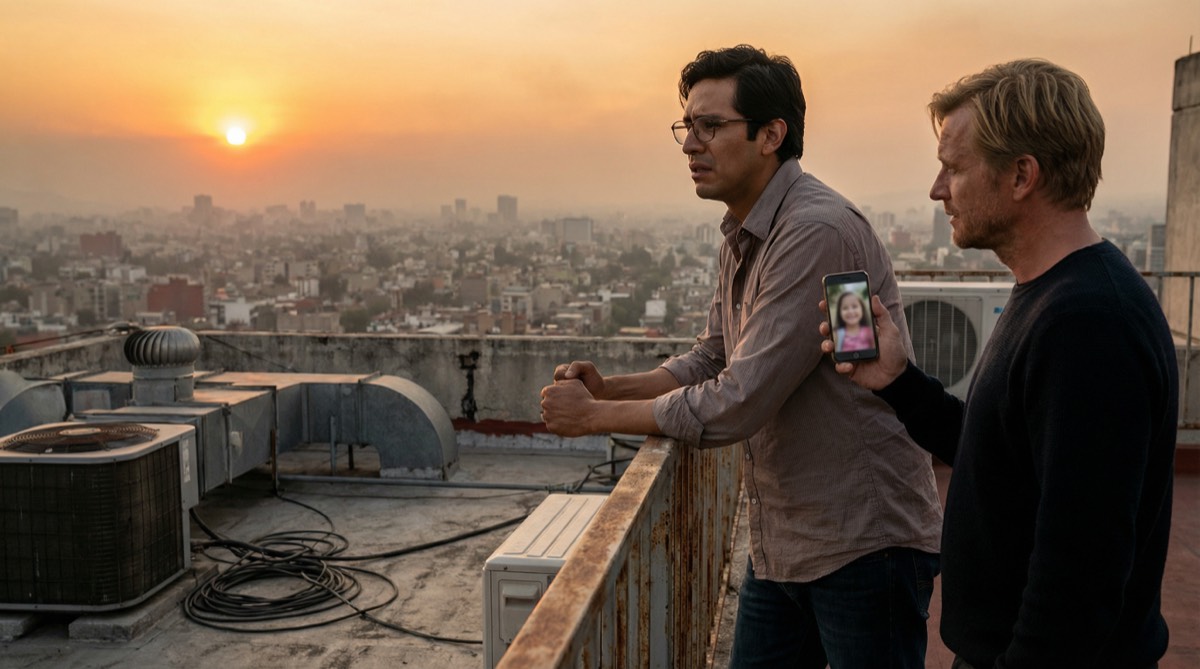
Diego found Stefan on the rooftop that evening.
The German was standing at the edge, looking out over Mexico City as the sun painted the smog in shades of gold and orange. In his hand, as always, was his phone — a photo of his daughter visible on the screen.
“May I join you?”
Stefan didn’t turn. “The rooftops in this country. They all have stories.”
Diego walked to stand beside him. For a long moment, neither spoke.
“I need advice,” Diego said finally. “About something that has nothing to do with code.”
Stefan pocketed his phone. “Personal matters?”
“Valentina.”
A ghost of a smile crossed Stefan’s face. “Ah.”
“I’ve loved her since we were kids. Since before MIT, before any of this.” Diego’s hands clenched on the railing. “But she’s having dinners with Bruno. She’s fighting battles I should be fighting. And I just… stand there. Watching.”
“Why are you telling me this?”
“Because—” Diego laughed bitterly. “Because I don’t know who else to tell. Mando would tell me to be patient. Héctor would tell me to drink about it. And my own father died when I was twelve, so…”
Stefan was quiet for a moment. “You know what killed my marriage?”
Diego shook his head.
“Patience. I was so patient. I waited for the right moment to tell my wife what I was feeling. I waited for work to calm down. I waited for our daughter to be older.” He sighed. “And by the time I stopped waiting, there was nothing left to say.”
“So you’re telling me to do something?”
“I’m telling you that love is not a passive verb.” Stefan turned to face him. “Valentina sees you, Diego. I’ve watched her. When you speak, she listens differently than she listens to anyone else. But she doesn’t know what you’re willing to risk. Show her.”
“How?”
“That,” Stefan said, “is for you to figure out. But start by stopping your analysis. Love is not a deployment. You cannot plan every contingency.” He clapped Diego on the shoulder. “Just… begin.”
The Fracture
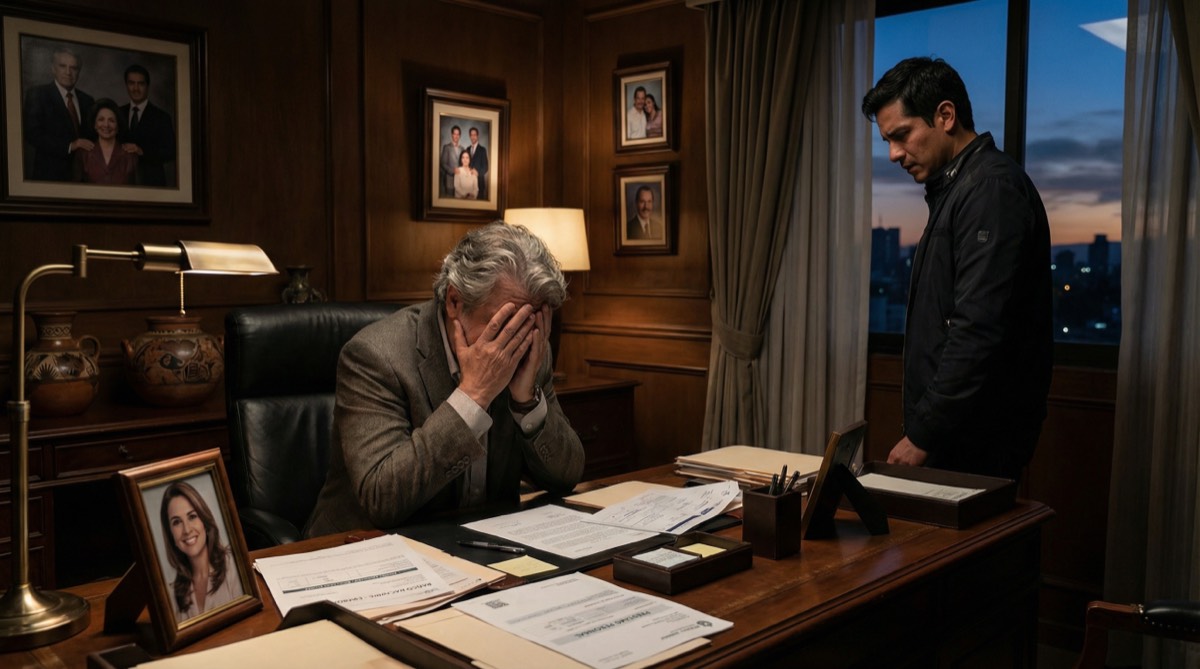
In Don Rodrigo’s office, a different kind of confession was unfolding.
The patriarch sat at his desk, head in his hands. Before him lay a stack of documents — bank statements, loan papers, evidence of debts he’d never authorized.
Patricio stood by the window, unable to meet his uncle’s eyes.
“How much?” Don Rodrigo’s voice came out as barely more than a breath. The voice of a man who already knew the answer was going to destroy him.
“Three million pesos.”
The silence that followed was absolute. Complete. The silence of a tomb.
“Three million pesos.” Don Rodrigo repeated the words as if they were in a foreign language. As if by saying them differently, they might mean something else. “Three… million… pesos.”
“The casinos. I thought I could win it back. The odds, the system I was using — I thought—”
“You thought?” Don Rodrigo stood so violently his chair crashed backward into the wall, the sound cracking through the office like a gunshot. His face had gone from pale to purple, veins standing out on his temples like ropes, spittle flying from his lips. “You THOUGHT? Like you thought bringing in that Brazilian vulture was a good idea? Like you thought you could run this company with your Harvard degree and your fancy fucking English and your designer suits?”
“Tío, please—”
“DON’T CALL ME THAT!” The words tore out of him like a physical force, like something that had been building for years finally breaking free. “You call me tío when you want something! When you need cover! When you’ve made another catastrophic mess that I have to clean up while you stand there with your hangdog face and your empty apologies!”
He was shaking now — his whole body trembling with rage and grief and something else, something that looked horribly like heartbreak. Tears were streaming down his weathered face.
“I took you in after your father died! I held you at his funeral when you were twelve years old and you cried in my arms! I could feel your little body shaking! I promised your dying father I would take care of you!” His voice cracked like glass shattering. “I paid for your education! I gave you a position in this company! I treated you like my own son because I never had one and you were all I had left of my brother!” He slammed his fist on the desk, sending papers flying, his knuckles splitting against the wood. Blood smeared across the documents. “And THIS — this — is how you repay me?” By gambling away everything three generations of this family built? By pissing it all away at a fucking casino table like some degenerate?”
Patricio’s face had crumpled into something unrecognizable. Tears ran down his cheeks. “I’m sorry. Dios mío, I’m so sorry. I never meant—”
“Sorry doesn’t pay debts!” Don Rodrigo’s voice broke on the words. “Sorry doesn’t save the company you’ve mortgaged behind my back!” He sank back into his chair — not sitting so much as collapsing, as if his legs had simply given out. In that moment he looked ancient. Defeated. Broken.
“The collateral, Patricio.” His voice was barely audible now. “Tell me you didn’t use the company as collateral. Tell me you at least had that much sense.”
The silence stretched. And stretched. And stretched.
“Dios mío.” Don Rodrigo pressed his hands over his face. When he spoke again, his voice was hollow. Dead. “You’ve killed us. You’ve killed everything.”
“No. I can fix this. Bruno’s framework will accelerate the SaaS launch. Once we have clients paying subscription fees—”
“Bruno.” Don Rodrigo laughed — a terrible, broken sound. “Bruno is a vulture. He doesn’t accelerate. He consumes.” He looked at his nephew. “But you can’t see that, can you? You still think he’s here to help us.”
Patricio’s jaw tightened. “He’s our best chance.”
“He’s your chance. To look good. To pretend you didn’t gamble away your family’s legacy.” Don Rodrigo shook his head. “Get out.”
“Tío—”
“GET OUT!”
Patricio left.
Don Rodrigo sat alone in the gathering darkness, surrounded by papers that told the story of his nephew’s betrayal.
Finally, he opened his desk drawer. Inside was a photograph — his late wife Esperanza, smiling in the garden of their first home.
“What do I do, mi amor?” he whispered. “How do I save what we built?”
The photograph didn’t answer.
The Warning
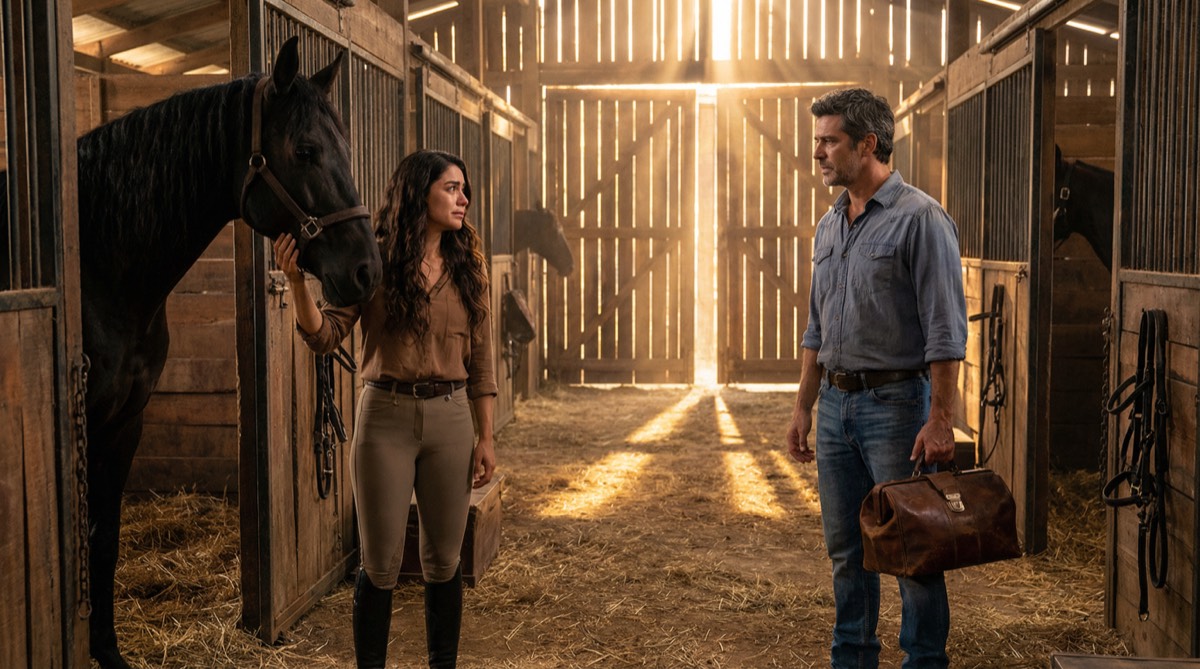
The stables were quiet at sunset.
Camila had come to ride — to escape the chaos of the office, the weight of Luciana’s threats, the memory of Milo’s hands in her hair.
But Relámpago sensed her mood. He was restless, pawing at the ground, refusing the saddle.
“I know, boy,” she murmured, stroking his neck. “I know. Nothing feels right anymore.”
“He can tell when you’re troubled.”
She spun.
Dr. Emiliano Contreras stood at the entrance to the stall, veterinary bag in hand. He’d aged since she’d last seen him — or maybe that was just the guilt that hung between them like smoke.
“Milo.”
“Camila.”
They stood there, separated by three feet and a universe of things they couldn’t say.
“I didn’t know you’d be here,” she said finally.
“Thursday. Doña Martínez’s mare.” He lifted his bag. “Routine check.”
“Then I should go.”
“Wait.” He stepped forward, stopped himself. “Can we… can we talk? Just talk?”
Camila felt the pull — that gravity that had dragged them together in the first place. It would be so easy to give in. So easy to fall back into his arms and forget everything else.
But she’d seen what easy looked like. She’d seen it in Luciana’s calculating eyes. In Patricio’s empty promises. In her own father’s convenient blindness to the fraud that built their fortune.
“No, Milo.” Her voice was gentle but firm. “We said goodbye. We meant it.”
“I haven’t stopped thinking about you.”
“And I haven’t stopped thinking about your children.” She met his eyes. “Two boys, you said. How old?”
He looked away. “Six and four.”
“Do they look like you?”
“The older one. The younger one has his mother’s eyes.”
“Then go home to them.” Camila felt tears threatening but held them back. “Go home and be the father they deserve. Not the man who sneaks away to stables to meet a woman half his age.”
“Camila—”
“This isn’t love, Milo. It’s escape. For both of us.” She took his hand, pressed it briefly, let it go. “Find your way back to your family. I have to find my way to myself.”
She walked past him, leading Relámpago toward the arena.
She didn’t look back.
The Call
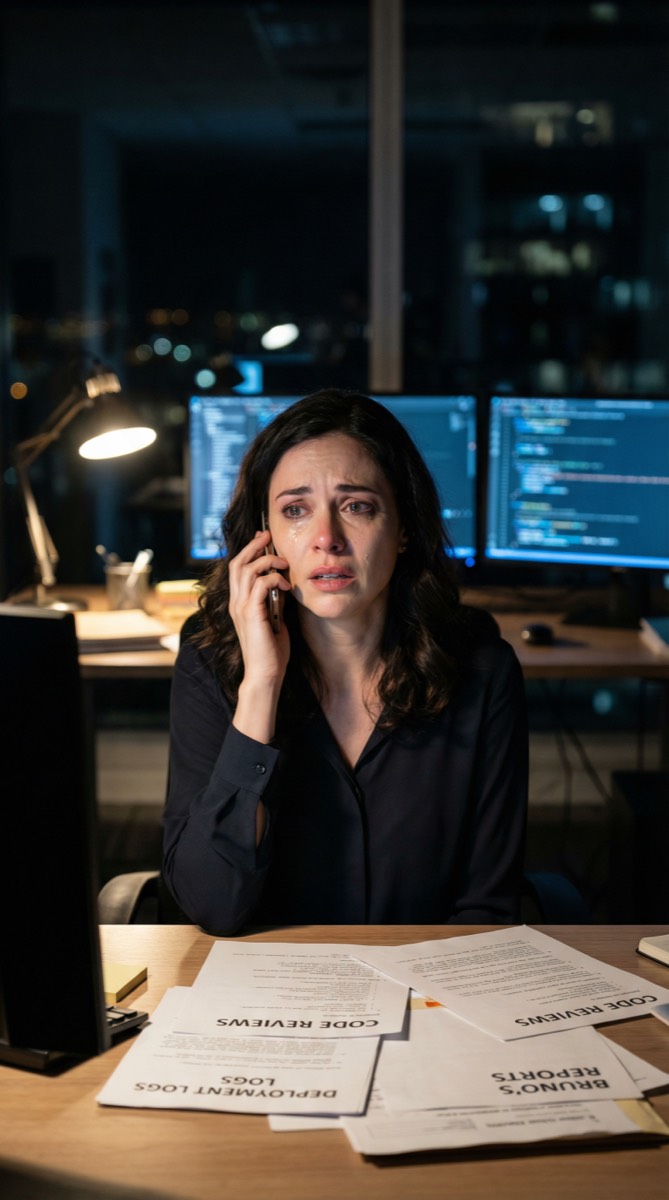
It was 9 PM when Valentina’s phone rang.
She was at her desk, surrounded by code reviews and deployment logs and the never-ending demands of Bruno’s reporting system. The number was unfamiliar — a Mexico City area code she didn’t recognize.
“Hello?”
“Am I speaking with Valentina Reyes?”
“Yes. Who is this?”
“This is Dr. Carmen Velázquez, from Hospital Ángeles México. I’m calling about your mother, Lucia Reyes.”
The world narrowed to a pinpoint.
“What happened? Is she okay?”
“Miss Reyes, I need you to come to the hospital immediately. Your mother’s condition has… there have been complications.”
“What kind of complications?”
A pause. Too long. “It’s better if we discuss this in person.”
“Tell me.” Valentina’s voice cracked. “Please.”
Another pause. Then: “The cancer has spread more aggressively than we anticipated. She collapsed this evening. We’ve stabilized her, but… the prognosis has changed.”
“Changed how?”
“Please, Miss Reyes. Just come.”
The line went dead.
Valentina sat frozen at her desk, the phone still pressed to her ear.
The prognosis has changed.
Four words. Four words that rewrote everything.
Diego found her there ten minutes later, still sitting, still frozen.
“Vale? Vale, what’s wrong?”
She looked up at him, and he saw something in her eyes that he’d never seen before — a kind of terror that went beyond fear.
“It’s my mom,” she whispered. “She’s dying.”
He didn’t ask questions. Didn’t offer platitudes. He simply took her hand, pulled her to her feet, and led her to the elevator.
“I’ll drive you.”
“Diego—”
“I’ll drive you,” he repeated. “And I’ll stay as long as you need.”
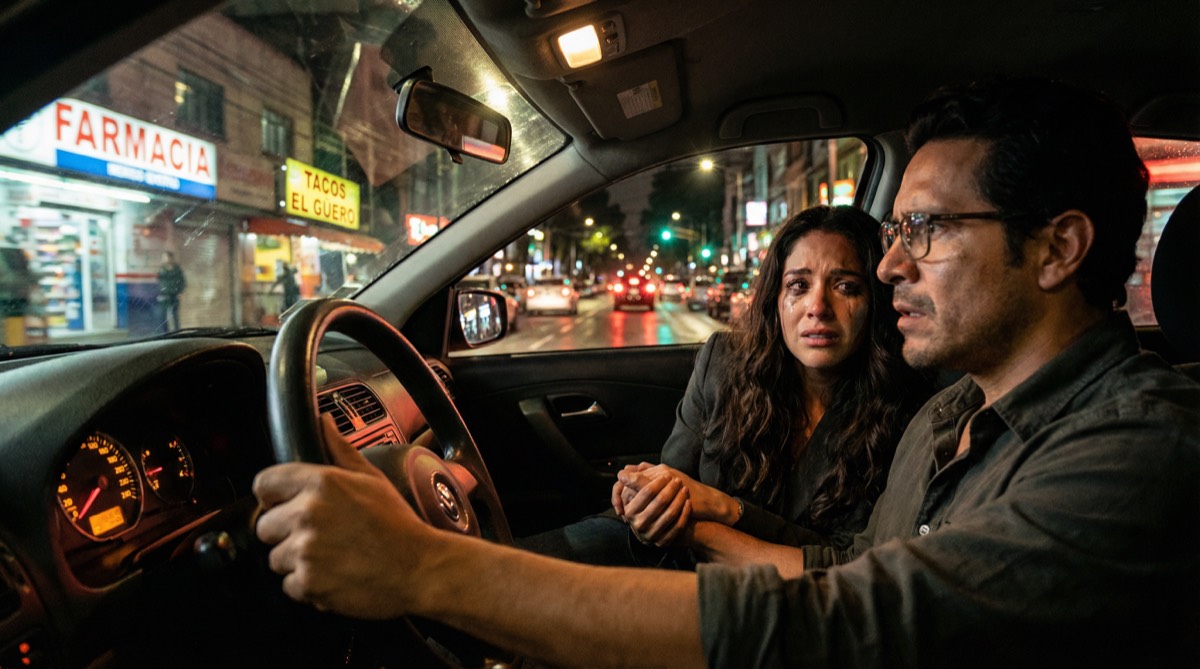
In the car, racing through the night streets of Mexico City, Valentina finally let herself cry.
And Diego, one hand on the wheel and the other holding hers, didn’t let go.
The city blurred past them — lights and shadows and the endless pulse of life that doesn’t care about individual tragedies.
Somewhere, in a hospital room, Lucia Reyes was fighting for every breath.
And Valentina was about to learn that some secrets — the ones that matter most — can’t be kept forever.
🎭 This Week's Episodes
Telenovelas show what we can't say in client meetings. The drama is heightened, but the patterns are real.
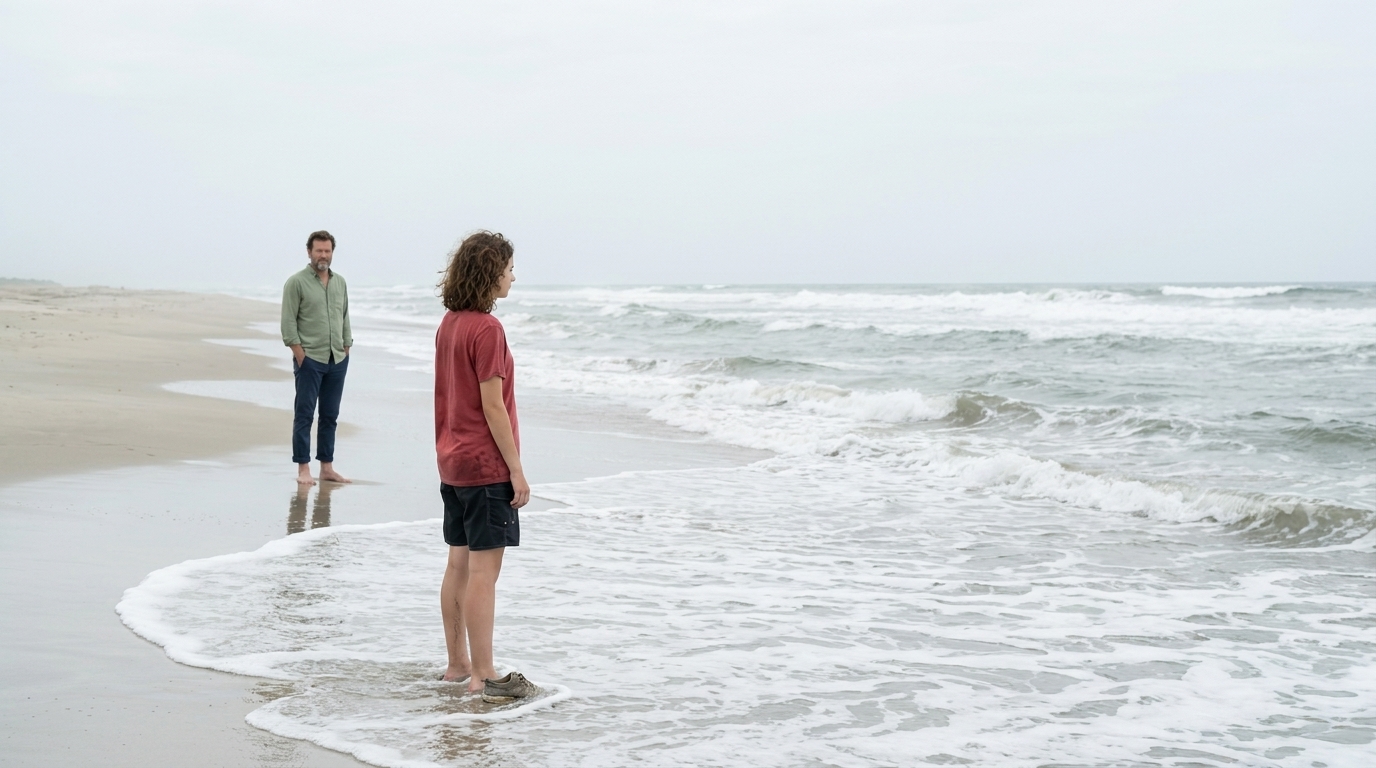 Three Ways to Understand a Country
Stefan drives Sophie to the Pacific for two days. The beach is big enough to make her feel appropriately small. Back at the finca the rain keeps th...
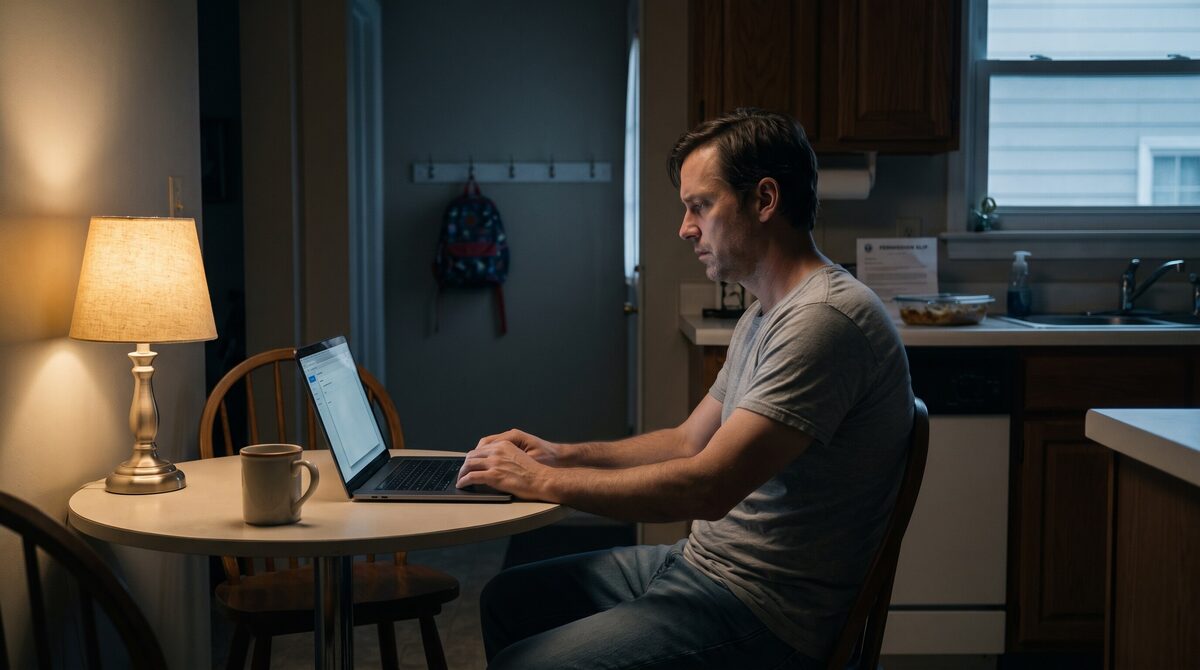 The Resignations
Nathan Cole resigns on a Monday morning with two sentences and no argument left in his body. By Tuesday his desk is empty and the company's institu...
Technical Consultancy
Embedded Delivery Partner
Embedded into your team as an active contributor, reducing delivery friction and helping important work move cleanly.
Technical Advisor
Peer-style technical assessments before far-reaching decisions; reduce architectural and product risk early.
Product & Delivery
Ship working software to real users earlier. Measure impact and adapt based on evidence rather than assumption.
Custom Software Development
High quality, maintainable software. Short-term augmentation that leaves lasting capability in your own team.
Recent Articles
- When Everything Is Finally Under Control (28.09.2026)
- AI Makes Technical Execution Cheap. Judgment Stays Scarce. (24.09.2026)
- The LLM Will Not Come Back Tomorrow (19.09.2026)
- The One-Person AI Company Is a Greed Fantasy (15.09.2026)
- Test Production Without Leaving a Mess (10.09.2026)
Explore More