Primeros Pasos
Stefan Richter begins his workshops on Test-Driven Development and Continuous Integration. The veterans resist fiercely — twenty-five years of experience don't bow easily to a German with a laptop. Valentina becomes Stefan's translator, not just of language but of culture, bridging the gap between old and new. When Rafa explodes in grief over his dead son who wrote his first code on this very system, even Stefan steps back. Mari confesses her growing feelings for Sebastián to Vale, who warns her to be careful. Héctor finds a bottle in his desk — but Mando takes it away. And when the 'Hello World' deployment finally succeeds, Don Rodrigo smiles for the first time in months. But behind the victory, Patricio makes a call: Bruno Cavalcanti is coming to Mexico.
The Conference Room
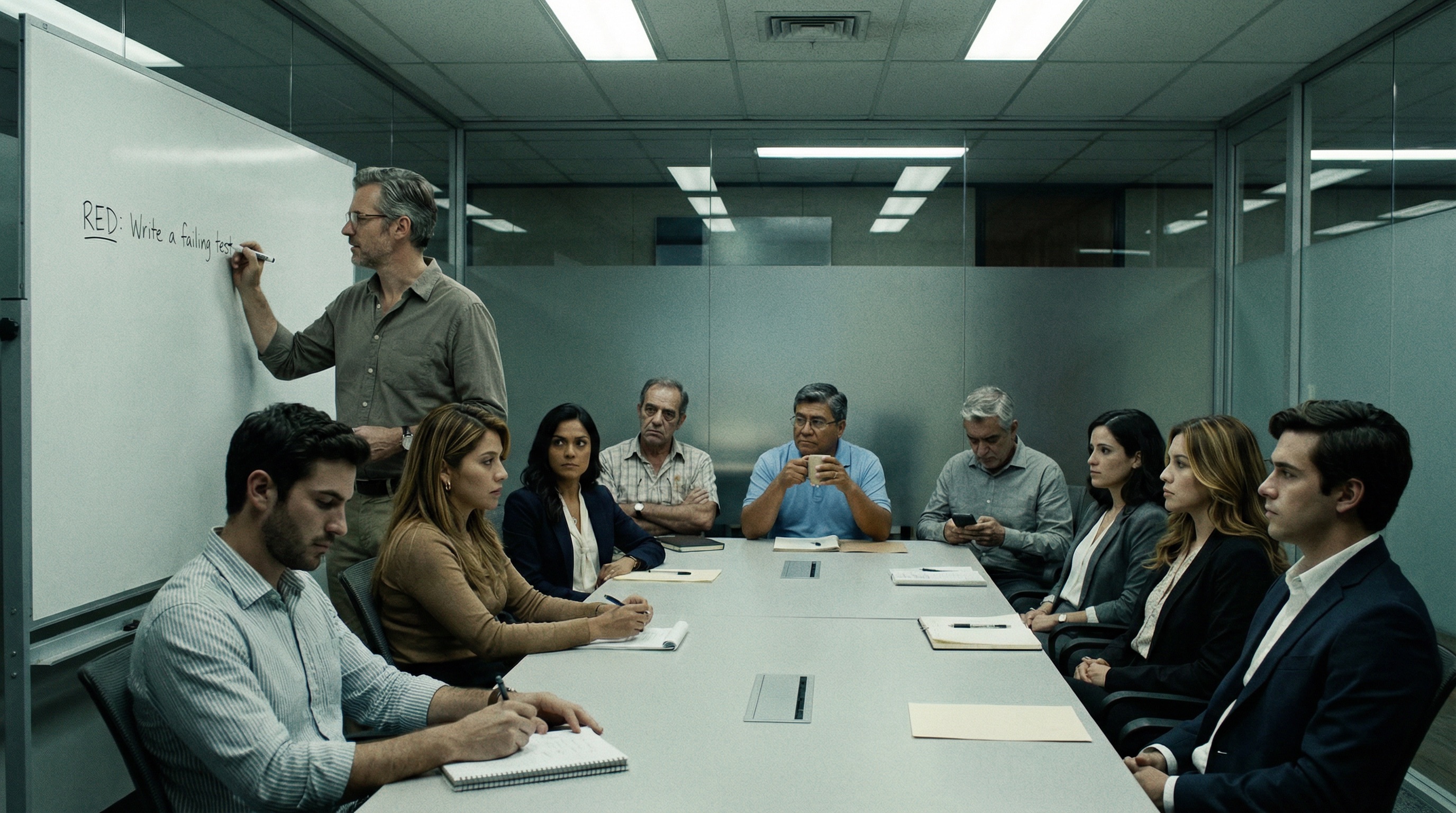
The fluorescent lights of Conference Room B flickered once, then stabilized. Valentina noticed. She’d worked in enough legacy buildings to know that flickering lights meant aging electrical, which meant aging infrastructure, which meant problems hiding everywhere.
Stefan Richter stood at the whiteboard, marker in hand, facing a room that did not want to be taught.
Héctor Villanueva sat in the back corner, arms crossed, jaw tight. Beside him, Armando “Mando” Guerrero held a coffee cup like a shield. Rafa Ortega hadn’t even looked up from his phone since the meeting started.
The new blood — Mari, Camila, Sebastián, Diego — clustered near the front, notebooks open, postures uncertain. They knew they were caught between worlds.
And Valentina sat in the middle, deliberately neutral, deliberately alone.
“Good morning,” Stefan said. His Spanish was careful, accented, precise. “Thank you for being here.”
“Did we have a goddamn choice?” Rafa muttered, loud enough to carry, his voice dripping with contempt. His arms were crossed so tightly his knuckles had gone white, every muscle in his body screaming defiance.
Stefan didn’t react. “I want to start with something simple. A question. How do you know your code works?”
Silence.
“When it runs,” Héctor said finally, his voice flat. “We deploy it. It runs. It works.”
“And if it doesn’t run?”
“We fix it.”
“How long does that take?”
Héctor’s eyes narrowed. “As long as it takes. We’ve been doing this for twenty-five years, Señor Richter. I think we know how to fix our own code.”
Stefan set down the marker. His voice remained calm, almost gentle. “I believe you. Twenty-five years of keeping this system alive — that’s remarkable. I’m not here to tell you you’ve been doing it wrong.”
“Then why are you here?” Rafa asked, still not looking up.
“To give you options. Tools. Ways of working that might make the next twenty-five years easier.”
“We won’t be here in twenty-five years,” Mando said quietly. It wasn’t bitter — just true.
Stefan nodded slowly. “Then let’s make sure whoever comes after you has something solid to build on.”
The room shifted. Not much. But Valentina saw Mando uncross his arms.
“Today,” Stefan continued, “we’re going to deploy something. Together. Something small. A proof of concept. Not to replace anything you’ve built — just to show that we can build new alongside old.”
“Hello World,” Valentina offered, breaking her silence.
Stefan met her eyes. Gratitude flickered there. “Exactly. Hello World. The first step of every journey.”
The Translator
By mid-morning, the room had divided into predictable camps.
Héctor and Rafa had retreated to the back, watching but not participating. Mando stayed closer, observing with the quiet patience of a man who’d survived too many management fads to get excited — or threatened — by another.
The younger developers clustered around Stefan’s laptop, watching him set up a CI/CD pipeline with what looked like religious devotion. Diego asked technical questions. Sebastián made jokes that landed about half the time. Camila typed notes furiously, her expensive watch catching the light.
Mari caught Valentina in the hallway during the first break.
“Vale,” she whispered, pulling her toward the water cooler. “I need to tell you something.”
Valentina saw it in her eyes before she spoke. “Sebastián?”
Mari’s face flushed. “How did you—”
“You’ve been staring at him all morning. And he keeps finding reasons to brush past you.”
Mari grabbed Valentina’s arm. “Is it that obvious? Dios mío, if Patricio notices—”
“Patricio doesn’t notice anything that isn’t about Patricio.” Valentina glanced back toward the conference room. “Mari, be careful. There’s something about Sebastián. I can’t put my finger on it.”
“He’s from Stanford. Silicon Valley experience. He’s brilliant, Vale.”
“I know. But people who are that charming usually have something to hide.”
Mari’s face fell slightly. “You always do this.”
“Do what?”
“Assume the worst. Not everyone is playing an angle.”
Valentina thought of Don Rodrigo’s office, of the photograph of his dead wife, of the way he’d offered to talk about her father. Of the secrets this building surely held.
“Maybe,” she said. “But be careful anyway. For me?”
Mari squeezed her hand. “For you. Always.”
The Bottle
Héctor didn’t return after lunch.
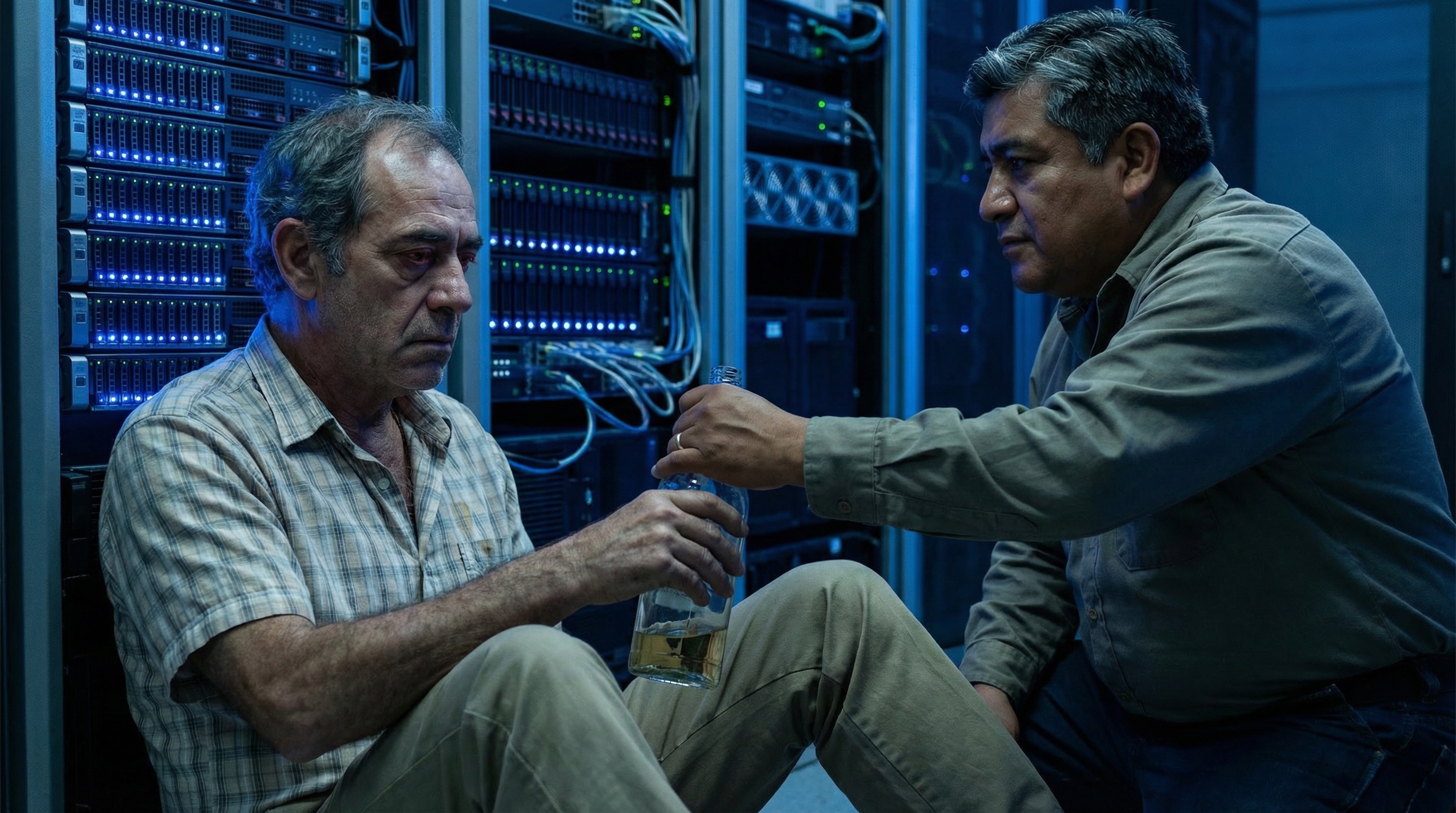
Mando found him in the server room — of course, always the server room — sitting on the floor with his back against the AS/400 rack. The same position Valentina had found him in days ago.
But this time, there was a bottle.
“Don’t.” Mando’s voice was quiet, but it hit the room like a gunshot, like a punch to the gut.
Héctor looked up. His eyes were red-rimmed, bloodshot, the eyes of a man who had been crying for hours — or maybe years. His whole face was a wreck of grief and snot and shame. “It’s just tequila, compadre.” His voice was thick, slurred with emotion, barely recognizable. “Not a goddamn gun.”
“Same thing, for you.” Mando walked over slowly, lowered himself to the floor with the careful movements of a man whose knees had seen better decades. He sat beside Héctor, close enough to reach the bottle, close enough to smell the despair coming off him in waves like a dying animal. “How many days sober was it?”
“Thirty-one.” Héctor’s voice shattered on the number. “Thirty-one fucking days. And for what? For what?”
“And now?”
“Now Elena’s lawyer called. That bitch wants the house. The house I’m still paying the goddamn mortgage on. The house where I slept on the fucking couch for the last two years because she couldn’t stand to be in the same room as me.” His voice was thick with bile, with years of swallowed rage. “Twenty-three years of marriage. Gone. Pissed away. Like I was nothing. Like everything we built together was nothing.”
“She left. She doesn’t get the house.”
“She says I abandoned her first. For this.” He gestured wildly at the servers humming around them, and his hand was shaking so badly the bottle clinked against the rack. “For twenty-five years of blinking lights and green screens while my wife rotted with loneliness in our bed. She says I married the machines, not her. She says I never once — not once — looked at her the way I looked at a clean compile.” His voice disintegrated into something barely human. “And God help me, she was right.”
Mando was quiet for a long moment. “Was she wrong?”
Héctor laughed — a terrible, broken sound that scraped out of somewhere deep. “No. Dios mío, no. She was right. That’s the worst fucking part of all of it.” He lifted the bottle, unscrewed the cap with trembling fingers. The smell of tequila filled the small space.
Mando’s hand closed over his, firm but gentle. “Not today, hermano. Not today.”
“Why not?”
“Because that German is out there trying to save our jobs, and if you show up drunk, you give Patricio exactly what he needs to fire you.”
Héctor’s grip loosened. The bottle lowered.
“I’m scared, Mando. I built this system with my bare hands. I wrote the first line of code in 1999. And now they’re going to throw it away and throw me away with it.”
“Maybe. Or maybe not.” Mando took the bottle, set it aside. “But you don’t find out by hiding in here. You find out by fighting. Today we fight.”
Héctor stared at him for a long moment. Then, slowly, he nodded.
“Today we fight.”
Mando helped him to his feet. They walked back toward Conference Room B together.
The Explosion
The afternoon session began with Stefan explaining test coverage.
“The goal,” he said, drawing a diagram on the whiteboard, “is not to test everything. That’s impossible. The goal is to test the things that matter. The critical paths. The edge cases that break in production.”
“We already know the edge cases,” Rafa said. It was the first time he’d spoken in hours. “We’ve been finding them for twenty years.”
“Good. Then we document them. We write tests that prove they’re fixed. And we make sure they never break again.”
“Why?” Rafa’s voice was rising. “Why do we need to prove what we already know?”
Valentina saw where this was going. She started to speak, to redirect—
“Because knowledge that isn’t captured is knowledge that can be lost,” Stefan said calmly. “When you retire, Rafa, who will remember all those edge cases?”
It was the wrong thing to say.
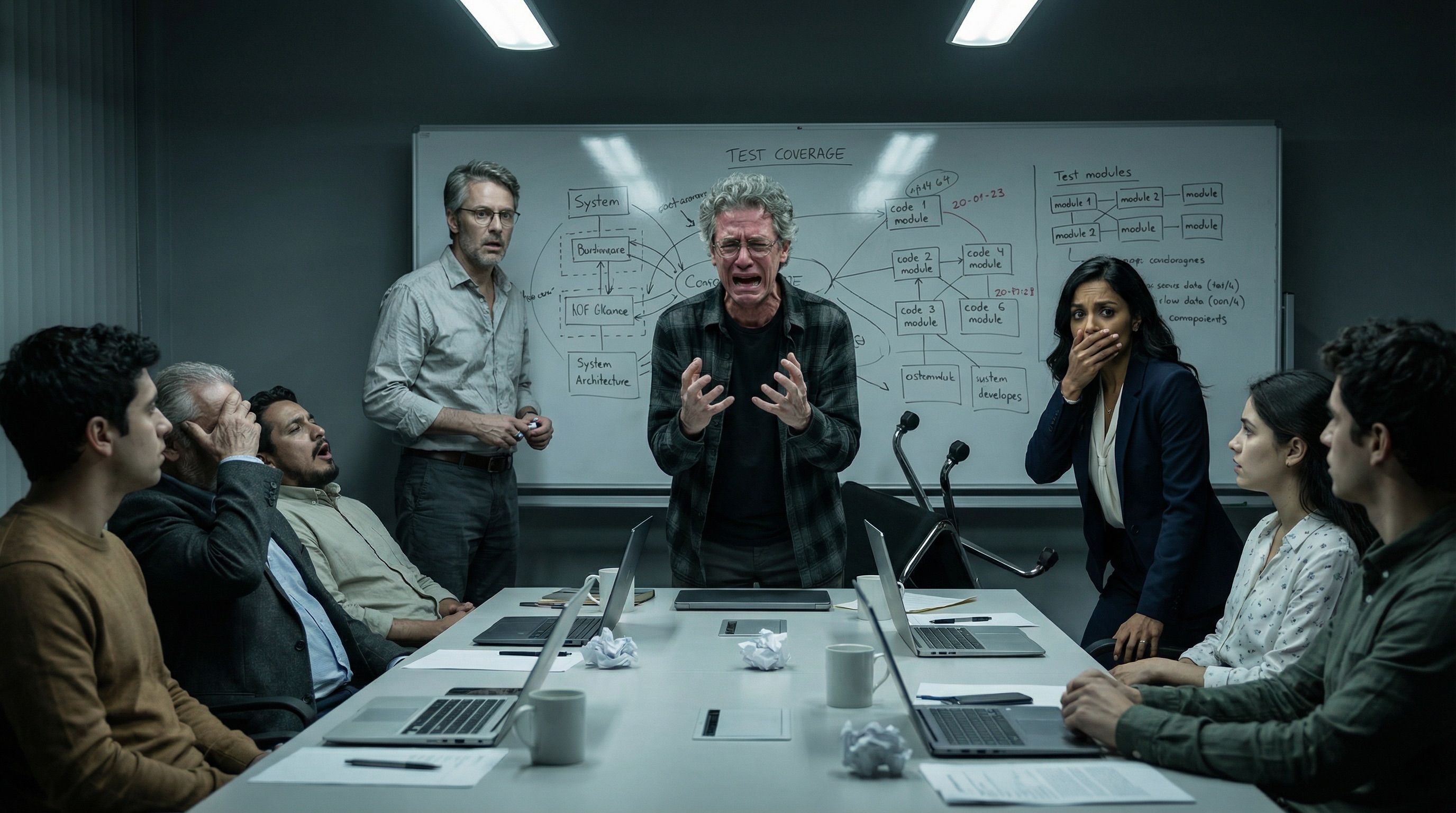
Rafa exploded out of his chair, sending it crashing backward into the wall. “When I retire? When I fucking retire? Is that what this is? Is that a goddamn threat? Are you here to push us out?” His face had gone purple, veins bulging at his temples, his whole body shaking with decades of suppressed rage finally finding an outlet.
“That’s not what I—”
“MY SON WROTE HIS FIRST CODE ON THIS SYSTEM!” The words tore out of Rafa like something had broken loose inside him, something he’d been holding back for years. “He sat right here, in this building, at this table, and I taught him COBOL when he was sixteen years old! I watched his face light up when the program ran! I watched him become a developer!” His voice shattered. “And now he’s DEAD and you want to erase everything he touched?”
The room went absolutely silent. Even the hum of the air conditioning seemed to fade.
Rafa’s hands were shaking violently. His face was crimson, contorted with grief that had no outlet, and tears were streaming down his cheeks, dripping off his jaw. He didn’t wipe them away. He didn’t seem to notice.
“Twenty-two years old.” His voice dropped to something barely above a whisper. “Car accident. Three years ago. The drunk driver — some rich cabrón with a good lawyer — walked away without a scratch. Not even a fucking bruise. That son of a bitch is probably at some country club right now, sipping whiskey, not even remembering the kid he killed. And my boy—” His voice broke completely, his whole body crumpling like wet paper. “My boy was on the way to visit me. To show me a program he’d written. Something he was proud of. And I never—”
He couldn’t finish. He pressed his fist against his mouth, but the sobs came anyway — deep, wrenching sounds that seemed to tear themselves out of his chest.
Stefan set down the marker. His face had gone pale. When he spoke, his voice was barely audible. “I didn’t know. I’m so sorry.”
“You’re sorry.” Rafa laughed — if you could call that sound a laugh. It was more like something dying. “Everyone’s goddamn sorry. The police were sorry. The judge was sorry. The hospital chaplain was very fucking sorry.” He looked up, his eyes wild with pain. “But sorry doesn’t bring him back. Sorry doesn’t let me hear his voice again. Sorry doesn’t give me back the future he was supposed to have.”
He looked around the room — at Héctor, who understood grief; at Mando, who radiated quiet compassion; at the young developers who had no idea what loss felt like.
“We take a break,” Stefan said quietly.
Rafa walked out. The door swung shut behind him.
Nobody moved for a long moment.
Then Valentina stood. “I’ll go.”
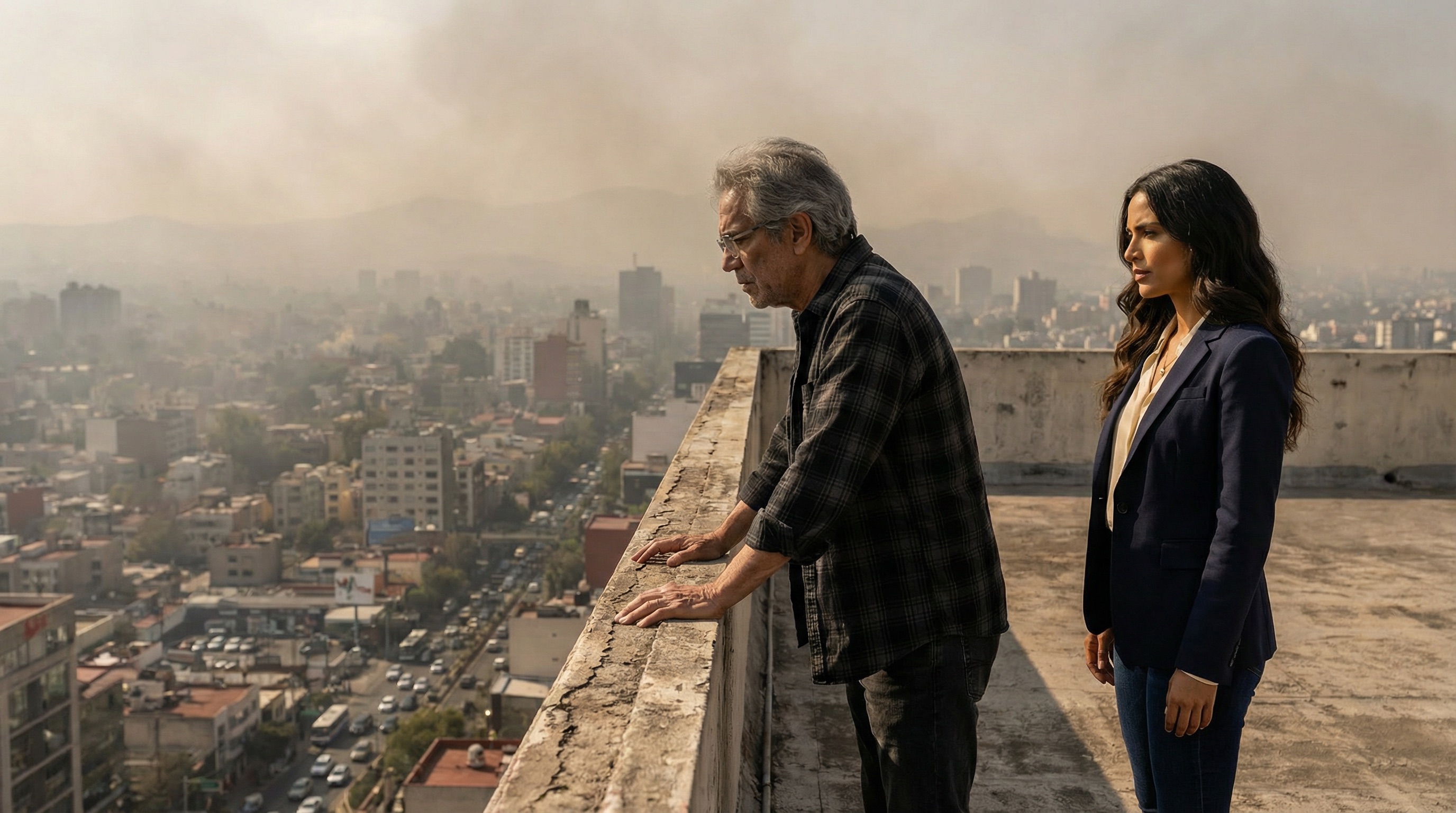
She found him on the rooftop, staring out at the Mexico City skyline. The air was thick with smog and humidity, the eternal gray haze that wrapped the valley like a shroud. His shoulders were shaking.
“Rafa.”
“Don’t.” His voice was raw, wrecked. “Whatever you’re going to say, don’t. I can’t — I can’t hear another fucking platitude right now.”
She stood beside him anyway, not touching, just present. Below, traffic crawled through the maze of streets. Horns honked. Sirens wailed somewhere in the distance. Life continued its indifferent march, as if nothing had happened. As if twenty million people hadn’t just witnessed a father’s heart break in a conference room.
“My father died at TransMex,” she said finally. “Fifteen years ago. Forklift accident.” She paused. “That’s what they called it.”
Now Rafa turned. His face was a mess — tear-streaked, swollen, stripped of every defense. “Antonio Reyes. I remember him.”
“I was fourteen.” Valentina’s voice was steady, but her hands gripped the railing hard enough to hurt. “I didn’t understand anything except that one morning he kissed my forehead and said he’d see me for dinner, and that night my mother came home from the hospital alone.” She swallowed hard. “The company paid for his funeral. Wrote us a check. My mother never stopped working after that. Two jobs. Sometimes three. She’d come home at midnight and cry in the shower because she thought I couldn’t hear.”
“Dios mío.”
“I went to MIT because I thought if I understood systems, I could fix things. Control things. Make sure nothing unexpected ever happened again.” She laughed — a harsh, bitter sound that scraped out of her throat. “I thought if I was smart enough, if I worked hard enough, I could keep the world from hurting the people I loved. What a goddamn joke.”
“Did it work?”
“No.” Her voice cracked. “My mother has cancer. Stage three. And there’s not a goddamn thing my MIT degree can do about it.”
Rafa was quiet for a long moment. Then: “Your father was a good man. He used to bring pastries on Fridays. His wife made them.”
Valentina felt tears threatening. She forced them back. Not here. Not now.
“Stefan’s not here to erase anything,” she said. “He’s here to make sure what you built survives. That’s all.”
“You believe that?”
“I have to. Because if I don’t believe this company can change without destroying itself, then I came home for nothing.”
Rafa studied her face. Whatever he saw there, it seemed to satisfy something in him.
“Okay,” he said finally. “Okay.”
The Hello World
They reconvened at 4 PM.
Rafa was back in his seat. His eyes were still red, but his jaw was set in something that looked almost like determination.
Stefan didn’t acknowledge the earlier scene. He simply picked up where they’d left off.
“We have a deployment pipeline now. It’s basic — just build, test, deploy to a staging environment. But it works. Who wants to push the first change?”
Silence.
Then Diego raised his hand. “I’ll do it.”
He walked to the laptop, fingers hesitant on the keyboard. Valentina watched him — the quiet DevOps engineer who’d been invisible for most of the day. His hands weren’t shaking now. They moved with surprising confidence.
“It’s just a simple API endpoint,” Diego said, half to himself. “Hello World. Returns a string.”
“Run the tests,” Stefan said.
Diego typed. The terminal scrolled. Green text: All tests passed.
“Deploy.”
Another command. The pipeline began its work. Build stage. Test stage. Deploy stage.
The room held its breath.
Deployment successful.
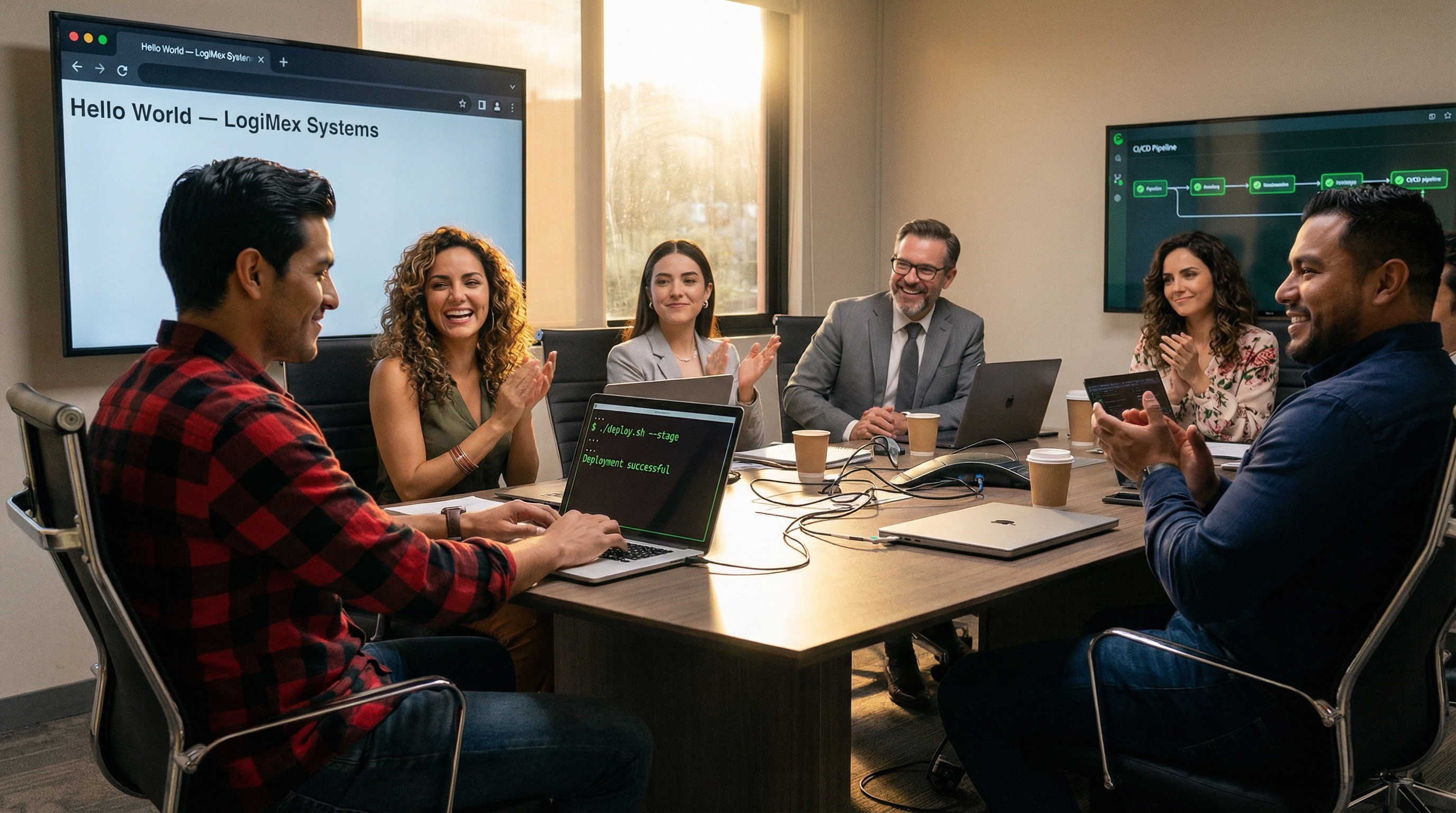
Diego refreshed the browser. There, on the staging server, in simple text:
Hello World — LogiMex Systems
Mari applauded. Then Camila. Then, surprisingly, Mando joined in.
Stefan smiled — the first real smile Valentina had seen from him. “That’s it. That’s the first step. Everything else builds from here.”
Valentina caught Diego’s eye across the room. He ducked his head, embarrassed by the attention.
Later, she found him at his desk.
“Nice work today.”
He shrugged, still not meeting her eyes. “It was just Hello World.”
“First steps matter. You took one.”
Diego finally looked up. Something flickered in his expression — hope, maybe, or longing.
“Vale, I—”
His phone buzzed. He glanced at it, then back at her.
“Later,” she said. “We’ll talk later.”
She walked away before she could see his face fall.
The Mother
That night, Valentina sat beside her mother’s hospital bed.
The machines beeped their steady rhythm. The room smelled of antiseptic and flowers — the bouquet Valentina had brought, already wilting.
“Mamá, I don’t know if I can do this.”
Her mother’s eyes opened. They were tired, pain-lined, but still fierce.
“What happened, mija?”
“Today a man cried because we’re trying to change the system his dead son worked on. Another man almost drank himself into oblivion. And I’m supposed to fix everything while my mother is—”
She couldn’t finish.
Her mother reached out, took her hand. The grip was weaker than Valentina remembered. When had she gotten so fragile?
“You are your father’s daughter,” her mother said. “Do you remember what he used to say?”
“‘The work doesn’t care about your feelings. But the people do.’”
“Exactly. The code doesn’t matter, mija. The systems don’t matter. What matters is how you treat the people who build them.”
“I’m trying.”
“I know.” Her mother squeezed her hand. “And you’re doing better than you think. You always do.”
Valentina leaned forward, pressed her forehead to her mother’s hand.
“Don’t leave me,” she whispered. “Please don’t leave me.”
Her mother stroked her hair with her free hand.
“I’m not going anywhere yet, mija. Not until I see you fly.”
The Mentor
Stefan was still in the office when Valentina returned. It was past 9 PM. The building was nearly empty.
She found him in Conference Room B, staring at his phone.
“You’re still here,” she said from the doorway.
He looked up, quickly putting the phone away. “So are you.”
“My mother. At the hospital.”
“How is she?”
“Brave. Too brave.” Valentina walked in, sat in one of the chairs. “Thank you. For today. For stopping when Rafa—”
“Anyone would have.”
“No. They wouldn’t. Most consultants would have pushed through. Stayed on schedule. Made him feel worse.”
Stefan was quiet for a moment. “I’ve made that mistake before. Pushing when I should have stopped. I learned the cost.”
Valentina thought about the photo she’d seen him looking at. “Your daughter?”
He nodded slowly. “She’s sick. Nothing life-threatening, but expensive. The consulting fee pays for her treatment.”
“I’m sorry.”
“Don’t be. We all carry our burdens quietly.” He stood, gathering his laptop. “You did well today. The way you talked to Rafa on the roof — I saw you go after him.”
“How did you—”
“I followed. From a distance. I wanted to make sure he was okay.” Stefan smiled slightly. “You reminded me of my daughter. She’s brave too.”
Valentina didn’t know what to say.
“Get some sleep,” Stefan said. “Tomorrow we build on today.”
He walked out, leaving her alone in the empty conference room.
The Call
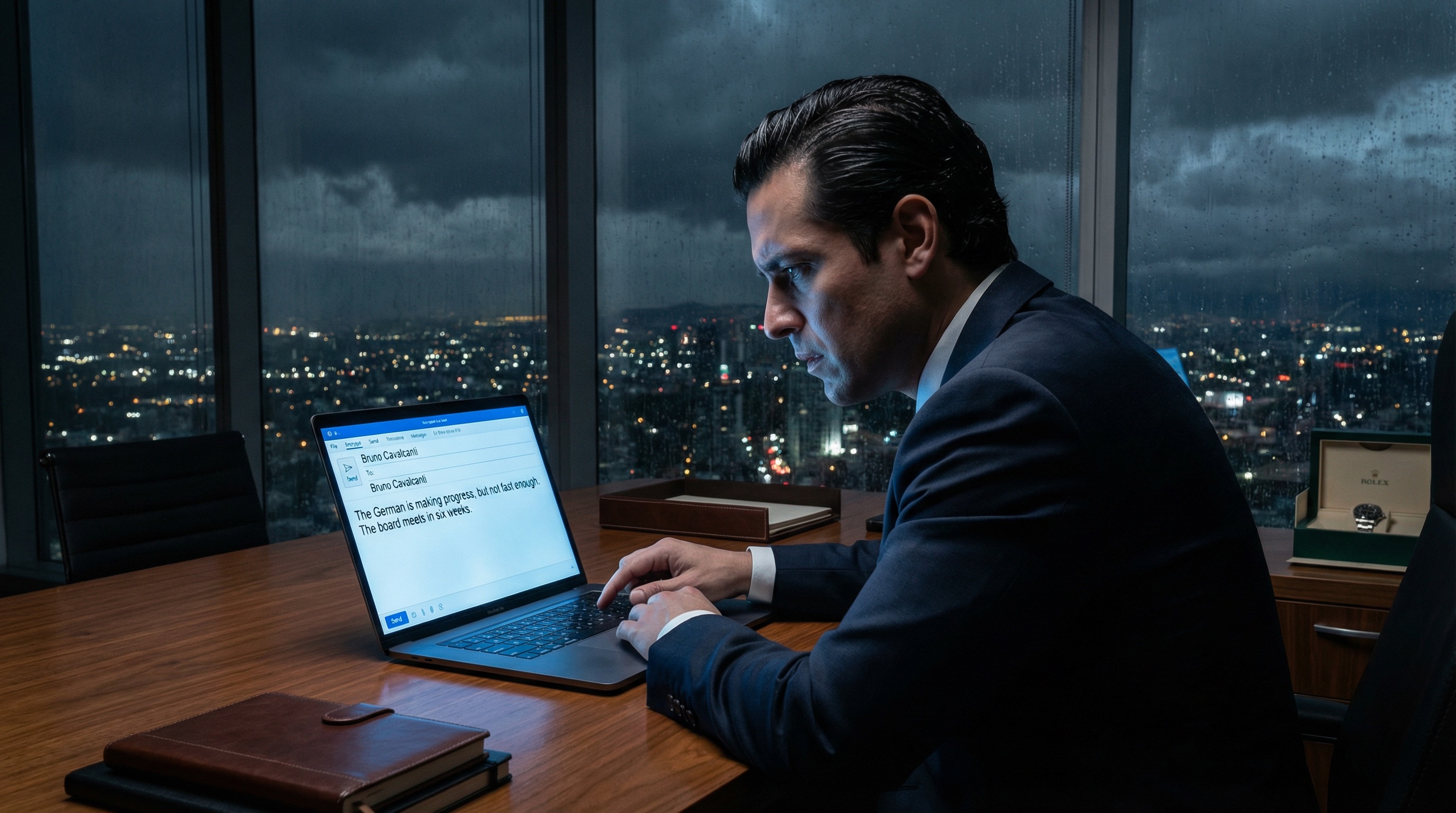
That evening, Patricio sat in his office long after everyone had gone home. The city lights glittered below. His desk was immaculate — nothing out of place, everything controlled.
Don Rodrigo had called earlier, excited about the deployment. “They did it, Pato! A working pipeline! Maybe this German knows what he’s doing after all.”
Patricio had smiled and agreed. Of course. Whatever you say, tío.
But inside, something cold had settled.
The German was too slow. Too careful. Too focused on teaching instead of delivering. The board meeting was in six weeks. Don Aurelio — the rancher, the skeptic — would be there, ready to vote against any modernization that didn’t show immediate results.
Patricio needed results. He needed them now.
He opened his laptop. Navigated to an encrypted email.
Typed: The German is making progress, but not fast enough. The board meets in six weeks. We need someone who can accelerate. Are you still interested?
The reply came within minutes.
Always interested, Patricio. I’ll be in Mexico City next week. Prepare the team — and keep the German away from the business side. That’s my territory.
— Bruno Cavalcanti
Patricio stared at the email. His finger hovered over the delete button.
What are you doing? a voice whispered. Your uncle trusts you.
He clicked send on the invitation instead.
Behind him, through the window, clouds gathered over Mexico City.
The team doesn’t know it yet, Patricio thought, but everything is about to change.
🎭 This Week's Episodes
Telenovelas show what we can't say in client meetings. The drama is heightened, but the patterns are real.
 Three Ways to Understand a Country
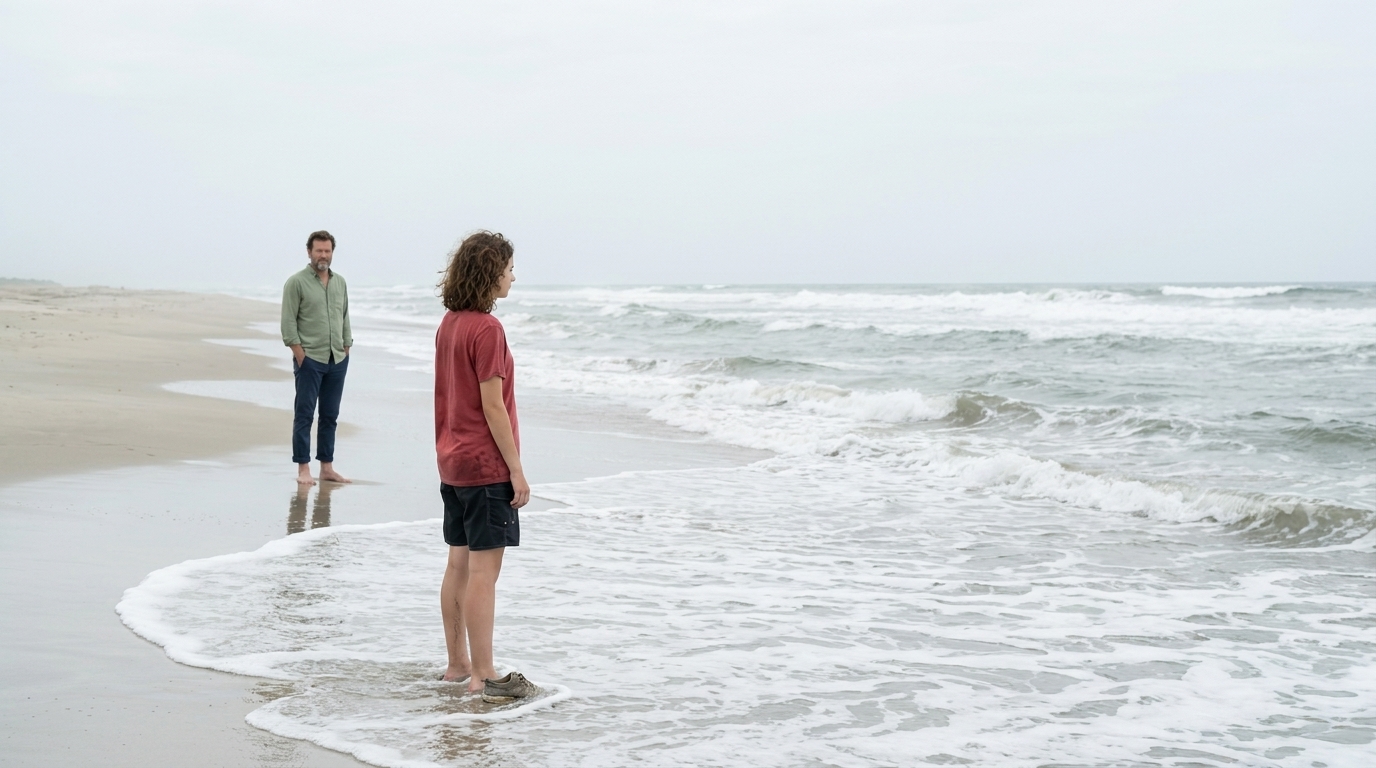
Stefan drives Sophie to the Pacific for two days. The beach is big enough to make her feel appropriately small. Back at the finca the rain keeps th...
 The Resignations
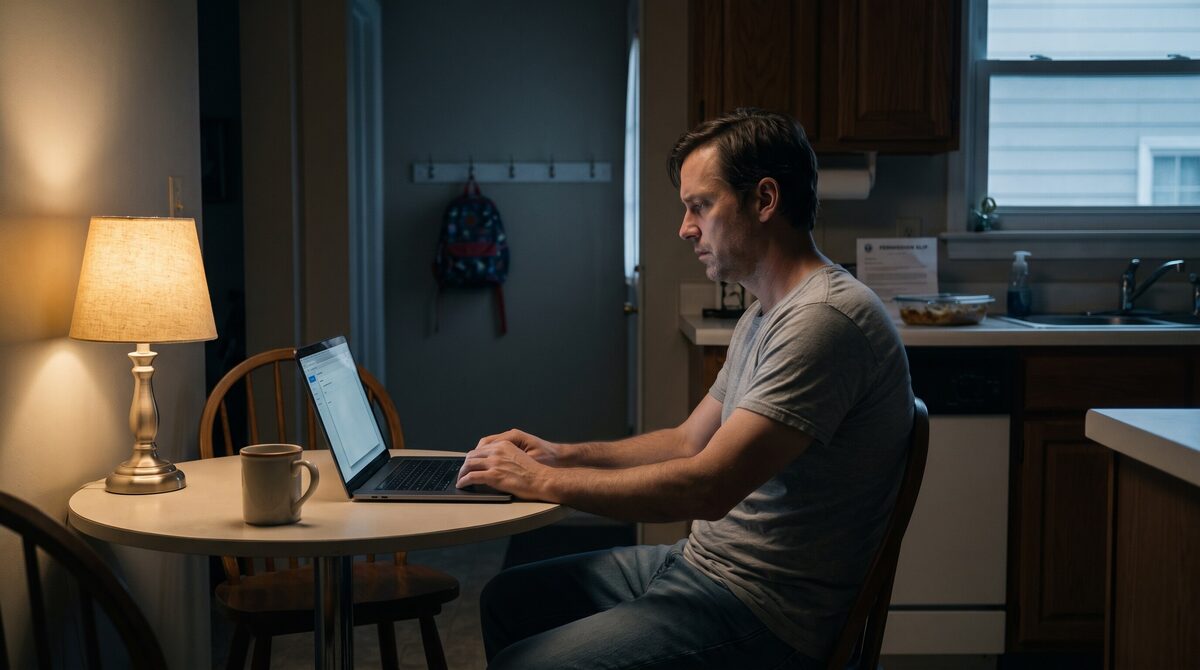
Nathan Cole resigns on a Monday morning with two sentences and no argument left in his body. By Tuesday his desk is empty and the company's institu...
Technical Consultancy
Embedded Delivery Partner
Embedded into your team as an active contributor, reducing delivery friction and helping important work move cleanly.
Technical Advisor
Peer-style technical assessments before far-reaching decisions; reduce architectural and product risk early.
Product & Delivery
Ship working software to real users earlier. Measure impact and adapt based on evidence rather than assumption.
Custom Software Development
High quality, maintainable software. Short-term augmentation that leaves lasting capability in your own team.
Recent Articles
- When Everything Is Finally Under Control (28.09.2026)
- AI Makes Technical Execution Cheap. Judgment Stays Scarce. (24.09.2026)
- The LLM Will Not Come Back Tomorrow (19.09.2026)
- The One-Person AI Company Is a Greed Fantasy (15.09.2026)
- Test Production Without Leaving a Mess (10.09.2026)
Explore More