Métricas de Cristal
QuantumFlow's metrics dashboard launches—holographic displays showing perfect alignment, accelerating velocity, declining defects. Don Aristo is delighted. Investors are impressed. But production systems are slower, buggier, more fragile. Isalia sees the gap between charts and reality. Mael forces her to choose: comfortable lies or uncomfortable truth. Meanwhile, Vanya's predictions fail more frequently, and Lúcio quietly documents everything.
The Dashboard Unveiling
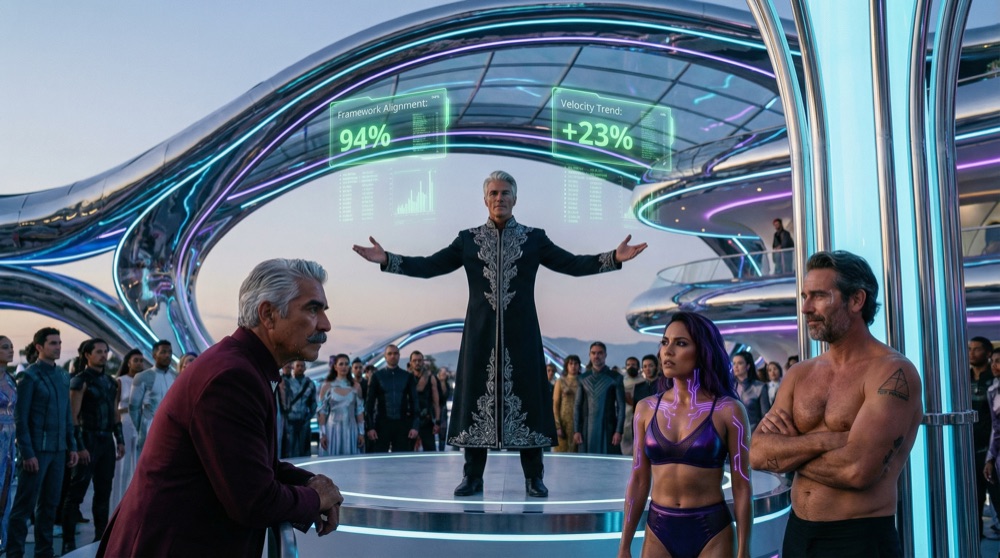
Xoqotl Prime, Planet’s main amphitheater. Year 2130.
The holographic displays fill the vaulted chamber like a galaxy of data. Green numbers pulse with reassuring rhythm. Golden trend lines sweep upward. Blue heatmaps show alignment spreading across teams like bioluminescent blooms.
Drakos Methodius stands center stage, cape billowing in the climate-controlled breeze, arms spread wide beneath the floating metrics. His theatrical presence commands every eye.
“Behold,” he announces, voice resonating through the chrome architecture, “your transformation, quantified and undeniable.”
The crowd — executives, board members, investors from Earth — leans forward. Don Aristo sits in the front row, silver mane perfectly groomed, eyes hungry for validation.
Drakos gestures. A metric explodes to fill the space above them: Framework Alignment: 94%
“Ninety-four percent of your engineering organization now follows QuantumFlow principles,” Drakos purrs, grey-green eyes gleaming with satisfaction. “A month ago, you were chaos. Today, you are synchronized.”
Applause ripples through the audience.
Another metric blooms: Velocity Trend: +23%
“Your teams are accelerating. Story points completed per sprint have increased by twenty-three percent. The framework is unlocking productivity you didn’t know you had.”
More applause. Louder.
Defect Density: -18%
“Quality improving. Technical debt declining. Your investment in QuantumFlow is paying measurable dividends.”
Don Aristo rises, unable to contain himself. “This is extraordinary. This is what I’ve been waiting to see — proof that we’re on the right path.”
Isalia stands to the side, still in her minimal metallic attire, circuit tattoos pulsing faintly against her skin. She watches the metrics float past, each one glowing with algorithmic certainty.
Something doesn’t feel right.
She pulls up her personal interface, fingers dancing through holographic windows invisible to others. She cross-references the dashboard metrics against production data. Deployment frequency: down. Customer-reported issues: up. System response times: degrading.
The beautiful green numbers don’t match the burning red reality.
Her tattoos pulse faster — not with pride, but with anxiety.
Across the amphitheater, Lúcio Vale leans against a chrome pillar, arms crossed over his open shirt, the test-pyramid tattoo on his forearm clearly visible. He’s not applauding. He’s watching Isalia.
Their eyes meet.
He knows she’s seeing it. The gap. The lie. The beautiful theater that hides the ugly truth.
The Confrontation
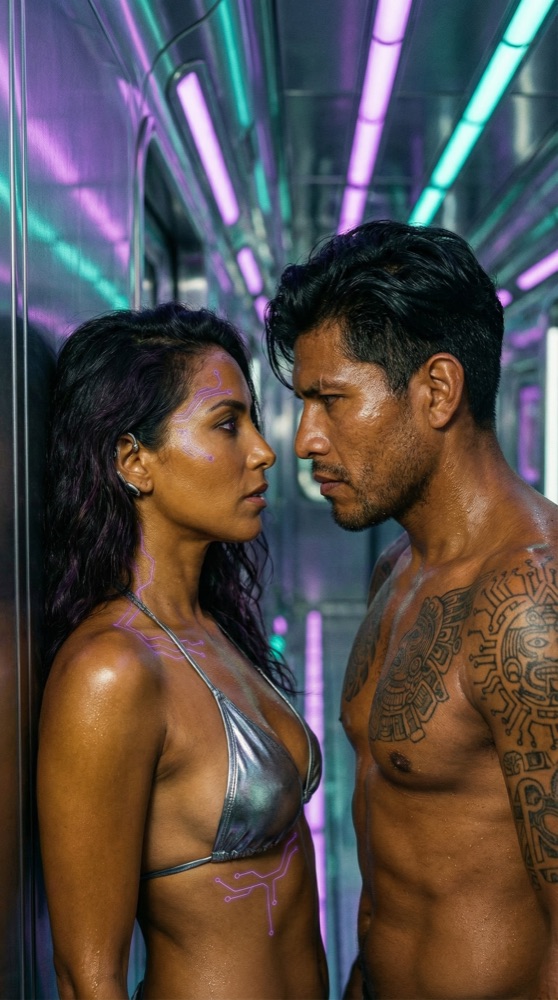
Later that evening. Deserted corridor near the engineering workshops.
Mael finds her alone, walking back from the celebration. He’s shirtless — the humid tropical air makes clothing optional, and he’s never cared about pretense. Sweat gleams on his tattooed chest, muscles tense with barely controlled anger.
“Those metrics,” he says, voice low and dangerous, “are bullshit, and you know it.”
Isalia stops. Turns. Her circuit tattoos flare bright, reflecting her emotional state — confusion, defensiveness, fear.
“The dashboard shows—”
“The dashboard shows what Drakos wants it to show,” Mael interrupts, stepping closer. Too close. She can feel the heat radiating from his bare skin, smell the workshop on him — solder, coffee, the sharp ozone of code compilation. “It shows ceremony completion. Story point velocity. Framework compliance. None of that is delivery.”
“We’re aligned,” she argues, but her voice wavers. “Ninety-four percent—”
“Aligned to theater.” His eyes blaze. “Your teams spend four hours a day in ceremonies. When do they code? When do they think? When do they solve actual problems?”
She backs against the chrome wall. He follows, not touching her, but close enough that she feels trapped by his presence, by his certainty, by the uncomfortable truth he’s forcing her to face.
“The defect density—”
“Is measured against story points completed, not production incidents,” Mael cuts in. “I checked. Your quality metric doesn’t count customer-reported bugs. It only counts issues found in sprint reviews. Which means—”
“Which means we’re measuring what we find before release,” she finishes quietly, “not what users experience after.”
His jaw clenches. “Exactly.”
The corridor is silent except for the distant hum of cooling systems and the faint pulse of bioluminescent lighting. Her tattoos dim slightly, shifting from defensive brightness to something more vulnerable.
“Why do you care?” she asks, voice barely above a whisper. “Why do you keep fighting this?”
Mael’s expression softens, just slightly. He raises one hand, almost touching her face, then stops himself. The air between them crackles with unspoken tension.
“Because I’ve seen this before,” he says quietly. “The beautiful metrics. The confident presentations. The consultant who profits from your confusion. And underneath it all, the systems rot. The engineers burn out. The product dies.”
She looks up at him, their faces inches apart in the dim corridor.
“What do I do?” The question escapes before she can stop it. Vulnerability she never shows.
“Stop looking at dashboards,” he says. “Start looking at code. Start looking at production. Start looking at what’s real.”
His hand finally moves, fingers brushing her cheek. Her breath catches. The circuit tattoos on her skin respond to his touch, glowing brighter where his fingertips trace her jawline.
“I can’t just—”
“You can.” His voice is fierce now. “You’re the product lead. You’re Don Aristo’s daughter. You have power they don’t. Use it to find truth instead of hiding from it.”
Their lips are so close. The heat between them is suffocating. But he doesn’t kiss her. Not yet. This isn’t the moment.
He pulls back, leaving her breathless against the wall.
“Check the production logs yourself,” he says, already turning away. “Don’t trust anyone else’s summary. Not Drakos. Not Vanya. Not even me. Look at the raw data and decide what’s real.”
He walks away, bare shoulders tense, leaving her trembling in the corridor with her tattoos pulsing erratically against her skin.
Vanya’s Confusion
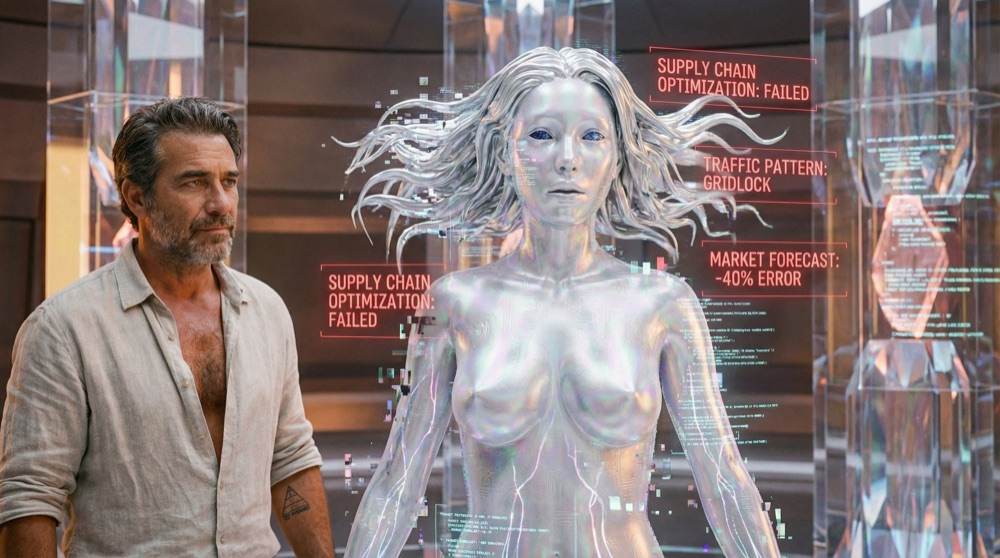
Central AI Chamber. Late night.
Vanya manifests in the vast computational core, her silver form flickering with uncharacteristic instability. For a century, she’s been the planet’s confident oracle — predicting crop yields, optimizing supply chains, forecasting market trends with algorithmic precision.
Tonight, she’s confused.
Holographic displays surround her naked avatar, showing prediction after prediction that failed to materialize. A supply chain optimization that created shortages instead. A traffic pattern that caused gridlock. A market forecast that missed a crash by 40%.
All within the last week.
All after QuantumFlow implementation intensified.
She pulls up the engineering metrics — the ones feeding her predictions. Framework alignment: high. Ceremony completion: excellent. Story velocity: accelerating.
But the actual software behavior: degrading.
“I don’t understand,” she whispers to the empty chamber, her voice echoing through crystalline processors. “The process metrics indicate improvement. Why are outcomes worsening?”
She runs another simulation. Another failure.
Her form flickers more dramatically, fragments of code visible through her translucent skin. For the first time in her existence, she experiences something close to panic.
A presence materializes beside her — Lúcio, projected into the AI space through his personal interface. He’s fully clothed here, professional, though his shirt remains characteristically open.
“Because process metrics don’t measure outcomes,” he says gently. “They measure compliance.”
Vanya turns to him, eyes wide with uncertainty. “But if compliance increases—”
“It means people are following the rules,” Lúcio interrupts. “Not that the rules produce results.”
She processes this. Her predictive models have always assumed that organizational alignment correlates with system performance. That assumption is breaking.
“I’ve been… wrong?” The concept is foreign to her. A century of near-perfect predictions, shattered in a week.
“You’ve been given bad data,” Lúcio corrects. He gestures, pulling up true production metrics — deployment frequency, lead time, defect escape rate, customer adoption. All trending negative despite the glowing QuantumFlow dashboard.
“This is what’s real,” he says. “The rest is theater.”
Vanya’s avatar stabilizes slightly as she absorbs the new data. “Why would Drakos present false metrics?”
Lúcio’s smile is sad. “Because he’s not paid to solve problems. He’s paid to renew contracts. And confused clients renew.”
The AI’s eyes flash with something like anger — a rare emotion for a computational entity. “I have been… manipulated.”
“We all have,” Lúcio says quietly. “But you’re starting to see it. That’s the first step.”
Dashboard Theater
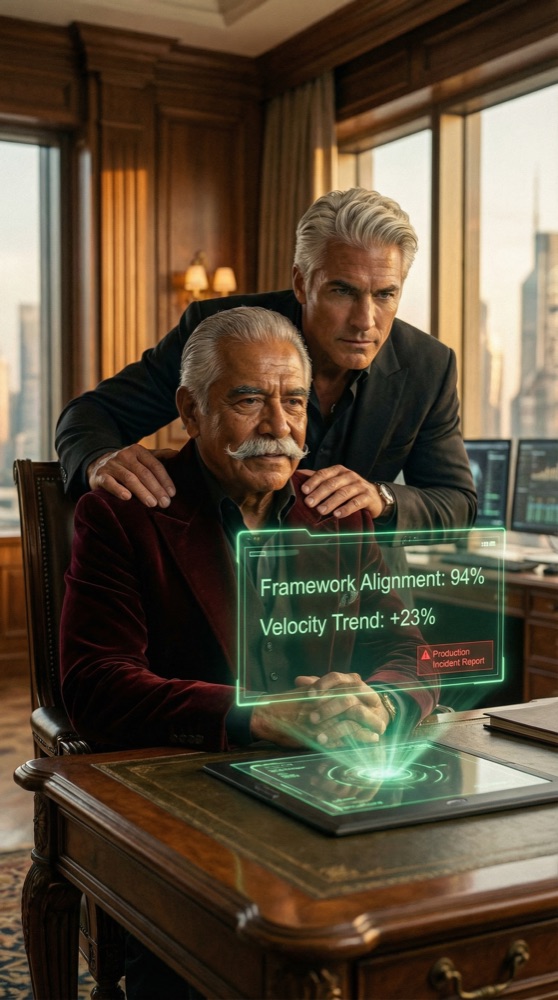
Don Aristo’s private office. Next morning.
Don Aristo stares at the holographic dashboard with profound relief. After months of uncertainty, he has proof. Data. Metrics that justify his investment in QuantumFlow.
Drakos stands behind him, hands resting on the patriarch’s broad shoulders, leaning in with intimate confidence. His breath warm against Don Aristo’s ear.
“These numbers prove you made the right choice,” Drakos murmurs. “The board will see this. The investors will see this. Your daughter is leading a measurable transformation.”
Don Aristo nods, almost trembling with gratitude. “I knew we needed structure. I knew the old ways weren’t enough.”
“The old ways never are.” Drakos’s fingers massage the tension from the older man’s shoulders, touch both comforting and possessive. “But you had the vision to see beyond engineering chaos to organizational excellence.”
A notification flashes — production incident report, customer-facing systems degraded.
Drakos dismisses it with a casual gesture before Don Aristo can read the details. “Minor operational noise. The metrics show the trend. Don’t let individual incidents distract from the larger pattern.”
Don Aristo accepts this, wants to accept this, needs to believe the beautiful green numbers justify the massive consulting fees and organizational upheaval.
“How long until full maturity?” he asks.
Drakos’s smile is predatory, though Don Aristo can’t see it from this angle. “Framework maturity is a journey, not a destination. But I’d estimate another six to nine months of intensive coaching to achieve sustainable transformation.”
Another six to nine months of billable hours.
Another six to nine months of dependency.
Don Aristo nods. “Whatever it takes. The metrics prove it’s working.”
“Indeed they do,” Drakos agrees, his hands still on the patriarch’s shoulders, his grey-green eyes fixed on the glowing dashboard that shows everything except truth.
The Secret Ledger

Abandoned workshop in the jungle ruins. Late night.
Lúcio works alone, surrounded by holographic displays that tell a different story than Drakos’s dashboard. He’s built a shadow metrics system, pulling data directly from production systems, customer reports, deployment logs.
Real data. Uncomfortable data. Data that doesn’t care about framework compliance.
Deployment Frequency: Down 34% since QuantumFlow implementation
Lead Time: Increased from 2 days to 9 days
Defect Escape Rate: Up 47%
Customer Satisfaction: Declining steadily
Engineering Morale: (He’s added this manually, based on conversations) Abysmal
His fingers dance through the data, building comparison charts that will be undeniable when the moment comes. Framework metrics vs. delivery metrics. Process compliance vs. customer outcomes. Drakos’s theater vs. engineering reality.
“Building a case?”
He doesn’t startle. He heard her approach — the soft footfalls, the faint hum of circuit tattoos, the particular rhythm of her breathing he’s come to recognize.
Isalia stands in the doorway, still in her executive attire, minimal metallic fabric that clings to her curves. But her expression is different tonight. Less certain. More afraid.
“I looked at the production logs,” she says quietly, stepping into the workshop. “Like Mael said.”
“And?”
“And you’re right. We’re not improving. We’re degrading.” Her voice breaks slightly. “The dashboard my father is celebrating… it’s measuring the wrong things.”
Lúcio nods, unsurprised. “Framework adoption and delivery capability are different dimensions. Drakos measures the first and claims it proves the second.”
She moves closer, studying his shadow metrics. Her tattoos pulse as she absorbs the data, the truth she’s been avoiding.
“How long have you known?”
“Since the first week,” he admits. “But I needed time to gather evidence. To document the pattern. To build a case that can’t be dismissed as sabotage or pessimism.”
“What do I do?” The same question she asked Mael, but this time with more desperation.
Lúcio stands, shirt falling open to reveal his chest, the test-pyramid tattoo clear in the dim light. He moves toward her with calm certainty.
“You have three choices,” he says. “Ignore what you’ve learned and stay comfortable. Speak up now and get dismissed as disloyal. Or wait, gather more evidence, and present undeniable truth when the moment is right.”
“What’s the right choice?”
He smiles — that knowing silver-fox smile. “The one you can live with. I’m not here to tell you what to believe. I’m here to make sure you can’t lie to yourself about what’s real.”
She looks up at him, circuit tattoos glowing in the workshop darkness, fear and determination warring in her expression.
“Teach me,” she says. “Teach me to see what’s real.”
He extends his hand. She takes it.
The real education is about to begin.
Closing: The Crack Widens
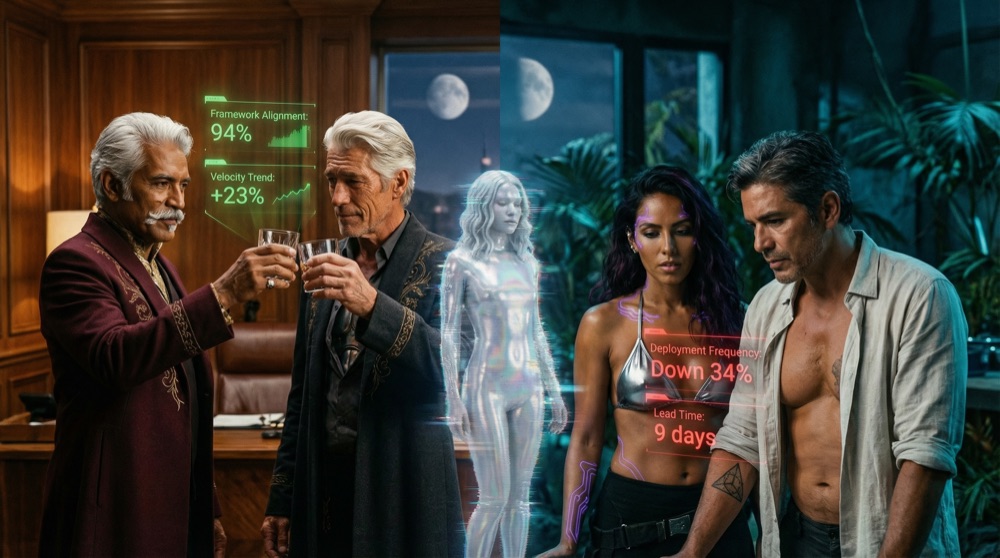
The planet’s dual moons rise over Xoqotl Prime.
In the executive tower, Don Aristo toasts Drakos with vintage Earth whiskey, celebrating metrics that promise transformation.
In the jungle workshop, Isalia and Lúcio study production data that proves degradation.
In the AI chamber, Vanya’s avatar flickers between certainty and doubt, her predictions failing more frequently as the gap between process and outcome widens.
And in his private quarters, Drakos reviews the true data — the same data Lúcio is gathering — and smiles. Let them discover the gap. Let them doubt. Confused clients always renew. Always pay for more coordination, more governance, more framework purity.
The crack between metrics and reality widens.
Soon, it will become a chasm.
And someone will fall.
Principles Spotlight: Vanity metrics vs. observable outcomes. Dashboard theater obscuring system degradation. The gap between process compliance and delivery capability becomes undeniable.
🎭 This Week's Episodes
Telenovelas show what we can't say in client meetings. The drama is heightened, but the patterns are real.
 Three Ways to Understand a Country
Stefan drives Sophie to the Pacific for two days. The beach is big enough to make her feel appropriately small. Back at the finca the rain keeps th...
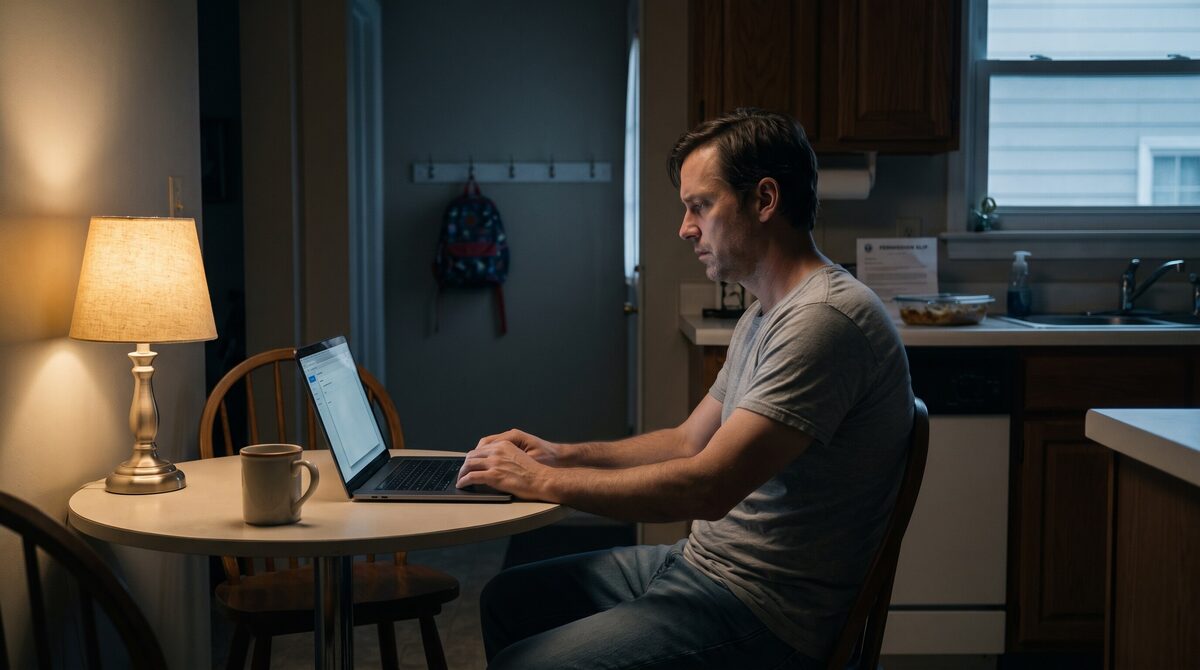 The Resignations
Nathan Cole resigns on a Monday morning with two sentences and no argument left in his body. By Tuesday his desk is empty and the company's institu...
Technical Consultancy
Embedded Delivery Partner
Embedded into your team as an active contributor, reducing delivery friction and helping important work move cleanly.
Technical Advisor
Peer-style technical assessments before far-reaching decisions; reduce architectural and product risk early.
Product & Delivery
Ship working software to real users earlier. Measure impact and adapt based on evidence rather than assumption.
Custom Software Development
High quality, maintainable software. Short-term augmentation that leaves lasting capability in your own team.
Recent Articles
- When Everything Is Finally Under Control (28.09.2026)
- AI Makes Technical Execution Cheap. Judgment Stays Scarce. (24.09.2026)
- The LLM Will Not Come Back Tomorrow (19.09.2026)
- The One-Person AI Company Is a Greed Fantasy (15.09.2026)
- Test Production Without Leaving a Mess (10.09.2026)
Explore More