Nuevo Amanecer
The ninety-day pilot program ends today. Three credit unions. 47,000 members. One simple question: will they choose FinPulso? The team gathers at dawn to watch the adoption numbers come in. Relationships have deepened. Skills have grown. Trust has been rebuilt. But none of it matters if users walk away. In the hours that follow, victories and departures intertwine, and a mysterious new investor makes an offer that could save FinPulso — or destroy everything they've fought to build.
Dawn at FinPulso
Thursday, May 15. 5:47 AM. FinPulso office.
The team has been here all night. Not because anything is broken — the system runs flawlessly now, automated deployments humming every few hours like clockwork. They’re here because today is the day.
Ninety days ago, they launched the pilot program with three credit unions: Cooperativa San Rafael in Medellín, Credicali in Cali, and Unión Financiera del Valle. 47,000 members. Real people with real money who trusted a startup to handle their financial lives.
Today, the members vote on whether to continue.
Sebastián and Isabella arrive together, his arm draped around her waist in the casual intimacy of people who’ve stopped hiding. She leans into him as they walk through the door, and he kisses the top of her head without thinking about who might see.

Three months of navigating this relationship—the late nights that became mornings, the stolen moments in empty conference rooms, the slow realization that what they have is real—has changed them both. They’re softer with each other now. More open.

Camila notices them first, a knowing smile playing on her lips. “Nice of you two to show up.”
Isabella grins, unapologetic. “Traffic was terrible.”
“I bet it was,” Diego mutters, but he’s smiling too. In the past three months, the team has learned to stop pretending about many things. Including this.
Camila stares at the analytics dashboard. “First results should start coming in at 6:00 AM when Medellín opens.”
Diego sits beside her, equally tense. “The system can handle the load. We tested it.”
“I know.” She doesn’t look away from the screen. “But people aren’t systems. They’re unpredictable.”
Sebastián pulls Isabella down onto the couch that used to hold the ping-pong table. She settles against him, his arm around her shoulders, her hand resting on his chest. They’ve learned to be honest about many things in the past three months. Including this.
“Whatever happens,” she says quietly, her fingers tracing idle patterns on his shirt, “we built something we can be proud of.”
“I know.” Sebastián’s voice is tight. He presses a kiss to her temple, breathing in the scent of her shampoo—familiar now, comforting. “But I want people to actually use it. I want the taxi drivers and the shopkeepers and the people in Soacha to have the same tools that rich people in Rosales take for granted.”
Stefan sits at the back of the room, his laptop open to the monitoring dashboards. He flew in from Panama yesterday. “For what it’s worth,” he says, “you’ve built a delivery capability that most companies would envy. Fast feedback, low risk, high trust. That’s not nothing.”
“It’s not enough if nobody wants the product,” Camila says.
“Then you’ll learn what to build next,” Stefan replies. “That’s what the capability is for.”
Don Hernando arrives at 5:55 AM, Laura behind him. The old rancher looks different now — still imposing, but there’s a softness around his eyes that wasn’t there three months ago.
“Any news?” he asks.
“Five minutes,” Sebastián says.
The patriarch settles into a chair. “I called Miguel’s mother last night. Told her about what Isabella said. About how I wished he was something he wasn’t.” His voice cracks slightly. “She said she’d been waiting twenty years for me to realize that.”
Laura puts a hand on his shoulder.
“She said Miguel would be proud of what we’re doing now. The honesty. The actual engineering.” Don Hernando looks at Sebastián. “I think she’s right.”
The clock hits 6:00 AM.
The Numbers
Camila’s screen refreshes.
“Cooperativa San Rafael is reporting.” Her voice is barely a whisper. “Member survey results coming in.”
They all crowd around her laptop. A simple question: “Do you want to continue using FinPulso for your financial services?”
The numbers update in real time.
- Yes: 73%
- No: 18%
- Undecided: 9%
The room is silent.
“That’s…” Diego starts, then stops. “That’s really good.”
“Wait for the others,” Camila says, but her voice is shaking.
6:15 AM. Credicali reports.
- Yes: 81%
- No: 12%
- Undecided: 7%
Isabella covers her mouth. Tears in her eyes.
6:30 AM. Unión Financiera del Valle.
- Yes: 69%
- No: 22%
- Undecided: 9%
Sebastián does the math in his head. “Combined, that’s 74.3% adoption across all three unions.”
“Mariana said we needed 65%,” Diego says. “We beat it by almost ten points.”

For a moment, nobody moves. Nobody breathes. The numbers glow on the screen like a verdict from God.
Then Camila lets out a sound — half laugh, half sob, half primal scream — and the dam breaks. She’s crying, laughing, her whole body shaking so hard she can barely stand. Diego pulls her into a fierce hug, and he’s crying too, tears streaming down his face as he rocks her back and forth.
“We did it,” she gasps into his shoulder. “Oh God, oh Dios mío, we actually fucking did it.”
Isabella buries her face in Sebastián’s chest, her shoulders heaving with sobs. He holds her so tight it hurts, one hand tangled in her hair, his own tears dripping into it. He’s making sounds he didn’t know he was capable of — ugly, broken sounds of relief.
Don Hernando rises slowly from his chair. The old patriarch — the man who buried his son, who risked his fortune on a dream, who learned too late to listen — crosses himself with trembling hands. His lips move in silent prayer. When he opens his eyes, tears roll down the weathered grooves of his face.
“Gracias a Dios,” he whispers. “Gracias a Dios. Gracias, Miguel. Gracias.”
Laura pulls him into an embrace. For once, he lets her.
Stefan watches them from the edge of the room. His own eyes are suspiciously bright. He wipes them quickly, pretending it’s the early-morning light. This is why he does this work. Not for the code. For moments like this — when people realize they can actually achieve what they thought was impossible.
The celebration is interrupted by Sebastián’s phone buzzing. A text from Mariana:
Mariana I saw the numbers. Call me in one hour. We need to discuss Series B.
He shows it to the team. More tears. More hugs.
But then another notification. This one from an unknown number:
Unknown Congratulations on the pilot. Unfortunately, your success has created a problem. Check your email. Time-sensitive offer. Respond within 24 hours or the offer expires — along with FinPulso's viability. You have no idea who you're dealing with.
Sebastián’s face goes pale.
The Offer
The email is from VentureCapital Global Partners. A firm Sebastián has never heard of.
The subject line: Acquisition Offer — $45M — Final and Non-Negotiable
He opens it. The team gathers around.
Dear Mr. Duarte,
Congratulations on your successful pilot program. Your technology shows promise, and your team has demonstrated capability.
VCGP is prepared to acquire FinPulso in its entirety for $45 million USD. This represents a 3x return for your Series A investors and a significant payout for all stakeholders.
Terms:
- All-cash transaction
- 90-day close
- Current management team retained for 12-month transition
- No employee layoffs for 6 months
This offer expires in 24 hours. If not accepted, VCGP will pursue alternative strategies to enter the Colombian fintech market, including partnerships with your direct competitors and aggressive customer acquisition campaigns that will render your business model obsolete.
We look forward to your response.
Regards, Marcus Chen Managing Director, VCGP
“That’s a good offer,” Diego says slowly. “Three times return for the investors.”
“It’s also a threat,” Isabella says. “Accept or we’ll destroy you.”
Don Hernando is reading over Sebastián’s shoulder. “Who is VCGP?”
Stefan is already searching. “VentureCapital Global Partners. Singapore-based. Portfolio includes fintech companies across Asia and Latin America. Known for aggressive acquisition strategies.” He scrolls. “And here’s the interesting part — their Director of Strategic Acquisitions for Latin America, hired three months ago: Alejandro Vega.”
The room goes cold.
“Son of a bitch,” Sebastián says. “This is Alejo’s revenge.”
“No,” Stefan says, still reading. “This is Alejo’s job. VCGP doesn’t want revenge. They want FinPulso. The threat is real — they have the capital to make your lives very difficult if you refuse.”

“What do we do?” Camila asks.
Sebastián looks at his team. Three months ago, they would have panicked. Made rash decisions. Lied to themselves about their options.
Now, he says the words that would have been unthinkable then: “We get expert advice. We don’t decide in a vacuum.”
The War Room
8:00 AM. Emergency video call.
On screen: Mariana, two other Vulcano Capital partners, a mergers and acquisitions lawyer, and a fintech consultant who specializes in valuations.
Mariana has already seen the VCGP offer. “Talk to me about what you want,” she says.
Sebastián glances at his co-founders. Isabella nods encouragement.
“Three months ago, I would have said we want to be the biggest fintech in Latin America. But that was ego talking.” He takes a breath. “What we actually want is to keep building tools that help ordinary people. We want autonomy to make technical decisions based on engineering reality, not board politics. And we want to work with people we trust.”
“Then don’t take the offer,” Mariana says simply.
“But the threat—” Diego starts.
“Is largely bluster,” the fintech consultant interrupts. “VCGP’s model is to buy promising companies, strip out costs, and flip them within three years. They’re good at it, but they’re not operationally creative. If you refuse, they’ll move on to easier targets.”
The lawyer chimes in. “The non-compete and transition clauses in their offer are concerning. Twelve months of retained management sounds good, but it really means twelve months where you can’t leave while they change everything you built. By month thirteen, you’ll be fired and prohibited from competing.”
Don Hernando leans forward. “So it’s a trap.”
“It’s a standard acquisition,” the lawyer corrects. “But yes, for founders who care about their product, it’s effectively a trap.”
Mariana looks at Sebastián. “Here’s what I’m prepared to offer: Vulcano Capital will lead a $12 million Series B at a $60 million valuation. That’s higher than VCGP’s offer. We’ll take two board seats. You maintain operational control. And we’ll support expansion to two more cities over the next year.”
“Why?” Sebastián asks. “VCGP is offering cash now. We’re still unproven.”
“Because in twenty years of investing, I’ve learned that culture and capability beat features and funding every time. You’ve built both. That’s rare.” She smiles. “Also, your pilot numbers are better than you think. 74% adoption in three months? Most fintech companies would kill for that.”
“What about VCGP’s threats?” Isabella asks.
“Let them come,” Mariana says. “They’ll burn money trying to acquire customers in a market where you already have trust and working relationships. You’ll deploy faster, learn faster, and adapt faster. That’s your moat.”
The consultant nods. “She’s right. Delivery capability is a competitive advantage. VCGP will be stuck in their acquisition integration process for six months while you ship improvements weekly.”
Stefan speaks for the first time. “You have a choice. Sell to Alejo’s employer and watch them optimize away everything you built. Or keep building, accept that growth will be slower, and trust that doing things right compounds over time.”
Sebastián looks at Isabella. She squeezes his hand.
“We’re not selling,” he says.
The Response
11:00 AM.
Sebastián sends the reply to Marcus Chen at VCGP:
Dear Mr. Chen,
Thank you for your offer. After careful consideration with our team and investors, we have decided to decline.
FinPulso will remain independent and continue building financial tools for underserved communities in Colombia. We wish VCGP success in finding alternative opportunities.
Please give our regards to Mr. Vega. We hope his new role brings him the success he’s seeking.
Regards, Sebastián Duarte CEO, FinPulso
He hits send before he can second-guess himself.
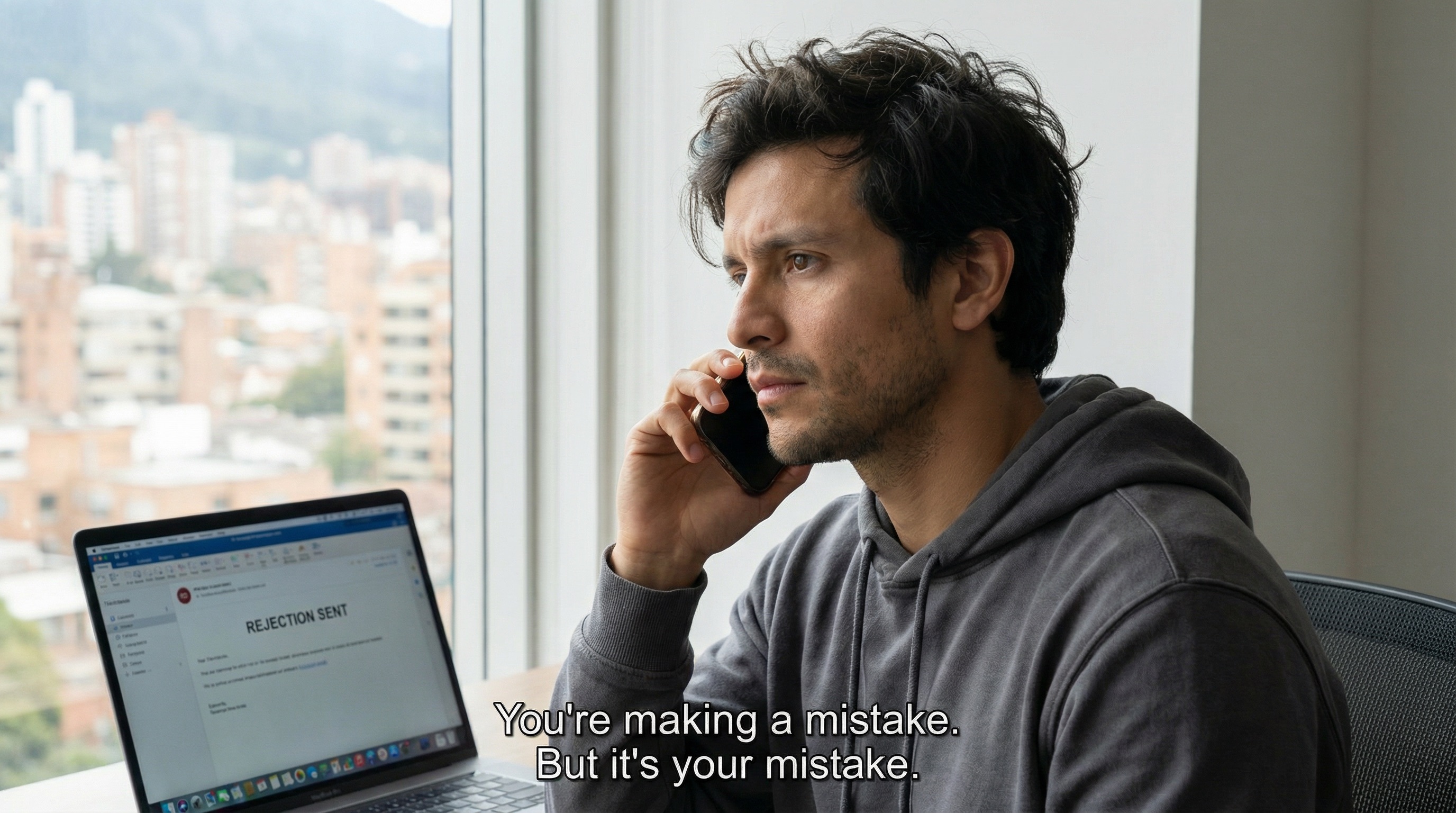
Ten minutes later, his phone rings. Unknown number. He answers.
“Sebastián.” Alejo’s voice. Smooth as ever. “You’re making a mistake.”
“Maybe. But it’s our mistake to make.”
“VCGP offered you a fortune. You’ll never see an offer that good again.”
“Probably not,” Sebastián agrees. “But we’ll still have the company. And we’ll still be able to look our users in the eye.”
There’s a long pause. Then, surprisingly, Alejo laughs. It’s not his usual calculated sound. It’s something almost genuine.
“You know what? Good for you. I mean that.” His voice cracks — just barely, but Sebastián hears it. The perfect mask slipping for just a moment. “I spent ten years optimizing for the exit. For the big payout. And you know what I have to show for it?” A hollow laugh. “A job working for people who see me exactly the way I saw FinPulso — as an asset to be extracted and discarded. I’m nothing to them. Just another pendejo who thought he was smarter than the game.”
“Alejo—” Sebastián starts.
“Don’t. I made my choices. You’re making yours. Just…” He pauses. “Tell Isabella she was right. About the notebook. About protecting what matters. I should have done that instead of trying to own it.”
The line goes dead.
Isabella, who’s been listening, has tears in her eyes. “Do you think he meant that?”
“I think he’s starting to realize what he lost,” Sebastián says. “Whether he does anything about it is up to him.”
The Celebration
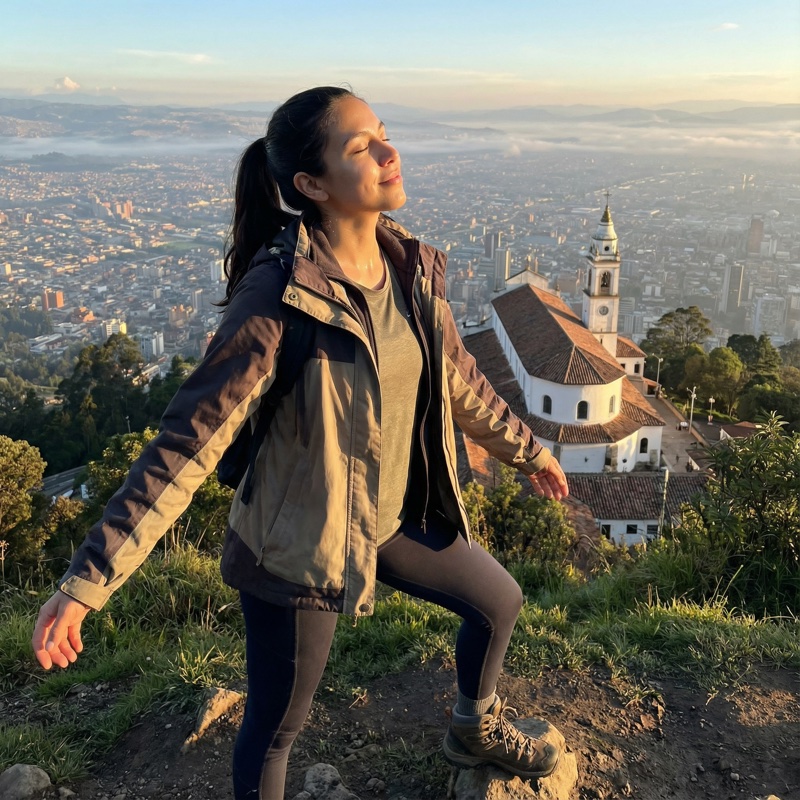
7:00 PM. Cerro de Monserrate.
The entire team — all fifteen of them now, including three new developers hired in the past month — takes the funicular up to the mountain that overlooks Bogotá. The city sprawls below them, a sea of lights as the sun sets.
Don Hernando arranged for a private dinner at one of the restaurants. Nothing extravagant, but good food and the best view in Colombia.
“A toast,” the old rancher says, standing with his wine glass. “Three months ago, I stood in front of you and admitted I was wrong. That I’d taken something beautiful and nearly destroyed it with my ego.”
“Don Hernando—” Sebastián starts.
“Let me finish.” The patriarch’s eyes are wet. “Today, you proved that honesty works. That doing things right works. That caring about the people you serve works. My son Miguel believed that. I didn’t listen. But you did. And because of that, forty-seven thousand people have better financial tools than they had yesterday.”
He raises his glass higher. “To FinPulso. To building things that matter. And to the people brave enough to tell the truth even when it’s hard.”
“Salud!” the team echoes.

They eat. They laugh. Stories are told — the all-night debugging sessions, the first successful deployment, the moment Camila’s risk-scoring algorithm went live and actually worked.
As dessert arrives, Stefan stands. “I have an announcement.” He looks uncomfortable, which is unusual for him. “I’m leaving FinPulso.”
The table goes quiet.
“Not because anything is wrong,” he says quickly. “Because everything is right. You don’t need me anymore. Camila is ready to be lead developer. Diego is handling architecture. You have practices, you have discipline, you have trust. My job here is done.”
Camila looks stricken. “But—”
“There’s a startup in Buenos Aires,” Stefan continues. “Healthcare technology. They’re in crisis. Making all the same mistakes FinPulso made six months ago. They need help.” He smiles. “And I think I can offer them what they need.”
Don Hernando nods slowly. “A man who fixes things and then moves on. I respect that.”
“Will you come back?” Camila asks, voice small.
“For the launch party when you hit a million users? Absolutely.” Stefan raises his glass. “To the next chapter. For all of us.”
Diego also stands. “I have news too.” He glances at Camila. “MiPago has offered me a position. Head of Engineering.”
The table stiffens. MiPago. The competitor.
“I’m taking it,” Diego continues. “Not because I’m leaving FinPulso behind. Because I want to prove that what we built here — TDD, continuous deployment, honest technical conversations — works everywhere. MiPago needs that. And…” he smiles, “I want to beat you in the market fairly. No espionage. No shortcuts. Just better engineering.”
Sebastián stands and extends his hand. “May the best team win.”
They shake. Former enemies. Current rivals. But also friends who learned the same hard lessons.
Three Months Later
August 20. FinPulso office. 3:00 PM.
The deployment dashboard shows the day’s twentieth deployment. The pipeline is a well-oiled machine now. Changes flow from idea to production in hours, not weeks.
Camila, now officially Lead Developer, reviews a pull request from one of the new team members. She leaves comments that are both technically precise and encouraging — lessons learned from Stefan.
Isabella is on a video call with credit unions in Barranquilla and Santa Marta. Expansion phase two. The pilot program there launches in two weeks.
Sebastián types the final sentences of his quarterly report to the board:
We are not the fastest-growing fintech in Latin America. We are not the most funded. But we are building something sustainable — technology that works, culture that learns, and relationships based on trust rather than promises.
This quarter: 73,000 active users. 1.2 million transactions processed. Zero production outages. Deployment frequency: 8.7 per day. Team satisfaction: 4.3/5.
Next quarter goals: Expand to two more cities. Launch mobile app. Begin work on international remittance features that our users have actually asked for.
We’re not chasing the billion-dollar exit. We’re building a company that our users need and our team believes in. That’s enough.
He reads it back, the numbers hitting him emotionally. Zero outages — a miracle three months ago. Deployment frequency up from 0.5 per day to 8.7. Defect escape rate down to 2%, user adoption at 74%. These aren’t just metrics; they’re proof of redemption. Proof that the lies, the burnout, the betrayals led to something better.
Camila walks by, sees him staring at the screen. “The report?”
“Yeah.” He turns to her. “Look at these numbers. We went from crashing demos to this. Because of you. Because of Diego. Because we finally did it right.”
She smiles, but her eyes are serious. “It’s not just the numbers. It’s that we trust them now. No more faking it for investors.”
Diego joins them, reading over Sebastián’s shoulder. “Defect rate at 2%. That’s… real quality.”
Pipe grunts from his desk. “About time we stopped breaking shit every other day.”
The team gathers around, sharing the metrics like a victory. Isabella checks her phone. “User feedback survey just came in. 4.8/5 satisfaction. They love the new features.”
For the first time, the success feels earned. Not promised, not inflated — built.
His phone buzzes. An email from an address he doesn’t recognize: m.vega.personal@gmail.com
He opens it.
Sebastián,
I’m writing from a personal account because VCGP monitors everything I send from work. They’re planning another run at FinPulso in Q4. Different strategy this time — they’re going to fund a competitor with your exact feature set and undercut you on pricing.
I thought you should know. Not because I owe you anything. Because Isabella was right — some things matter more than winning.
I quit VCGP yesterday. I’m not sure what’s next. But it won’t be this.
Take care of the company. It deserves better than what I tried to turn it into.
— Alejo
Sebastián reads it twice. Then forwards it to Mariana with a note: New threat. Let’s talk strategy.
No panic. No lies. Just information flowing to the people who need it.
He looks around the office. Camila explaining something to a junior developer. Isabella laughing on her call. The deployment dashboard showing another successful release.

This is what success looks like. Not the billion-dollar exit. Not the magazine covers. Just a team that knows what they’re building, why it matters, and how to do it right.
The deployment pipeline triggers another build. Green lights cascade down the screen.
His email pings. From an address he recognizes immediately: alejandro.vega@personal.com.
Subject: You should know something
Sebastián,
I quit VCGP yesterday. I saw their plans for the next acquisition attempt — it’s not what I thought I was signing up for.
They’re planning a coordinated regulatory complaint campaign combined with negative press. Make it look like FinPulso is unstable, then acquire during the crisis at a lower valuation.
I couldn’t be part of it. Whatever we were to each other, you built something worth protecting.
Watch for articles about “fintech risk” in the next few weeks. Be ready.
— Alejo

Sebastián reads it twice. Forwards it to Isabella, Don Hernando, and Stefan.
The predators are still circling. But now he knows how to see them coming.
Isabella appears beside his desk. “Dinner tonight? There’s a new place in Chapinero.”
“As long as we don’t talk about FinPulso,” he says.
She laughs. “Deal. Though you know we will anyway.”
“Probably.” He saves the board report. “But at least now when we talk about it, we’re telling the truth.”
She kisses his cheek. “That’s progress.”
Outside the window, Bogotá continues its chaotic dance. The city that doesn’t care about their small victories. The city that will always have more problems to solve.
And somewhere in that city, forty-seven thousand people are using an app that actually works. Built by a team that actually cares. Deployed by a system that actually delivers.
That’s not nothing.
That’s everything.
The Email
One year later. Sebastián’s inbox.
From: investor-relations@unicorn-ventures.com Subject: Partnership Opportunity — $100M+ Series C Interest
Dear Mr. Duarte,
Unicorn Ventures has been following FinPulso’s growth with great interest. Your expansion to eight Colombian cities and consistent delivery metrics demonstrate exactly the kind of disciplined execution we look for.
We’d like to discuss leading a $100M+ Series C round to fund your expansion into Mexico, Peru, and Chile. Our portfolio includes successful fintech exits in three continents.
However, we have concerns about your current technical leadership structure and deployment practices. Our experience suggests that continuous deployment creates unnecessary risk for consumer financial products. We’d want to implement more controlled release processes as a condition of investment.
Are you open to a conversation?

Sebastián reads it. Remembers the lessons of the past eighteen months. Remembers what happens when you let investors override technical judgment.
He types his reply:
Thank you for your interest. However, our deployment practices are non-negotiable — they’re the foundation of everything else we’ve built. If that’s a problem, we’re probably not the right fit.
If you’re interested in learning why continuous deployment actually reduces risk rather than increasing it, I’m happy to have that conversation. But we won’t change our engineering practices to accommodate investment terms.
He hovers over send. Takes a breath. Clicks.
Isabella reads over his shoulder. “That might have just cost us a hundred million dollars.”
“Or it saved us from becoming something we’re not.” He turns to face her. “We good?”
She smiles. “We’re good.”
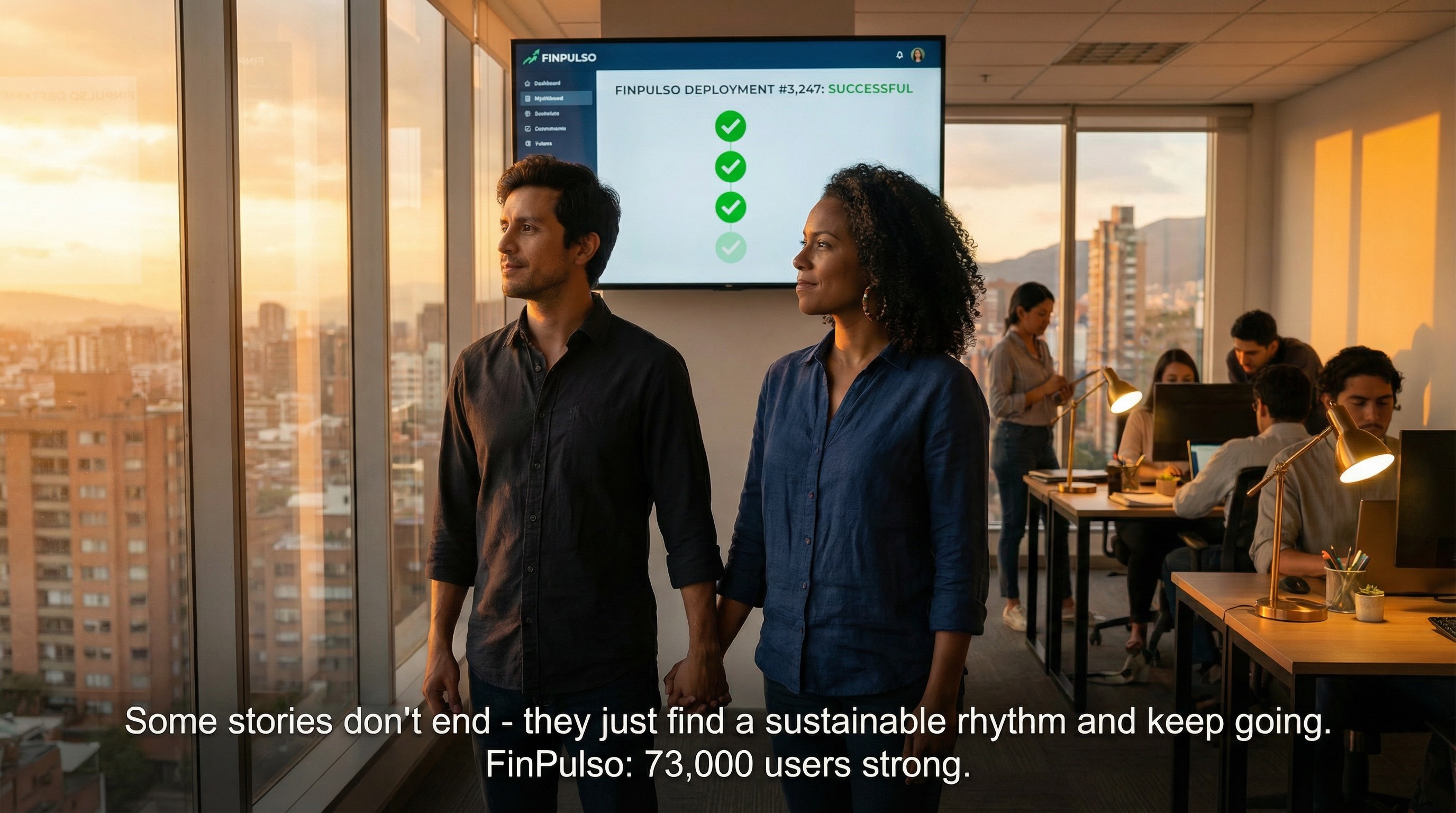
The deployment dashboard shows another successful release. Number 3,247 since they rebuilt the system.
Outside, the sun sets over Bogotá. Inside, the work continues.
Some stories don’t end. They just find a sustainable rhythm and keep going.
Lessons from the Code
This story explored real challenges in software delivery through the lens of telenovela drama. Behind the affairs, the betrayals, and the board meetings lie genuine patterns we see in startups every day:
The Bus Factor — Diego's disappearance in Episode 1 exposed what happens when knowledge lives in one person's head. FinPulso learned to pair, document, and distribute expertise.
The Investor Dilemma — Don Hernando loved his son but didn't understand engineering. Alejo manipulated that gap. Real alignment requires executives who ask technical questions and developers who speak business language.
Framework Theater vs. Real Practice — Velocity charts and burn-down diagrams gave the illusion of progress while actual delivery suffered. Stefan didn't bring methodology — he brought TDD, CI/CD, and honest feedback loops.
The Cost of Lies — Every fabricated status report, every hidden problem, every "we're on track" when they weren't — it all compounds. Truth creates short-term pain but long-term trust.
Technical Debt as Organizational Debt — The codebase mirrored the culture: fragile, undocumented, dependent on heroes. Fixing the code required fixing how people worked together.
Sustainable Pace — The team saved FinPulso not through heroics but through daily discipline. Small deployments. Fast feedback. Incremental improvement. Sustainable beats spectacular.
Evidence Over Opinions — Sebastián won the final Series C negotiation not by arguing but by showing deployment frequency, user satisfaction, and defect rates. The numbers tell the story.
And beneath it all: Integrity. Not perfection — the team made mistakes constantly. But they learned to admit them, fix them, and move forward.
That's what software delivery is really about. Not the pitch deck. Not the funding round. The daily choice to build something real.
🎭 This Week's Episodes
Telenovelas show what we can't say in client meetings. The drama is heightened, but the patterns are real.
 Three Ways to Understand a Country
Stefan drives Sophie to the Pacific for two days. The beach is big enough to make her feel appropriately small. Back at the finca the rain keeps th...
 The Resignations
Nathan Cole resigns on a Monday morning with two sentences and no argument left in his body. By Tuesday his desk is empty and the company's institu...
Technical Consultancy
Embedded Delivery Partner
Embedded into your team as an active contributor, reducing delivery friction and helping important work move cleanly.
Technical Advisor
Peer-style technical assessments before far-reaching decisions; reduce architectural and product risk early.
Product & Delivery
Ship working software to real users earlier. Measure impact and adapt based on evidence rather than assumption.
Custom Software Development
High quality, maintainable software. Short-term augmentation that leaves lasting capability in your own team.
Recent Articles
- When Everything Is Finally Under Control (28.09.2026)
- AI Makes Technical Execution Cheap. Judgment Stays Scarce. (24.09.2026)
- The LLM Will Not Come Back Tomorrow (19.09.2026)
- The One-Person AI Company Is a Greed Fantasy (15.09.2026)
- Test Production Without Leaving a Mess (10.09.2026)
Explore More