The All-Hands Disaster
The post-mortem meeting turns into a circular firing squad. Nine department leads blame each other while Lukas demands answers nobody can provide. Carmen and Lars nearly come to blows. Katja realizes status meetings have become theater — nobody actually knows what's happening. That night, desperate and sleepless, she searches for a way to see reality through the noise.
Monday Morning, 09:00 — Main Event Space
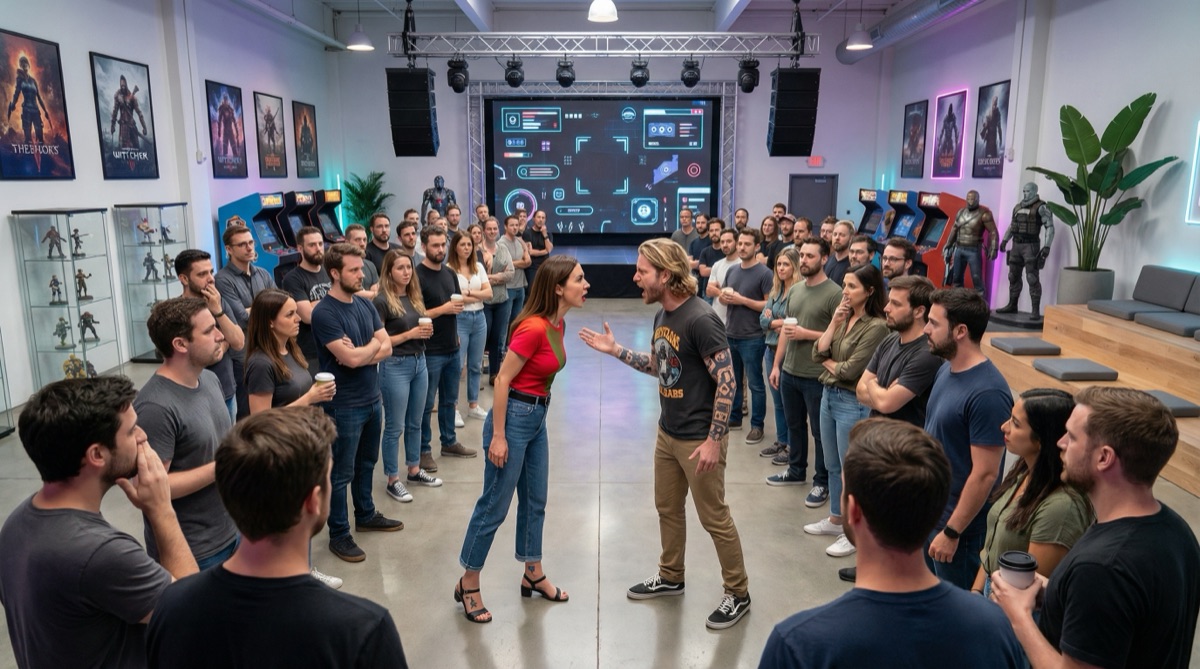
The main event space — usually reserved for monthly all-hands and investor presentations — held all 85 people uncomfortably. Folding chairs had been arranged in rough rows facing a single table where Lukas Weber sat, laptop closed, jaw set. The department leads sat in the front row: Katja Müller (CTO), Tomasz Kowalski (Head of Engineering), Lars Pedersen (Game Design), Carmen Delgado (Art & Animation), Hassan Al-Rashid (DevOps), Daniel Schmidt (QA), Elif Yılmaz (Live Ops), Claudia Hartmann (Marketing), and Priya Sharma (Analytics).
Behind them, the rest of the company. Developers. Artists. Support staff. Everyone who’d worked through the weekend fixing the catastrophe. Everyone who knew exactly what had gone wrong and was waiting to see if leadership would acknowledge it.
The update had launched Wednesday. By Friday, the App Store rating had cratered to 2.1 stars. The weekend had been an all-hands emergency response. Now, Monday morning, everyone looked like they’d aged five years in five days.
Lukas stood. The room fell silent immediately.
“Last week’s update was a disaster.” His voice carried to the back row. “2.1 stars. Seventeen thousand one-star reviews. Player retention down 23% in four days. Support tickets up 340%. Our investors are asking questions I can’t answer.”
He paused. Let that sink in. Eighty-five people watching him.
“So I called this meeting to understand what happened. What went wrong. Who knew what, when.” He looked at the department leads in the front row. “We’re going to figure this out. Together.”
Mariana, sitting in the third row next to Anton, felt her stomach tighten. This was going to be bad.
Lukas addressed Lars first. “Game Design owns the feature spec. What went wrong?”
Lars Pedersen stood, turned to face the room with his Danish composure and architectural glasses. “We delivered complete design documentation three weeks ahead of schedule. Every wireframe, every user flow, every interaction pattern. If Development couldn’t implement what we documented—”
“That’s bullshit.” Katja was on her feet before she could stop herself. “Half the assets didn’t arrive until two days before code freeze. Requirements changed four times—”
“Because Development kept finding problems we had to work around!” Lars spun toward her, face flushed.
Carmen Delgado shot up from her seat. “¡Coño!” She was moving toward Lars now, finger pointing. “You changed the design twice, tío. Twice! We threw away finished work!”
“Those were clarifications—”
“¡Mierda!” Carmen was right up in his face now, close enough that Lars stepped back. “Clarifications? You redesigned the entire tournament flow three days before deadline!”
“The focus groups—”
“What focus groups?” Her hands were shaking. “¡Joder! We never had focus groups! You’re making shit up to cover your ass!”
From the development section, Anton called out in Russian-accented English: “He’s making shit up!”
Someone from Art shouted: “He changed it three times!”
“The design had to evolve—” Lars started.
“Evolve?” Tomasz was standing now. “You call changing core functionality evolution? We rebuilt half the backend to accommodate your ‘evolution.’”
Elif stood up from the front row. “Kahretsin! I can’t deploy anything because releases take two days minimum!”
“That’s because everything’s manual!” Hassan’s voice, usually quiet, carried across the room. “يا خرا! (Ya khara!) Forty-seven manual steps. If one fails, I start over!”
Daniel pushed his glasses up. “QA flagged the tournament bug. Leadership overrode us!”
“We had a deadline!” Lukas’s voice rose.
“Porra!” Mariana was on her feet now, couldn’t stop herself. “Your deadline! We told you it wasn’t ready. I flagged that bug in code review!”
The room exploded. Multiple people standing. Voices overlapping, crescendoing. Carmen and Lars were face-to-face, shouting in Spanish and Danish-accented English, and for a second it looked like Carmen might actually swing at him. Developers on their feet arguing with designers. Art team surrounding Carmen, backing her up. Someone from Support threw a water bottle — it missed Lars and hit the wall.
“Fuck this!” Anton’s voice boomed from the back. “We’re not doing this shit again!”
Katja stood frozen in the front row, mouth open, watching the company tear itself apart in real time. This wasn’t a meeting anymore. This was a riot waiting to happen.
SLAM.
Lukas’s hand hit the table so hard his laptop jumped.
Silence crashed down like a guillotine.
Everyone froze. Eighty-five people holding their breath.
Lukas’s voice was ice-cold. “Everyone who is not a department lead — leave. Now.”
The room sat frozen for three seconds.
“I said OUT. Department leads stay. Everyone else, you’re dismissed.”
Slowly, people stood. Mariana caught Katja’s eye as she filed toward the door. The CTO’s face was pale. This was about to get worse.
The development team clustered in the hallway outside. Anton leaned against the wall, arms crossed. “That’s going to be a bloodbath.”
“They’re going to blame each other for the next hour,” Mariana said. “Then Lukas will yell, and nothing will change.”
Sofia, the junior developer, looked anxious. “Should we go back to our desks?”
“And pretend we didn’t just watch leadership fall apart in public?” Mariana shook her head. “Nah. I’m getting coffee. Anyone want anything?”
09:23 — Main Event Space (Department Leads Only)
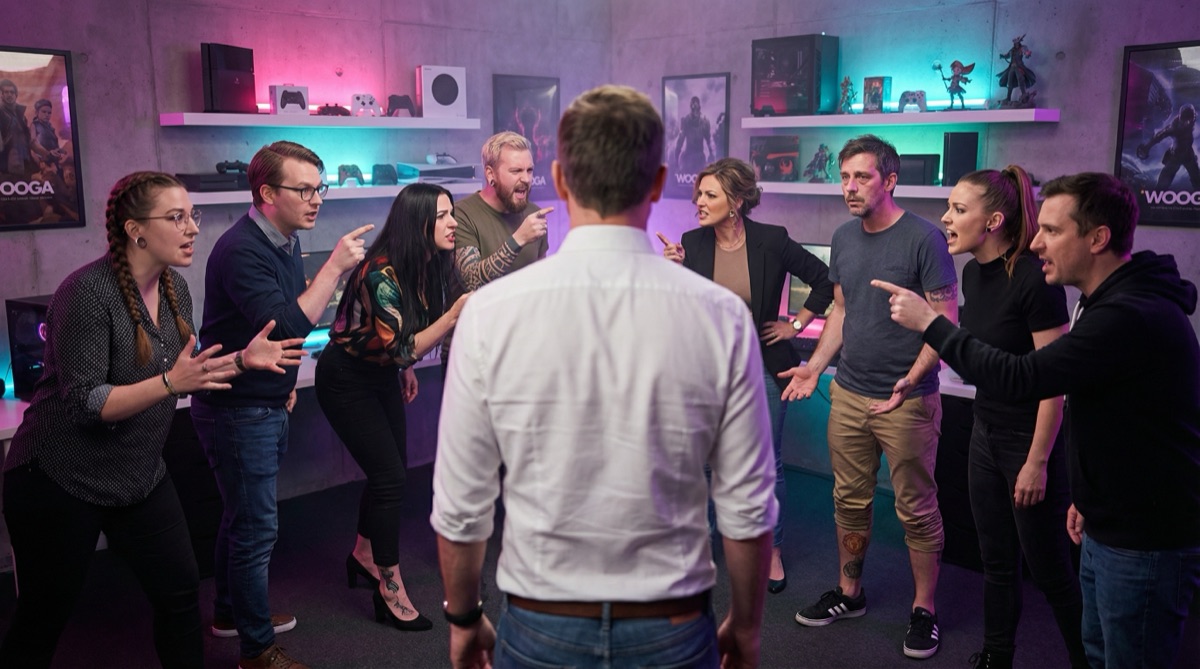
The room felt larger with only ten people in it. More exposed. Lukas remained standing at the table while the nine department leads spread out in the front row, no longer a unified leadership team but individuals bracing for interrogation.
Lukas’s hands were shaking. Not with fear. With rage.
“Now that we don’t have an audience,” his voice was dangerously quiet, “let’s try this again. What. The fuck. Happened?”
Nobody spoke.
“I’ll start with you, Lars. Game Design owns the feature spec. What went wrong?”
Lars spread his hands, that infuriating Danish calm still intact. “I already said—”
“No audience now. Truth, not performance.”
Lars’s jaw tightened. “We delivered complete documentation. If there were changes, they were responses to technical constraints Development discovered late. Not my fault they can’t implement what I design.”
The vein in Katja’s temple started throbbing.
“Oh fuck off.” Katja’s voice was flat. “You changed the tournament flow three days before deadline. Three days. We had to rebuild the entire backend validation system.”
Carmen was out of her chair. “¿Otra vez con esto? No podemos animar conceptos que no existen, joder.” She didn’t bother switching to English. “Lars cambió el diseño dos veces. Dos. Veces. We threw away finished work.”
Lars spun on her, standing now too. They were three feet apart. “Those were clarifications based on user feedback—”
“What user feedback?” Carmen’s face was red. “You made it the fuck up! Every time! You sit in your office having ‘visions’ and we have to scramble!”
“Elif,” Lukas cut in. “Live Ops. What’s your perspective?”
Elif looked dead inside. “I have three events ready to launch. Been ready for two weeks. Can’t deploy them because Development takes two days minimum for any release. If nothing breaks.” She looked at Tomasz. “You gonna tell him why, or should I?”
Tomasz’s Polish accent got thicker when he was pissed. “Everything is manual. No CI/CD. No automation. Hassan runs forty-seven steps by hand. By. Hand. Like we’re living in 2010.”
Hassan spoke quietly, which made everyone listen. His voice was steady but his eyes were bloodshot, dark circles underneath like bruises. “Forty-seven steps. If I fuck up step twelve, I start over from scratch. Last release took eight hours because the build kept failing.” His hands were flat on the table, fingers trembling slightly.
“Why don’t you automate it?” Lukas asked.
Hassan laughed. Actually laughed. “With what time? I’m one guy supporting 85 people. I spent last weekend keeping production alive. Week before that, onboarding new hires. Before that, debugging why staging keeps crashing.” He looked directly at Lukas. “You want automation? Give me time or give me another developer.”
“We’re hiring—”
“You’ve been saying that for three months.”
Daniel pushed his glasses up. “We flagged the tournament bug. Mariana flagged it in code review. I flagged it in QA. Both times, leadership said ship it anyway because we had a deadline.” He looked at Katja. “You were in that room.”
Katja felt her stomach drop. “You said we couldn’t delay—”
“Don’t put this on me,” Lukas shot back. “You said it was an edge case.”
“It was flagged as potential edge case with incomplete testing data!”
“It crashed the entire tournament!”
Priya closed her laptop with a sharp snap that echoed in the tense room. Everyone turned. Her face was composed but her knuckles were white where they gripped the laptop edge.
“I warned you.” Her voice was cold, each word precise. “Eight weeks ago. Monthly retention dropped from 71% to 63%. Session duration down 18%. I sent three detailed reports. Nobody responded. I put dashboard links in Slack. Zero clicks. I presented at leadership meetings. No follow-up.” She looked around the room, making eye contact with each person. “I’ve been screaming that we’re bleeding users, and you all kept arguing about whose fault it is while ignoring the data showing what’s actually happening.”
Silence. Heavy. The kind of silence where everyone knows she’s right and hates her for saying it out loud.
“So whose deadline was it, Lukas? Because the numbers said fix what you have before shipping new broken shit.”
Claudia jumped in. “I paused €50K in ad spend last week. You know why? Because I’m not burning acquisition budget when our product hemorrhages users. Every euro bringing in new players is wasted if they quit after a week because the game’s fucked.”
“So Marketing’s giving up?” Lars’s voice dripped sarcasm.
“Marketing’s being realistic. What’s your excuse for designing features nobody asked for?”
“Nobody asked for—? We have literal player surveys showing—”
“Surveys you wrote leading questions for!”
“That’s not—”
“Both of you, shut up.” Tomasz’s voice cut through. He’d been silent until now, watching with the detached interest of someone who’d already mentally checked out. “You want to know what happened? I’ll tell you what happened. We have 147 tickets in our backlog. 89 marked critical. 42 marked urgent. Development has been working 60-hour weeks for three months because every department thinks their stuff is the most important. We don’t have time to fix technical debt. We don’t have time to automate deployments. We don’t have time to write proper tests. We’re in constant fire-fighting mode because leadership keeps saying yes to everything without asking if we can actually deliver it.”
He looked at Lukas. “You asked what went wrong? Everything went wrong. And it went wrong because this company has 85 people and zero shared understanding of what’s actually happening. Everyone’s optimizing for their department. Nobody’s optimizing for the product. Nobody even knows what everyone else is doing.”
The room exploded.
Carmen shot to her feet screaming at Lars in rapid Spanish. Lars screaming back in Danish-accented English. Elif standing, yelling about deployment timelines. Daniel slamming his hand on the table defending QA. Hassan’s voice rising, infrastructure constraints nobody was listening to. Claudia and Priya both shouting that their warnings had been ignored.
Katja watched Lars grab his coffee cup — for a second she thought he was going to throw it at Carmen.
Tomasz stood up, chair scraping loud. “This is fucked. We’re fucked. All of us.”
Lukas stood up. “ENOUGH!”
Silence crashed down like a guillotine.
“This company has 85 people,” Lukas said, his voice shaking with anger or exhaustion or both. “85 people. And we can’t ship a simple feature without catastrophe. We can’t have a meeting without it turning into a fucking circular firing squad. Every one of you has excellent reasons why this isn’t your fault. Every one of you can point to someone else who failed first.”
He looked around the table. “You know what that tells me? It tells me none of you actually knows what’s happening outside your own department. You’re all flying blind and pretending you can see.”
Nobody argued. What could they say?
Lukas closed his laptop. “We’re done. I want written post-mortems from each department by end of day. Facts, not blame. We’ll try this again tomorrow.”
He stood. “Get out.”
People filed out in uncomfortable silence.
Katja was the last to leave. She paused at the door, looked back at the empty conference room. The table was covered in coffee cups and discarded notes and the wreckage of nine intelligent people who couldn’t see the same reality.
She’d been CTO for two years. She’d never felt more powerless.
Monday Evening, 22:34 — Katja’s Apartment, Kreuzberg
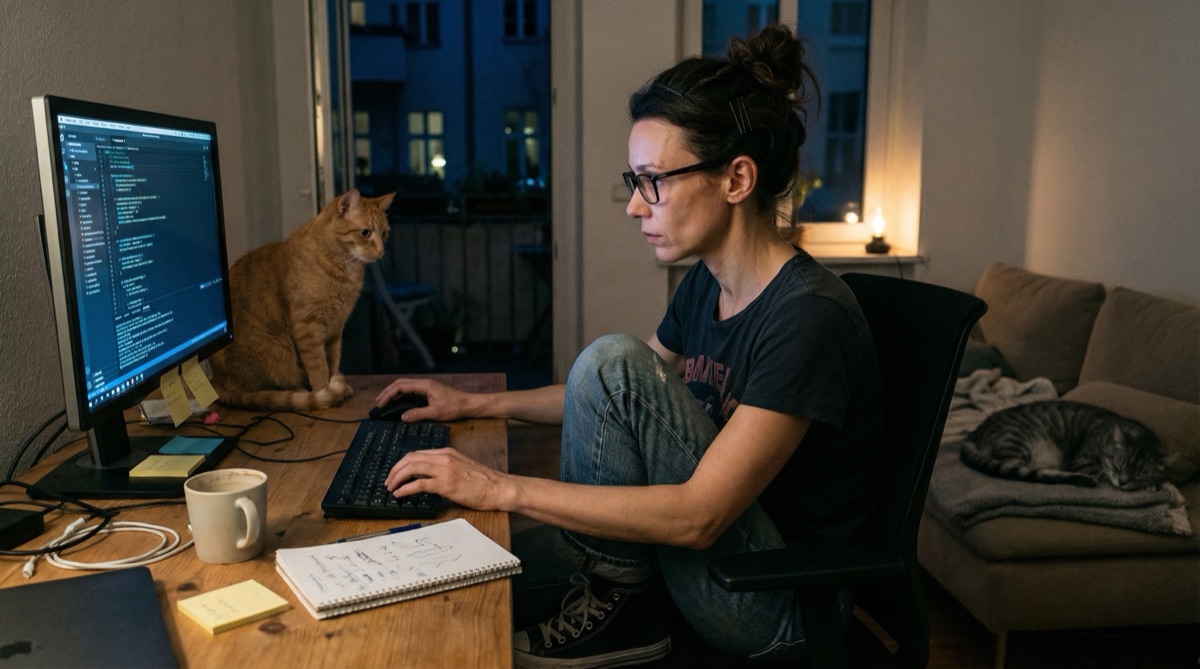
Katja sat at her desk, facing the window overlooking the courtyard. The apartment was dark except for her monitor’s glow. Turing, her gray tabby, had given up trying to get her attention and was now asleep on the couch. Lovelace, the orange one, sat on the desk watching her with judgmental cat eyes.
She’d been staring at the ceiling for three hours. Sleep wasn’t coming. Every time she closed her eyes, she saw that conference room. Heard the accusations flying. Felt the helplessness of watching reality dissolve into competing narratives until truth became unknowable.
Tomasz was right. Nobody knew what was actually happening. Status meetings were theater. Weekly reports were selective truth-telling. Jira tickets were wish lists, not reality. She was CTO, and she couldn’t answer the simplest question: what’s blocking us?
Not with confidence. Not with evidence. Just guesses and secondhand information filtered through whoever was willing to complain the loudest.
At 22:47, she opened her laptop and typed into Google:
organizational intelligence for software teams
The first page was the usual suspects. Jira. Asana. Monday.com. Project management tools she already had. They tracked tasks, not reality. She needed something different.
She refined the search:
see what’s actually happening software delivery
More results. Agile dashboards. Burndown charts. Velocity metrics. All measuring activity, not truth. All requiring manual updates nobody had time for.
She tried again:
evidence-based delivery visibility
Now she was getting somewhere. An article from a delivery consultant: “Stop asking teams what’s wrong. Start observing what’s actually happening.”
She clicked through. The article described an approach she’d never encountered: daily logs from practitioners, automated synthesis, pattern detection across departments. The tool was called Caimito Navigator.
The key phrase hit her like cold water:
“What if leadership could see reality without interrogating teams?”
She sat back. Read the article again, slowly this time.
The concept was simple. Practitioners log daily. Just type what happened. Takes 30 seconds while the compiler runs or tests execute. Short entries, plain language, no process overhead. The system synthesizes these logs weekly, showing patterns leadership can’t see from status meetings. Cross-department blockers. Repeated impediments. Systemic issues hiding in individual frustrations.
Evidence instead of opinions. Patterns instead of anecdotes. Reality instead of theater.
She checked the time. 23:16. Too late to call anyone. Not too late to keep reading.
Two hours later, at 01:23, she’d read six case studies, watched three demo videos, and filled two pages of her notebook with questions. The approach made sense. More than that — it made sense for exactly the dysfunction she’d witnessed today.
The meeting had failed because everyone had different information. Lars thought he’d delivered clear designs. Carmen thought Lars kept changing requirements. Development thought they were blocked by missing assets. Art thought they were blocked by unclear specs. Everyone was telling their truth. None of them could see the full picture.
What if there was a way to see all those truths at once? To detect when “Lars changed requirements” showed up in logs from three different departments? To see whether “Development is blocked by Art” was daily reality or occasional friction?
Her phone buzzed. A Slack message from Tomasz:
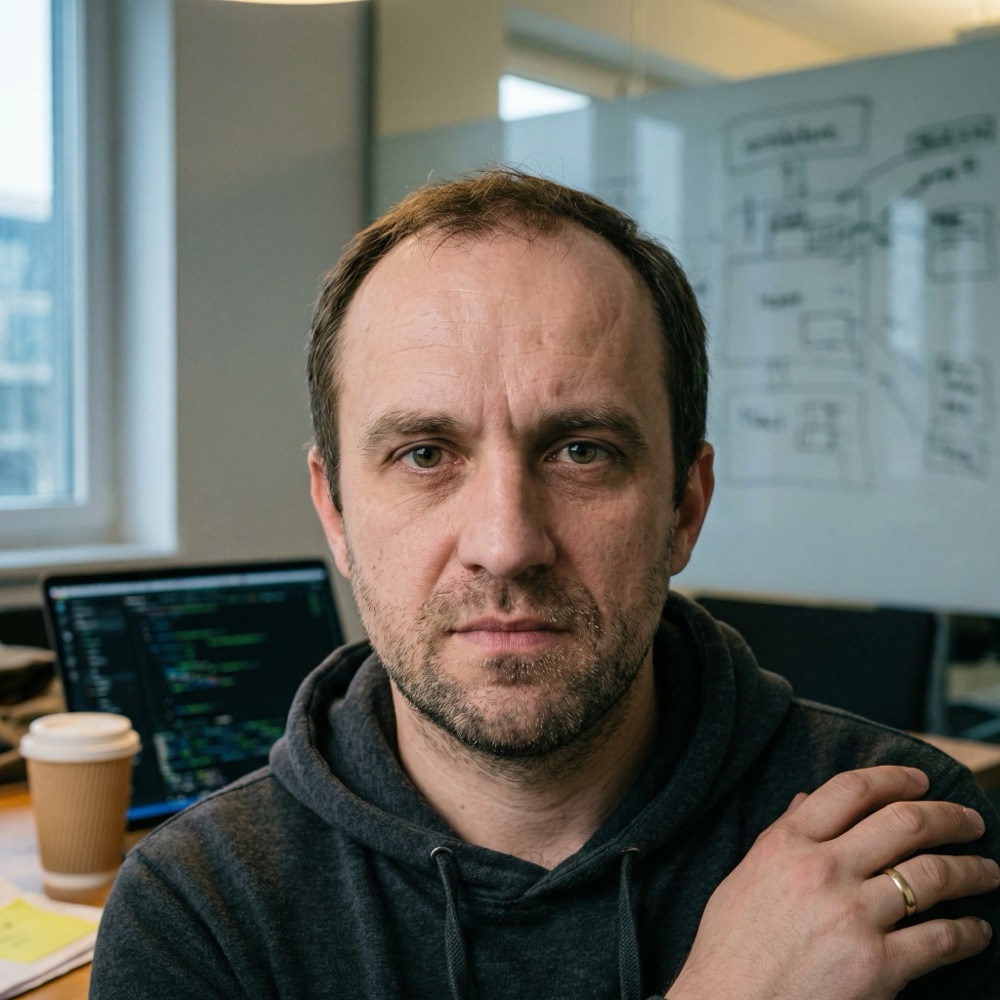 Tomasz Kowalski still awake?
 Katja Müller yeah. you good?
Tomasz Kowalski no. thinking about quitting. for real this time. żona wants me to. kids don't even know who i am anymore
Katja Müller fuck. i don't want you to quit. but i get it
Tomasz Kowalski today was so fucked. everyone screaming. nobody knows anything. we're flying blind and pretending we can see
Katja Müller i know. trying to figure out how to fix it
Tomasz Kowalski good luck with that. gonna try sleeping. doubt it'll work
Katja Müller night
She set the phone down and looked at her screen. Caimito Navigator’s signup page was open. Free trial. 30 days. No credit card required.
Fuck it.
She clicked “Start Trial” and filled out the form. Company name: Pixel Spree. Role: CTO. Team size: 85. Primary challenge: “Nobody can see reality through status meeting theater.”
The confirmation email arrived immediately. Welcome to Navigator. Here’s how to write your first daily log.
She opened a new entry. The interface was dead simple. Just a text box. No dropdowns, no categories, no process overhead. Just type. The cursor blinked steadily in the empty field.
Katja started typing, her fingers moving faster as the words poured out.
Disaster post-mortem this morning. 9 dept leads screaming at each other for an hour. Development blames Art. Art blames Design. Design blames Development for “not understanding the vision.” Live Ops can’t deploy shit because releases take 2 days minimum. Hassan drowning — he’s ONE person for 85. QA flagged the tournament bug, leadership (me included) said ship it anyway. Priya’s been screaming about player churn for 8 weeks, we all ignored her. Everyone has different information. Zero shared visibility. Status meetings are performance art. Can’t see what’s actually happening. Can’t tell chronic issues from one-offs. Flying blind.
She hit save. The system acknowledged her first log.
Great start. Keep logging daily. After a week, you’ll start seeing patterns. After a month, you’ll wonder how you ever operated blind.
Katja looked at the time. 02:07. She should sleep. Her neck ached. Her eyes burned. But sleep felt impossible with her mind still racing.
But first, she needed to do one more thing.
She opened Slack, the green icon glowing in her dock. Found Lukas’s DM.
Katja Müller you awake?
No response. Of course not. Normal people slept at 2 AM.
She typed anyway.
Katja Müller found something. think it might help. can we talk tomorrow morning? early? usual place?
She hit send, closed the laptop with a soft snap. If he saw it before morning, great. If not, she’d catch him at the office. Her shoulders sagged with exhaustion.
Turing jumped onto her lap, warm and solid. Lovelace remained judgmental from the desk, green eyes unblinking in the dark.
Now she could sleep.
Her phone buzzed on the coffee table, the screen lighting up the dark room.
 Lukas Weber 8:30. café.
She smiled in the dark, the tension in her shoulders easing slightly. At least she wasn’t alone in this.
Tuesday Morning, 08:23 — Café Naschmarkt, Corner Table

Lukas was already at their usual table when Katja arrived, americano half-finished, iPad propped up displaying what looked like a financial model. The café smelled like fresh bread and roasted coffee. Morning light streamed through the front windows. He looked up when she sat down, taking in her rumpled clothes and the dark circles under her eyes.
“You look like shit.”
“Didn’t sleep.” Katja ordered an espresso from the passing waiter, her voice rough. “Spent half the night researching.”
“Researching what?”
“How to un-fuck what happened yesterday.”
Lukas closed the iPad. “I’m listening.”
Katja pulled out her laptop, opened Navigator, turned the screen. “Yesterday failed because everyone had different information. Nine people, nine versions of reality, zero shared truth. We’re making decisions blind.”
“Status meetings—”
“Are bullshit.” Katja cut him off. “People report what makes them look good or what they think you want to hear. It’s theater.”
“So what’s your solution?”
Katja turned the laptop toward him. “This. Caimito Navigator. Teams log daily. Just type what happened. 30 seconds while the compiler runs. System synthesizes it weekly, shows patterns we can’t see from meetings.”
Lukas scrolled through the demo. “Another tool?”
“Not a tool. Intelligence. It’s not tracking tasks, it’s tracking reality.” She pulled up a case study. “Hamburg company, 120 devs, same shit we have. They logged for four weeks. Patterns emerged. DevOps team mentioned as blocker in 60% of logs. They hired two more people. Deployment speed tripled.”
“We already know Hassan’s drowning.”
“We think Hassan’s drowning because he’s loud about it. What about the blockers people stopped mentioning? The chronic shit we only notice during disasters?” She held his eyes. “If everyone yesterday had been logging for a month, we’d have data. How often Lars actually changes requirements. How often Art is truly blocked. Evidence instead of accusations.”
Lukas was quiet for a long moment, his fingers drumming slowly on the table. The espresso arrived, steam rising in a thin curl. Katja didn’t touch it. Her hands were folded in her lap, gripping each other tightly.
“Who logs?” he finally asked, his voice careful.
“Everyone who wants to. It’s not mandatory. But the more people log, the more complete the picture.”
“Sounds like more overhead we don’t have time for.”
“30 seconds a day. While the compiler runs or tests execute. Just write what happened. No structure, no categories.”
“And you think this will fix our problems?”
“No.” Katja’s honesty surprised even herself. “This won’t fix anything. But it’ll let us see what needs fixing. Right now we’re operating blind. We’re making decisions based on whoever shouts loudest in meetings. This gives us a way to see reality.”
Lukas picked up his coffee, drank, set it down. “How much does it cost?”
“Free for 30 days. After that, depends on team size.”
“You already signed up, didn’t you?”
“Last night. Wrote my first log at 2 AM.”
A small smile. “What did it say?”
“That yesterday’s meeting was a circular firing squad and nobody actually knows what’s happening in this company.”
“Accurate.” He looked at the screen again. “Okay. Try it. Start with whoever’s willing. Report back in two weeks.”
“Not a month?”
“Two weeks. If I don’t see value by then, we drop it.”
Katja closed her laptop. “Fair enough.”
They sat in silence for a moment. Outside, Berlin was already in full swing. Trams rattled past, their bells clanging. Morning commuters rushed by with their second coffee, breath visible in the cold February air. The city had been awake for hours, moving with the oblivious momentum of something too big to notice individual disasters.
“Yesterday broke something,” Lukas said quietly, not looking at her. “In that room. Between all of us.” His voice was heavy with something that sounded like grief.
“I know.”
“We can’t keep operating like this.”
“I know.”
“If this doesn’t work—”
“Then we try something else. But we have to try something.” Katja finished her espresso. “Because you’re right. We can’t keep operating like this. Something has to change.”
Lukas nodded slowly. “Keep me posted.”
She stood, gathered her laptop. “I will.”
Walking back to the office, Katja felt something she hadn’t felt in months: a small, fragile hope. Not that Navigator would solve everything. Not that logging would magically fix systemic dysfunction.
But hope that maybe, finally, they could start seeing reality clearly enough to know what needed fixing.
That was enough. For now.
Tuesday Afternoon, 15:47 — Development Floor

Mariana looked up from her code when Katja appeared at her desk. The CTO looked wired on caffeine and desperation, her eyes too bright, her movements jerky.
“Got a minute?”
Mariana saved her work, her fingers pausing on the keyboard. “Yeah. What’s up?”
Katja pulled up a chair, the wheels scraping against the floor, and angled her laptop toward Mariana. “Trying something new. Caimito Navigator. Daily logs, pattern detection. Takes 30 seconds. Just write what happened while you’re waiting for stuff to compile.” Her words came out fast, rehearsed.
Mariana skimmed the interface. Her expression: not impressed. “Another management tool.”
“I know—”
“Do you though? Yesterday was a complete shitshow and now you’re here asking us to do more work so you can have better dashboards.”
“30 seconds. While you’re waiting for the compiler. Just type what happened. No structure.”
“To tell you stuff you should already know if you actually talked to us.”
Direct hit. Katja didn’t flinch. “You’re right. I should know. But I don’t. Status meetings are performance. Jira’s a wish list. Yesterday proved nine people can sit in a room and have completely different versions of the same reality.”
Mariana leaned back, arms crossed. “So you want me to log so you have better data for meetings I’m not invited to.”
“I want patterns visible. When you’re blocked by Hassan four days straight, it shows as a pattern, not just you complaining. When requirements change mid-sprint, we see how often it actually happens versus how often it feels like it happens.”
“And then what? You’ll fix it?”
“Honestly? Don’t know.” Katja’s bluntness surprised both of them. “But I can’t fix what I can’t see.”
Mariana studied her. The CTO looked genuinely wrecked. Not just tired — everyone was tired. This was deeper. The kind of exhaustion that came from watching your authority become meaningless. Her eyes were bloodshot. Her hands trembled slightly when she gestured. There was a coffee stain on her shirt she probably hadn’t noticed.
“Fine.” Mariana said, her voice softening slightly. “Two weeks. If it’s bullshit, I’m out.”
“Fair.”
Katja showed her how to set up an account, walked through the interface. It was simpler than Mariana expected. Just a text box. No dropdowns, no category tags, no process overhead. Type what happened, hit save, AI does the rest.
After Katja left, Mariana stared at the empty log entry, the cursor blinking accusingly. Her coffee had gone cold. She could hear the usual office sounds — keyboard clatter, muffled conversations, someone’s phone ringing. She started typing, the words coming faster than she expected.
Code review for payment integration. Flagged 3 race conditions. Investigated last week’s tournament crash — root cause was EXACTLY what I flagged before launch. Nobody surprised, everyone pissed. Hassan needed staging reset, he’s drowning. Unclear requirements on payment retry logic. Product hasn’t answered my questions from Thursday. We keep shipping known bugs because deadlines > quality. QA flags shit, we override, players suffer, we scramble. Repeat forever.
She hit save.
The system acknowledged: Thanks for logging. Keep it up. Patterns become visible through consistency.
Mariana closed the laptop and returned to her code.
She didn’t expect miracles. But maybe — just maybe — someone would finally see what was actually happening.
That would be something.
Monday Evening, Feb 24, 19:23 — Katja’s Apartment

Katja sat cross-legged on her couch, laptop balanced on her knees, Turing purring beside her, warm against her thigh. The apartment was quiet except for the soft rumble of her cat and the distant hum of traffic. She’d been logging for a week now. Mariana had joined on Tuesday. Hassan had signed up Wednesday after Katja explained it might help make his blocker status visible.
Three people logging. One full week of data.
The first weekly synthesis had just arrived in her inbox, the notification chiming softly in the stillness.
She pulled up the synthesis Navigator had generated, her heart beating faster. It was preliminary — the system warned that real patterns needed weeks, not days — but even preliminary synthesis was illuminating:
📋 Summary
Observed Actions:
- Hassan (DevOps) repeatedly mentioned as blocker across multiple logs. Pattern: deployment requests queue behind single person; manual process creates serialized bottleneck affecting Development and Live Ops.
- Requirements clarity issues surfaced in multiple contexts. Pattern: mid-sprint changes and unanswered questions from Product create rework loops.
- QA approval bypassing documented multiple times. Pattern: deadline pressure overrides quality gates, known bugs ship to production, team scrambles post-launch.
Tooling and System State:
- Manual deployment process documented as chronic friction point. No automation, no self-service capability.
- Staging environment resets require Hassan intervention — further congestion at single point of failure.
Relation to Organizational Context:
- Cross-department communication breakdown visible in conflicting priorities and information asymmetry.
- Decision-making pattern: deadlines prioritized over quality signals, then reactive firefighting when predicted issues materialize.
🎯 Recommendations:
- Immediate: Evaluate DevOps capacity. Single-person bottleneck creates systemic delivery friction.
- Short-term: Examine requirement definition process. Repeated mid-sprint uncertainty suggests upstream clarity issues.
- Structural: Review quality gate override process. Pattern of ignoring QA flags then scrambling post-launch suggests misaligned incentives.
It was preliminary. It was incomplete. It was three people out of 85.
But it was also the clearest picture of reality Katja had seen in months. Her chest felt tight with something between hope and relief.
No percentages. No dashboards. Just patterns synthesized from actual daily experience, written in plain language that anyone could understand.
Hassan wasn’t mentioned as a statistic. He was described as what he actually was: a single person carrying the entire company’s deployment capability, with predictable consequences.
She added Lukas as an observer to the Navigator workspace. The system sent him an automatic invite. Then she opened her email, fingers hovering over the keyboard for a moment before she started typing.
Subject: Navigator — First weekly synthesis
One week. Three people (me, Mariana, Hassan).
First synthesis just came in. Hassan showing up as chronic bottleneck across all logs. We suspected this. Now we have evidence.
Added you as observer. Check the synthesis directly. You can ask the AI questions about patterns if you want deeper analysis.
This is THREE people. Imagine 20. Imagine 40.
Want to expand. Get dept leads logging. Not mandatory but strongly encouraged. Two weeks, then review.
—K
She hit send before she could second-guess herself.
The reply came eight minutes later.
From: Lukas Weber
Subject: Re: Navigator — First weekly synthesis
Do it. Present at Friday leadership meeting. Show them this. See who’s willing to try.
—L
She closed her laptop and looked out the window. The Kreuzberg courtyard was dark, lit only by scattered apartment windows glowing warm against the February night. Somewhere in those apartments, people were living normal lives. Relationships. Hobbies. Sleep. Things that didn’t consume every waking hour.
She couldn’t remember the last time work hadn’t consumed everything. Her neck ached. Her eyes burned. But for the first time in weeks, the exhaustion felt different. Less like drowning, more like… swimming toward something.
But maybe — just maybe — they were starting to find a way out of the noise.
One log at a time.
Turing stretched beside her, claws extending briefly before settling back into a purr. Outside, a tram rattled past on Oranienstraße, its bell clanging faintly in the distance.
🎭 This Week's Episodes
Telenovelas show what we can't say in client meetings. The drama is heightened, but the patterns are real.
 Three Ways to Understand a Country
Stefan drives Sophie to the Pacific for two days. The beach is big enough to make her feel appropriately small. Back at the finca the rain keeps th...
 The Resignations
Nathan Cole resigns on a Monday morning with two sentences and no argument left in his body. By Tuesday his desk is empty and the company's institu...
Technical Consultancy
Embedded Delivery Partner
Embedded into your team as an active contributor, reducing delivery friction and helping important work move cleanly.
Technical Advisor
Peer-style technical assessments before far-reaching decisions; reduce architectural and product risk early.
Product & Delivery
Ship working software to real users earlier. Measure impact and adapt based on evidence rather than assumption.
Custom Software Development
High quality, maintainable software. Short-term augmentation that leaves lasting capability in your own team.
Recent Articles
- When Everything Is Finally Under Control (28.09.2026)
- AI Makes Technical Execution Cheap. Judgment Stays Scarce. (24.09.2026)
- The LLM Will Not Come Back Tomorrow (19.09.2026)
- The One-Person AI Company Is a Greed Fantasy (15.09.2026)
- Test Production Without Leaving a Mess (10.09.2026)