What Is Offered First
The day before Sophie flies back to Berlin, Mateo takes them to Kuna Yala. The road climbs from the Chepo side into the mountains, the Caribbean appears below them in impossible color, and a Guna family serves Sophie a meal she nearly misreads. Only later does she understand the rule: you eat what is offered first without flinching. The next morning she is at Tocumen, carrying that lesson with everything else.
The day before Germany, Mateo said we were leaving before dawn. He said it with the satisfaction of a man announcing a logistical inconvenience he had personally designed.
The Road Starts in the Dark
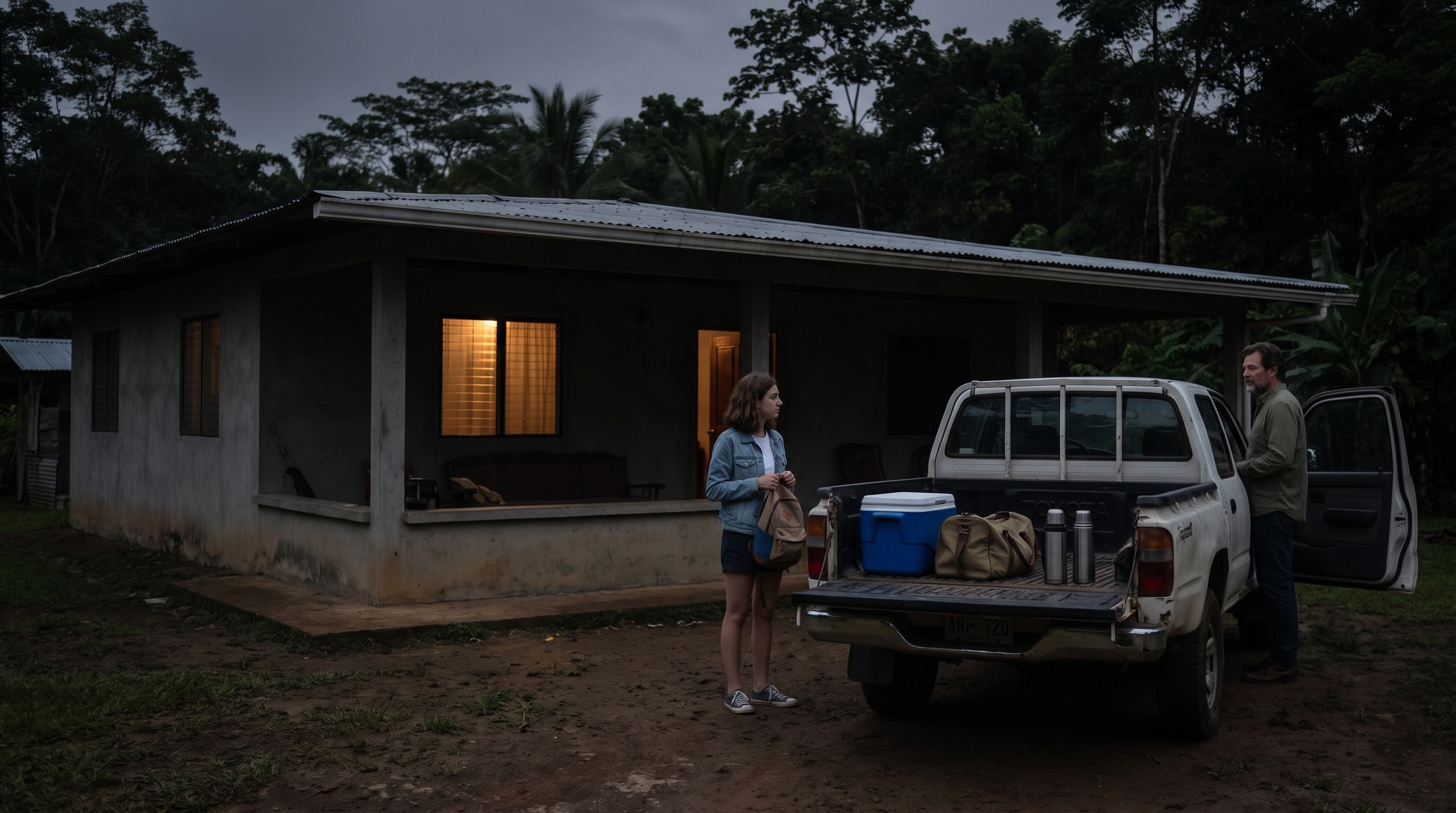
Mateo knocked on the post beside the terrace at three-forty-five, which I maintain is not a legitimate hour.
I came out in my denim jacket because every Panamanian had warned me that the mountain road before sunrise would feel cold and because I had learned, over three weeks, that when everyone local agrees on something bodily you do not argue with them from theory.
The air was damp and dark and full of insects that had not yet accepted morning.
“You’re alive,” Mateo said, sounding faintly disappointed.
“Debatable.”
He grinned and threw my backpack into the truck bed next to a cooler and two plastic bags I assumed contained food or emergency food or food that would become emergency food depending on how the day went.
Papa had the thermos. Of course he had the thermos. He handed me a cup without comment while Mateo secured the cooler with a strap whose previous life appeared to have involved horses, fencing wire, and at least one bad decision.
“How far?” I asked.
“To the turnoff? Not long,” Mateo said. “Then the mountain road. Then the port. Then the lancha.”
“That is not an answer.”
“It is all the answers in order.”
Valentina climbed into the back beside me with the expression of someone who had done this before and knew exactly which parts were worth being awake for.
We left the finca in the dark.
Chepo at that hour was mostly dogs, one light in a bakery, and the occasional truck with a purpose I was glad I did not need to understand. We took the Interamericana east toward Margaritas de Chepo. The road was almost empty. Papa sat in front with Mateo. Valentina and I sat in the back with the cooler between us and watched the black shape of the roadside vegetation move past.
At some point we passed the bridge over the Río Mamoní. Mateo pointed with two fingers off the wheel.
“After that,” he said. “Kilometre seventy-one. Left.”
There is a particular kind of trust involved in being driven through a sleeping country by a man who treats potholes as personal acquaintances.
The left turn came with no drama: a sign, a break in the roadside, a narrower road disappearing into darker country.
“El Llano-Cartí,” Valentina said.
The road changed immediately.
Not rough, at first. Just different. More intention than traffic. More curve than straight line. The truck began to climb.
I looked at my phone. No signal.
“Good,” Mateo said, seeing me do it in the rearview mirror. “Now you have to pay attention.”
The Threshold
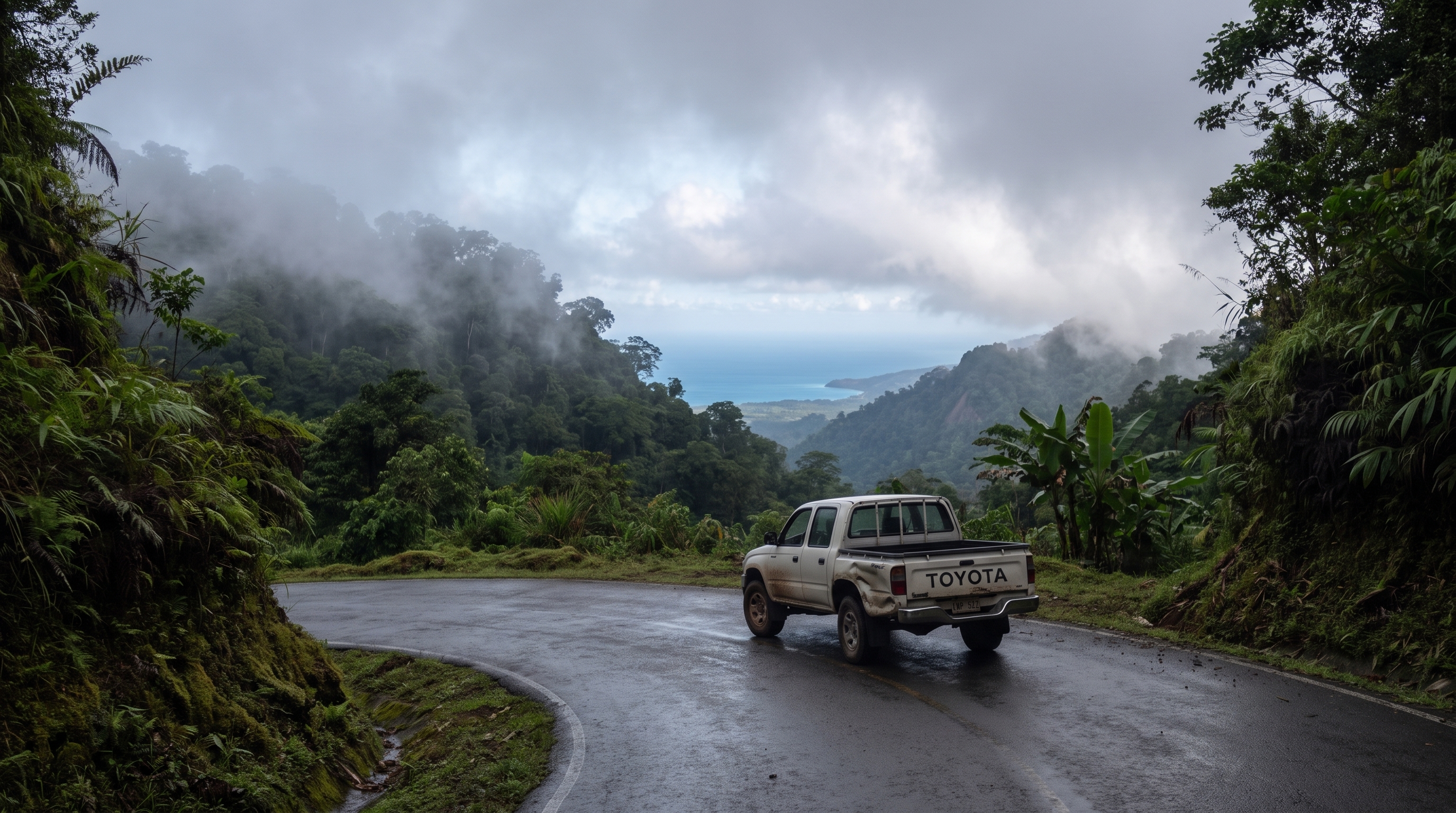
By the time the sky lightened properly we were already in the mountains.
The road curled up and over itself through green so dense it made the Chepo roads look edited down for simplicity. Mist lifted out of the trees in slow white strips. Sometimes the pavement was good enough to let you forget where you were for thirty seconds. Then there would be a drop at the edge of the road that reminded you.
At kilometre nineteen there was a checkpoint: a few structures, people already awake, uniforms, the specific mood of a place where one jurisdiction ends and another begins.
Mateo pulled over. Papers. Fees. Short conversation. One man looked into the truck, saw two German-looking people and two Panamanians who were clearly not remotely concerned, and lost interest in us immediately.
“That’s it?” I asked when we were moving again.
“That’s the line,” Valentina said. “Chepo there. Comarca here.”
The word sat with me. Comarca. Not province. Not district. Something with its own edges.
The road after the checkpoint changed again. Higher. Narrower feeling, even where it technically wasn’t. More curves. More moments where the mountain opened on one side and I could see layers of ridges falling away into haze.
Then the Caribbean appeared.
Not gradually. Not politely. One turn, trees, guardrail, cloud. The next turn: blue.
I made an involuntary noise which I will not spell out because I would like to retain some dignity.
Below us, through a break in the ridge, the water was a color I did not have a category for. Not Baltic. Not swimming-pool turquoise. Not anything I had seen in postcards, because postcards always look like propaganda and this did not. This looked excessive. Like a country showing off without embarrassment.
Small islands were visible farther out — green dots, some with what might have been houses, some just palms and light.
“There,” Mateo said, pleased with himself, which was fair. “Now you’re awake.”
“That is rude,” I said.
Valentina laughed. “No. It’s the correct reaction.”
The road eventually loosened its grip on the mountain and gave us back flatness in pieces: a strip here, a shoulder there, then a long straight section that looked, for a moment, like we were driving over an abandoned runway.
“Old airstrip,” Papa said, reading my face.
At the far end: water, boats, people, coolers, children, engines, salt.
“Niga Kantule,” Mateo said.
The lancha was waiting.
What They Put in Front of You First
The boat ride was short enough that I had no time to become philosophical and long enough for the salt to get into my hair and my mouth and the cuffs of my jacket.
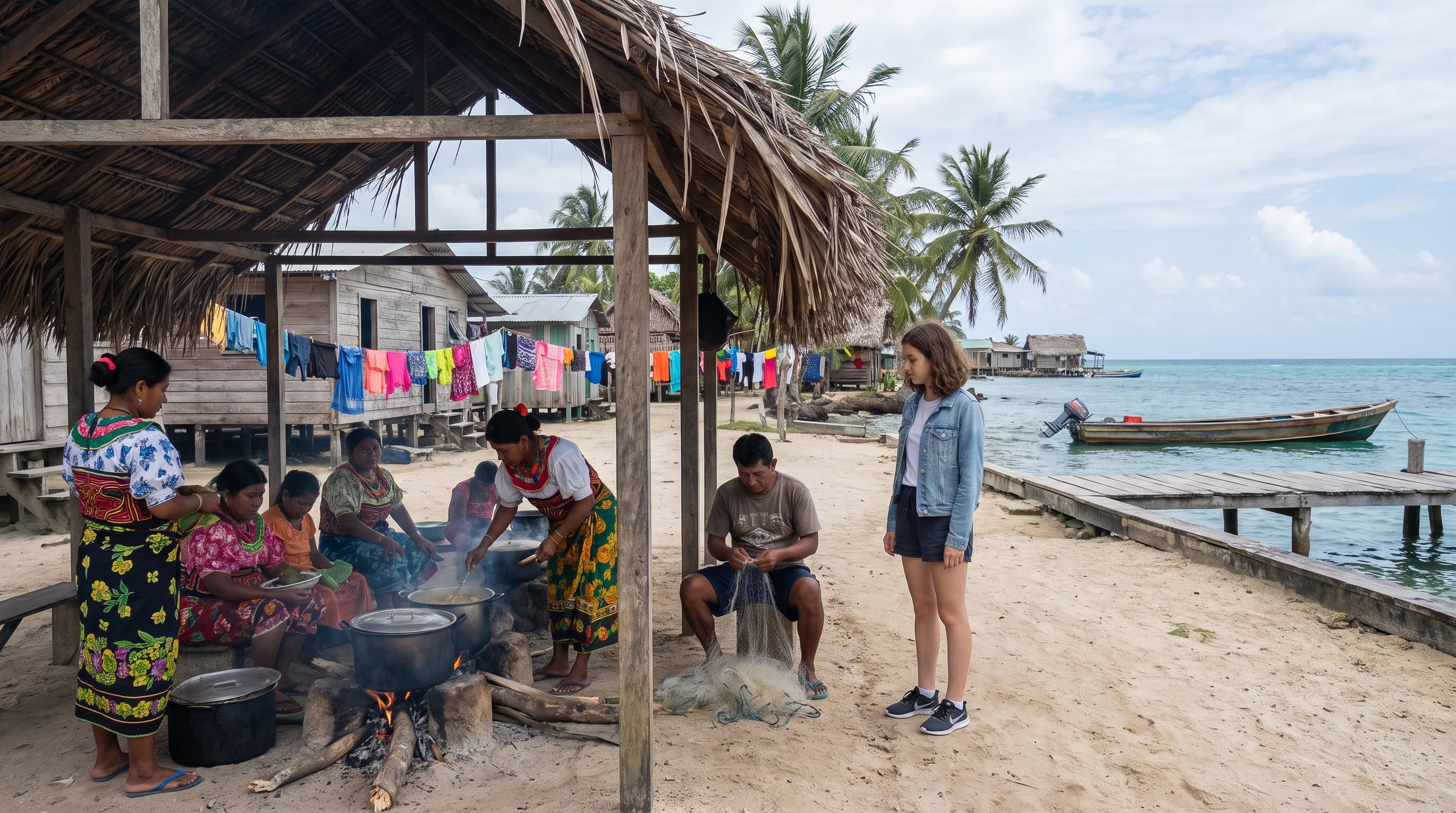
The island was small. Not in the abstract sense in which all islands are smaller than continents. Small in the sense that if you stood at one edge you could see the other through palm trunks and houses on stilts and laundry in colors that looked aggressive against the sand.
The first thing I noticed was the cloth.
Not because I was now some trained observer of Panamanian textiles. Because the mola panels were impossible not to notice. Layered color. Red inside yellow inside black inside green. Geometric animals. Shapes that looked almost like circuitry until you looked long enough to see they were older and stranger than anything on a screen.
One of the women wore gold in her nose and beadwork wrapped around her lower legs in dense color from ankle nearly to knee. Another had a blouse whose front panel looked like someone had cut open a stack of colored paper and found a whole world inside it.
I stared, which was unavoidable, and then tried very hard to stop staring in the rude way and continue staring in the observational way.
Mateo knew a family there. Of course he did. Mateo seemed to know everyone between the Pacific mud and the Caribbean shallows. There were greetings, names I didn’t fully catch, the immediate redistribution of bags, and then we were being directed toward shade with the kind of efficiency that told me there had never been any possibility of us refusing hospitality.
I sat where I was pointed.
Valentina leaned in briefly. “Eat what is offered.”
“That sounds like advice you only give when the thing is about to be difficult.”
“Just eat what is offered,” she said, and sat back.
The first bowl arrived.
This is where I would like to claim maturity, openness, an anthropologically admirable lack of prejudice. That would be fiction inside fiction.
What they put in front of me first looked, to my Berlin eyes, unfortunate.
A pale broth. Something starchy in it — boiled plantain, I thought. Soft in the way soft things become immediately suspicious when you are sixteen and have not been prepared. A cup of something thin and slightly cloudy that smelled faintly sour.
I looked at the bowl. I looked at the cup. I looked at Mateo, who had already started eating with complete calm, which made it worse because it removed any possibility of collective panic.
Valentina did not look at me. Papa definitely did not look at me, which meant he was absolutely aware of everything.
I took the first spoonful.
It was not disgusting. That would have been easier. Disgust has clarity. This was harder because it was plain and unfamiliar and impossible to classify quickly. The plantain was soft and dense. The broth had almost no decoration to it at all. The drink was sour in a way that was not pleasant exactly but was not wrong either. It simply had no interest in winning me over.
So I kept eating.
Not heroically. Not with cultural nobility. Because everyone else was eating and because after three weeks in Panama I had at least learned that public refusal of food given in good faith is almost always a way of announcing something ugly about yourself.
Halfway through the bowl, one of the women noticed I had stopped thinking about my face and started actually eating. She said something to Valentina. Valentina answered. The woman smiled without sentiment and disappeared back toward the cooking area.
“What did she say?”
Valentina’s mouth did something dangerous at the corner. “Nothing for you yet.”
“That is ominous.”
“Keep going.”
So I finished the bowl. I drank the cup. Sour, then less sour, then suddenly fine once I had stopped trying to compare it to anything else.
And then the real food arrived.
Fish. Proper grilled fish, the skin blistered and dark in places, the flesh white and clean. Coconut rice. Patacones. Something with onion and lime. More than that, even: the entire table changing register from test to abundance so visibly that I nearly laughed.
I looked at Valentina.
She lifted one eyebrow.
“You all knew,” I said.
Mateo grinned. “Of course.”
“Nobody warned me.”
“If we warn you,” he said, “it doesn’t work.”
“What doesn’t work?”
Papa answered this time, quietly. “The reading.”
I looked at him.
The fish was extraordinary. Which, under other circumstances, would have dominated the memory. It didn’t. What stayed was the sequence.
First the thing that, to me, looked plain and wrong and disappointing. Then, after I ate it without making myself the center of the occasion, the feast.
I sat there with a piece of fish in my hand and felt something click into place so audibly inside my head I was surprised nobody else heard it.
The women had not been feeding us badly and then well.
They had been learning who we were.
The Better Thing Comes After
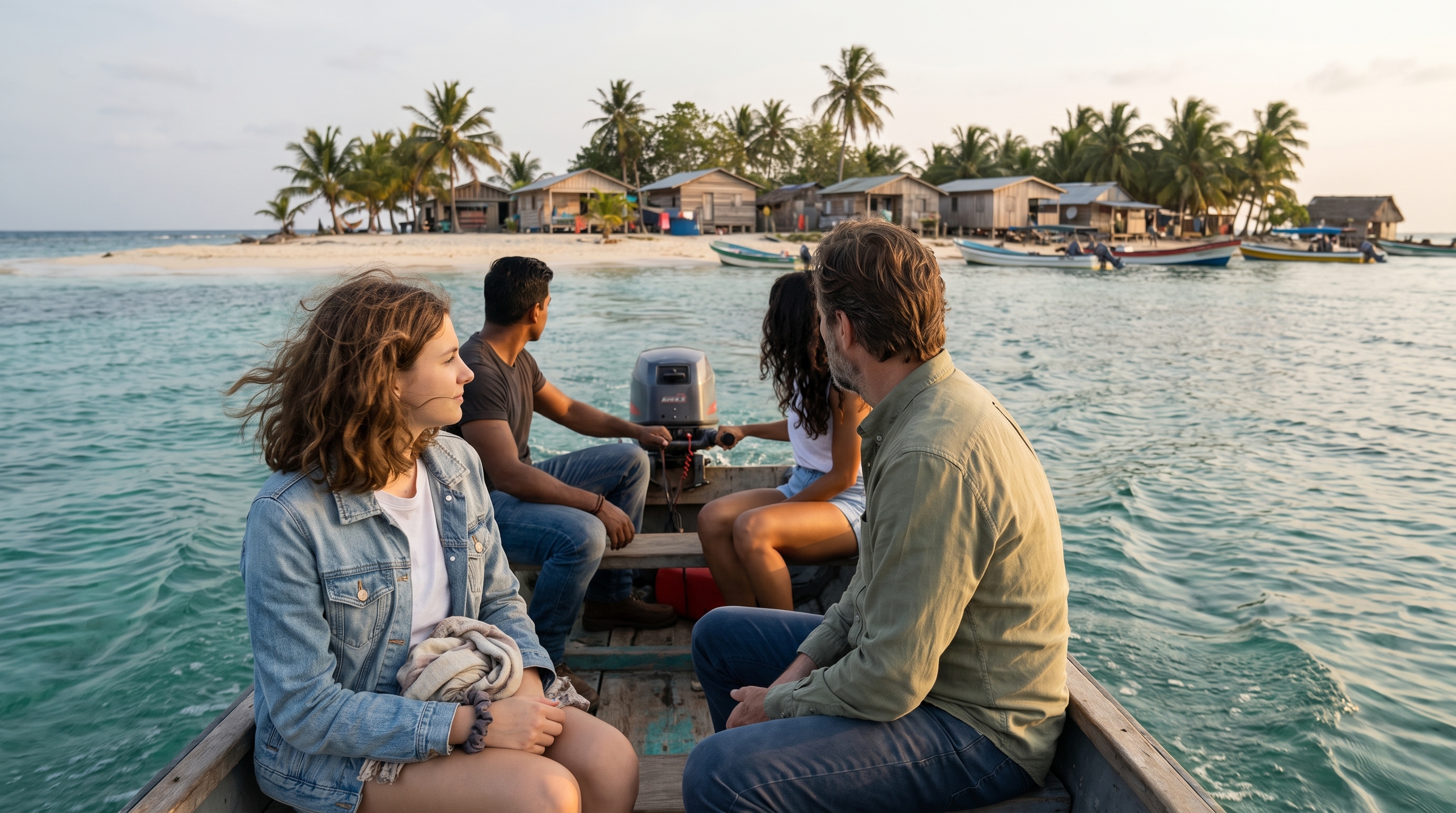
On the boat back I sat beside Papa and watched the island get smaller.
He didn’t ask the kind of immediate, efficient question he might have asked three weeks earlier: well? what did you think? He had learned, or remembered, that some things needed room before language.
So we were halfway back to the port when I said, “You knew that was a test.”
“I suspected.”
“And you said nothing.”
“If I had said something, you would have been performing for the idea of the test.” He looked out at the water. “That defeats the point.”
“That is extremely annoying.”
“Yes.”
I looked at the wake behind us. White and temporary and already being pulled apart by the water around it.
“I thought the first food was the bad food,” I said.
“I know.”
“That feels important in a way I don’t yet have words for.”
“Also yes.”
That was all we said about it then, which was enough.
The truck ride back from the port was quieter. Everyone had spent whatever first energy they brought with them before dawn. Mateo still drove like a man with a private arrangement with mountain roads, but even he talked less on the return.
Cloud was rolling over the upper ridges when we climbed back through them. At one turn I could still see the sea through a break in the trees — one impossible blue strip between darker greens — and I thought, with a kind of embarrassment I kept to myself, that the meal had done something very similar to me as Panama itself had been doing all month.
It had refused my first category.
It had let me be wrong before it let me understand.
By the time we got back to the finca it was late. Not dramatic-late. Just late enough that nobody pretended there was another adventure still available in the day.
I packed.
The green notebook. The piece of pollera ribbon. The photograph Papa had printed for me of the finca from above. The list of scorpion species in Esteban’s handwriting. Sand where there should not have been sand. Salt in everything.
And, because it had been pressed into my hand at the island when we left and refusing it would have been stupid, a small scrap of patterned cloth — not a mola panel, nothing so grand, just a piece from something utilitarian, geometric and bright and unmistakably from there.
I looked at it for a while before putting it in the notebook.
Layers, again.
Always layers.
Tocumen
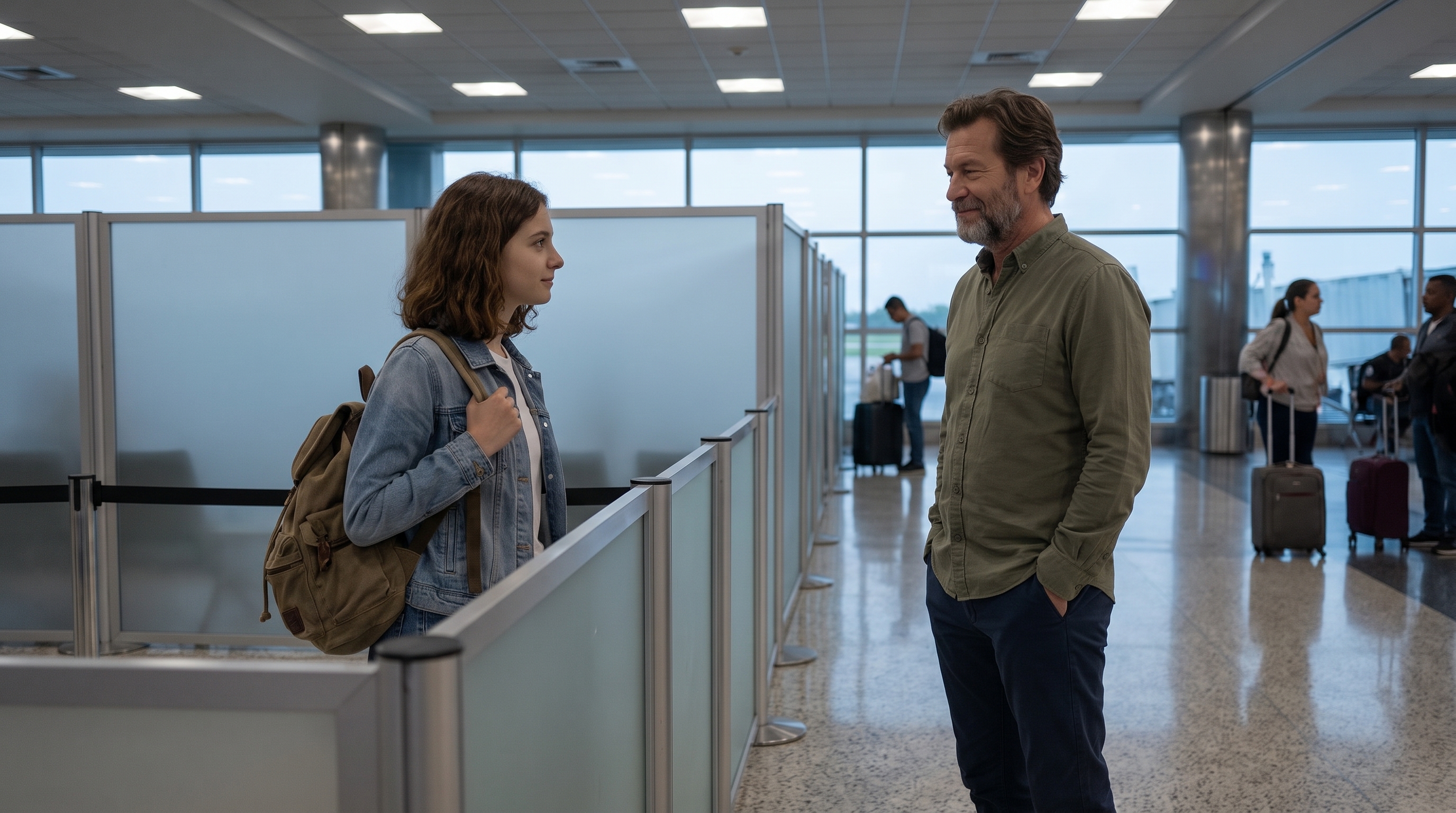
At Tocumen the next morning the air conditioning was so aggressive it felt ideological.
My denim jacket, which had spent most of the trip functioning as luggage, was suddenly necessary again. The airport was all glass and polished floor and the particular anonymous brightness international airports use to imply that movement is natural and no one belongs anywhere for long.
Papa came as far as the point where he had to stop.
We were both tired in the clean, flattened way that follows a pre-dawn departure, a full day somewhere else, a late return, and another pre-dawn drive. It helped. Exhaustion removes the temptation to perform emotion for yourself.
He held me for a moment. Not tightly. Not for too long. Just enough.
“Eat something in Madrid,” he said.
I laughed once. “That is a threat now.”
“Good.”
“I mean it,” I said. “About next year. Or sooner.”
“Or sooner,” he said.
I looked at him properly one last time before the line took me forward: the messenger bag, the watch, the face that had always been my father’s face whether I was angry with it or not, the expression he gets when he is containing more than he intends to say aloud.
Then I went through security.
I didn’t look back.
Not because I was trying to prove something. Not because looking back would have broken me open and turned me into a tragic girl in an airport film. Because I understood, finally, that not every first impulse deserves obedience.
Sometimes the thing served first is not the thing itself.
Sometimes the first version of the story is only the part you have been given because you haven’t stayed long enough yet.
On the plane, after takeoff, somewhere over water I now knew how to distinguish, I opened the notebook and wrote:
what I know about Panama: it does not hurry to explain itself. If you decide too fast, you miss it.
Then, below that:
what I know about my father: same problem. same answer.
I looked at the lines for a while.
Then I added one more.
eat what is offered first.
🎭 This Week's Episodes
Telenovelas show what we can't say in client meetings. The drama is heightened, but the patterns are real.
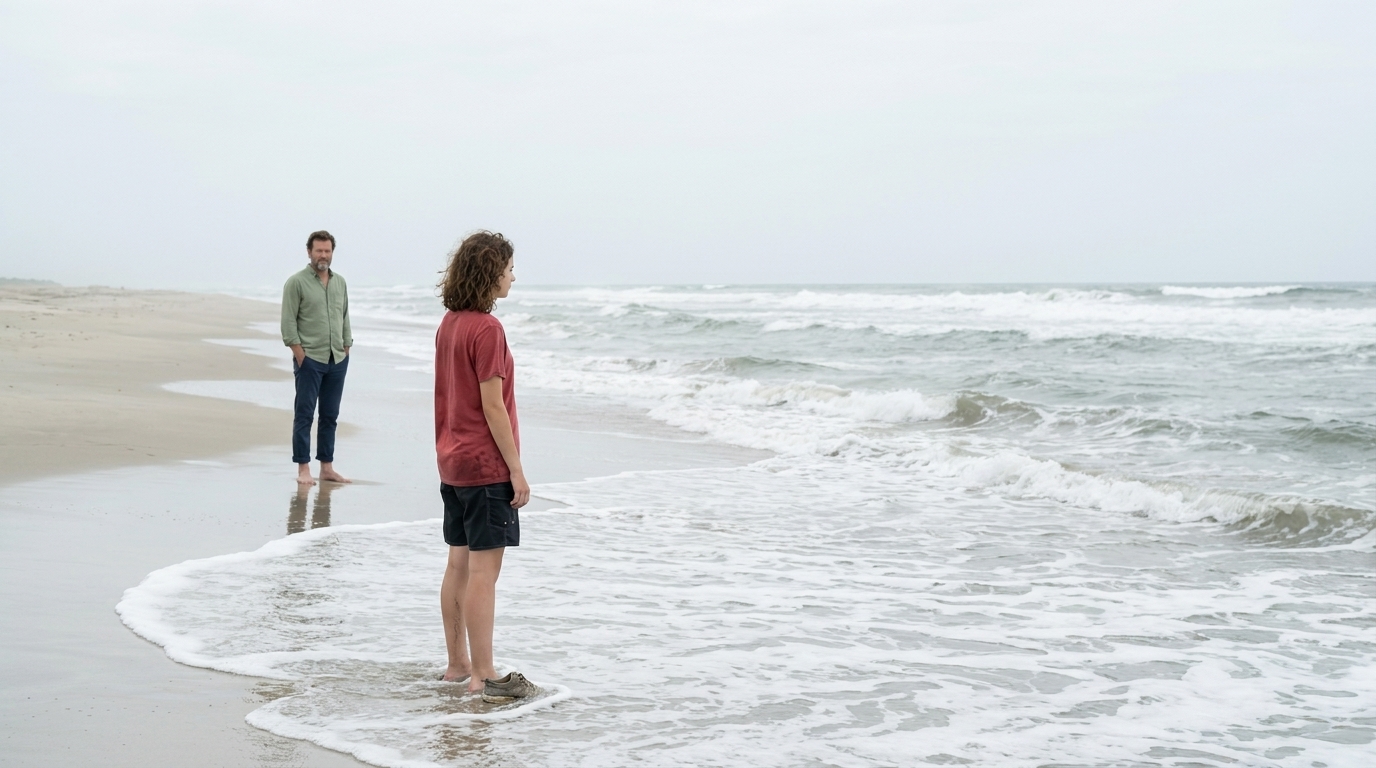 Three Ways to Understand a Country
Stefan drives Sophie to the Pacific for two days. The beach is big enough to make her feel appropriately small. Back at the finca the rain keeps th...
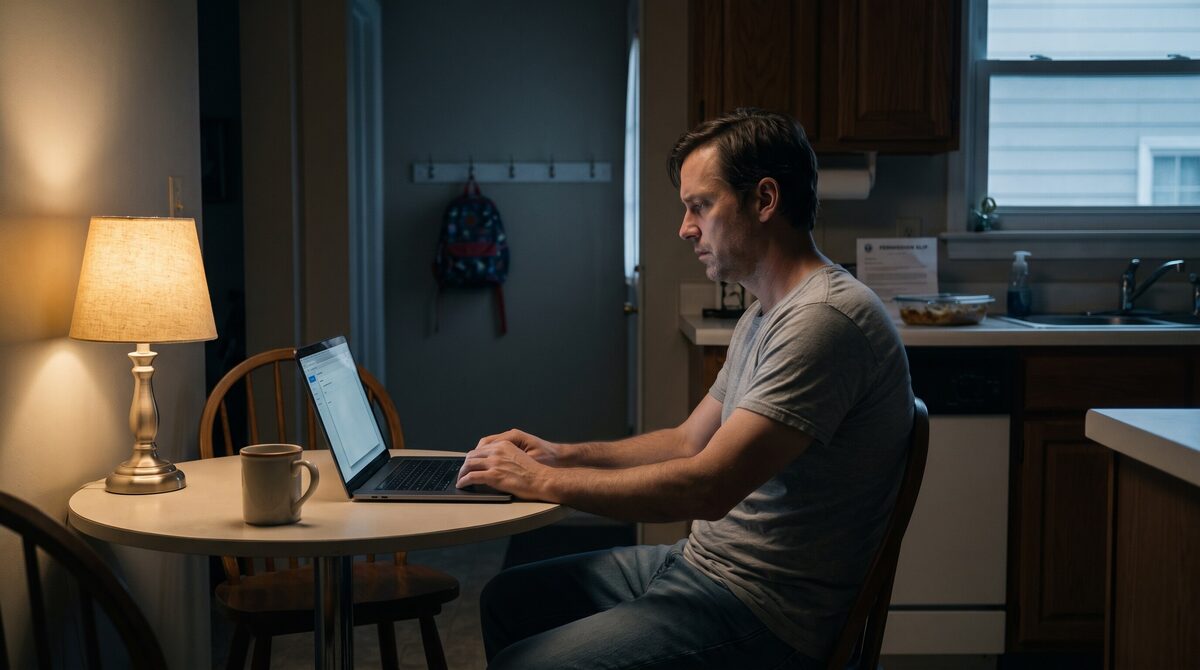 The Resignations
Nathan Cole resigns on a Monday morning with two sentences and no argument left in his body. By Tuesday his desk is empty and the company's institu...
Technical Consultancy
Embedded Delivery Partner
Embedded into your team as an active contributor, reducing delivery friction and helping important work move cleanly.
Technical Advisor
Peer-style technical assessments before far-reaching decisions; reduce architectural and product risk early.
Product & Delivery
Ship working software to real users earlier. Measure impact and adapt based on evidence rather than assumption.
Custom Software Development
High quality, maintainable software. Short-term augmentation that leaves lasting capability in your own team.
Recent Articles
- When Everything Is Finally Under Control (28.09.2026)
- AI Makes Technical Execution Cheap. Judgment Stays Scarce. (24.09.2026)
- The LLM Will Not Come Back Tomorrow (19.09.2026)
- The One-Person AI Company Is a Greed Fantasy (15.09.2026)
- Test Production Without Leaving a Mess (10.09.2026)