The Offshore Disaster
With Nathan gone and only Caleb Turner and Marcus Doyle left in the development room, Graham Whitaker and Derek Lawson need a story that turns understaffing into prudence. Preston Hale gives them one: hire offshore programmers, buy flexibility, add structure, and stop treating resistance as expertise. Derek dives into Upwork with the confidence of a man who mistakes searchable profiles for operational understanding. He finds web developers in India and Pakistan who are competent, diligent, and entirely wrong for the work in front of them: no COBOL, no VB6, no payroll domain knowledge, no way to reconstruct a Frankenstein architecture from work packages and binders. Caleb and Marcus try to explain this, but fear without authority has become just another input Graham and Derek know how to rephrase. As billable hours accumulate and customers begin to feel the damage, the company keeps calling the effort a transition. Meanwhile year-end approaches, the COBOL batches remain untouched, and everyone in the room starts behaving like people who know winter is coming but still believe vocabulary can count as insulation.
Tuesday, 10:08 — Commodity Logic
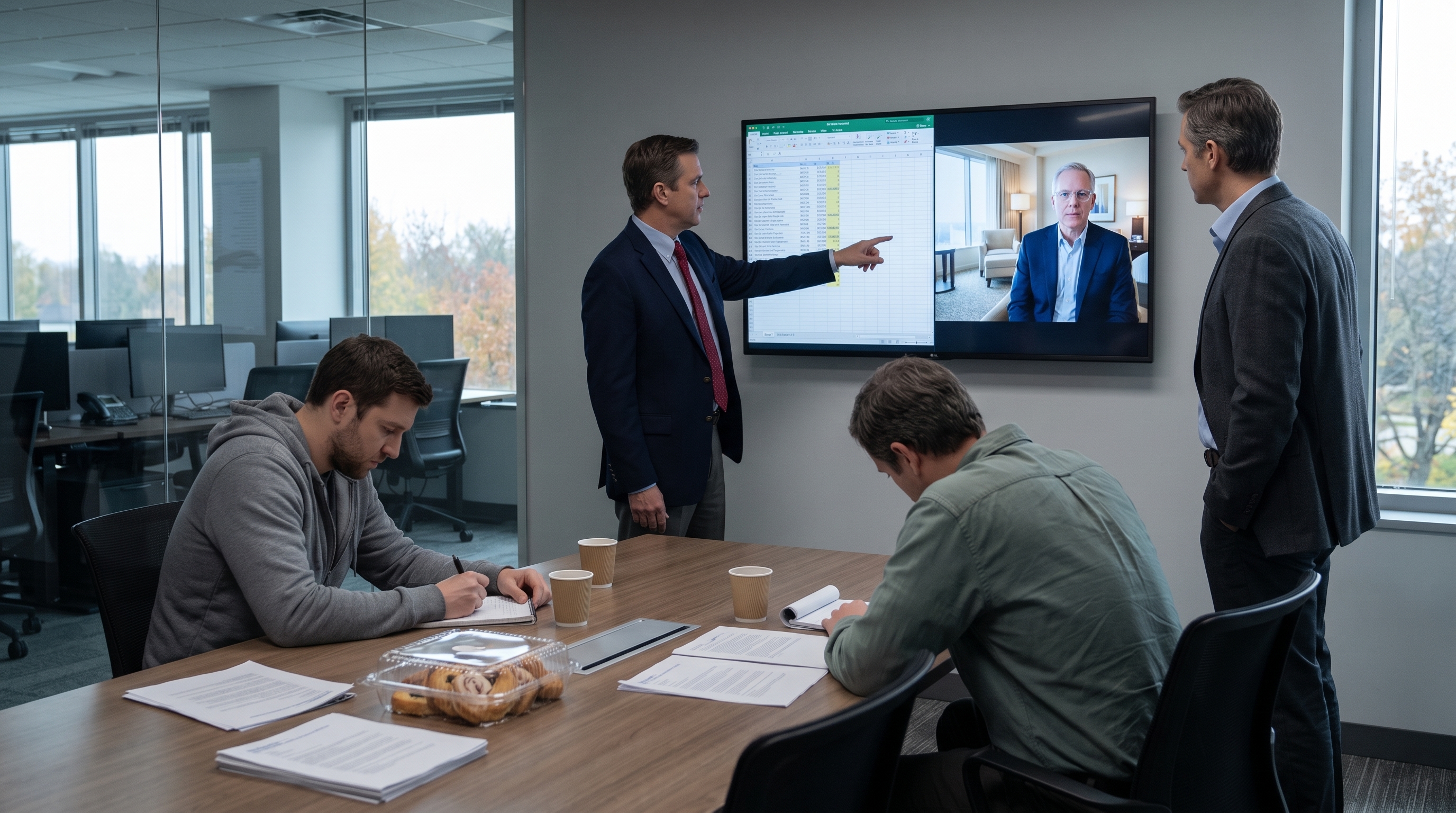
By Tuesday morning, the absence of three programmers had already been converted into a deck.
Derek had titled the first slide RESOURCING PATHWAYS.
The phrase carried the clean, medicinal optimism of language designed specifically to prevent the room from having to say what had actually happened, which was that the company had driven away the people who understood its systems and was now staring at the hole as if the hole might accept a management term in place of engineering knowledge.
Graham sat at the head of the table with one cuff unbuttoned and rebuttoned it twice during the first five minutes without seeming to notice he was doing it.
Sleep had not improved him. His eyes looked tender around the edges, as if grief and embarrassment had started using the same muscles.
On the screen at the front of the room, Preston joined from a hotel suite in Chicago or Dallas or one of the other cities whose interchangeable business interiors allowed successful men to appear permanently in transit without ever looking displaced.
Behind him: abstract art, a chrome lamp, two bottles of sparkling water aligned on a credenza with the aesthetic precision of a room maintained by invisible labor.
“What we’re solving for,” Preston said, “is not merely staffing. It’s dependency concentration.”
Derek nodded immediately and clicked to the next slide.
CURRENT STATE: SINGLE POINTS OF FAILURE.
Underneath, bullets.
COBOL knowledge.
Legacy batch flow.
VB6 client behavior.
Payroll domain edge cases.
Caleb looked at the slide and felt a hot, almost adolescent urge to say, Those are not points. That’s the whole system.
He said nothing yet.
Marcus sat beside him with his hands folded too neatly on the table. He had learned over the last two months that visible alarm, when it came from people without title, tended to get reclassified as emotionality. So he kept his face still and let the alarm happen deeper in the body, where nobody in the room could write minutes about it.
Preston went on.
“Organizations in transition often over-romanticize irreplaceability. The healthier question is: where can capability be modularized? Where can expertise be distributed?”
Graham took that in with visible relief.
Modularized.
Distributed.
Those were the kinds of words that preserved self-respect. They suggested a systems problem. Systems problems were morally cleaner than human ones. A systems problem did not require Graham to admit that he had mistaken governability for trustworthiness or that he had kept choosing the people who helped him feel less ashamed over the people who helped the company become more correct.
“Exactly,” he said. “We need resiliency. We can’t be in a position where the departure of one or two people destabilizes the whole company.”
Caleb’s jaw tightened.
One or two people.
The company had already lost Ethan, and now Nathan, Olivia, and Ryan. The sentence reduced the hemorrhage to weather.
Derek clicked again.
A slide appeared with three columns: DOMESTIC CONTRACTING, CONSULTANCY, OFFSHORE TALENT MARKETPLACES.
“Domestic consultants with legacy specialization are expensive,” Derek said. “The firms that claim COBOL experience are quoting rates that are frankly unreasonable, especially given the limited scope of what we need.”
Caleb looked up then.
“Limited scope,” he repeated.
The room paused.
Derek turned slightly toward him, patient already arranged on his face.
“Meaning?”
Caleb knew the trap. If he said the whole architecture, he would sound dramatic. If he said we don’t know, he would sound unprepared. He felt the familiar pressure to translate danger into something the room would permit.
“Meaning the work isn’t separable in the way the spreadsheet implies,” he said. “The batch flow isn’t a module you peel off. The VB6 behavior isn’t isolated. Payroll rules leak across all of it. Nathan carried most of the integration logic in his head, and Ethan had only started turning some of that into tests.”
Preston listened with the expression he wore when allowing practitioners to say something locally true before he restored the strategic frame over it.
“That may be how it feels from the inside,” he said, “but complexity has a way of protecting itself rhetorically. If we start from the premise that only an increasingly narrow priesthood can touch the system, then we’ve already surrendered the future.”
What Preston, Derek, and Graham all shared was the same executive misunderstanding: they heard COBOL and VB6 and translated both to older programming languages. In their minds they sat beside Java or C# or Python as one more skill a competent developer could brush up on with enough diligence and a few good work packages. They did not understand what it meant to depend on a VB6 environment that only ran correctly on one aging Windows machine nobody could safely reproduce, or on a Micro Focus COBOL setup tied to another deteriorating computer that had become less a tool than a relic with a power button. To them this was staffing. To the people actually living inside the system, it was dependence on dead ecosystems, half-broken vendor tooling, extinct documentation paths, and a labor market where the surviving experts were expensive precisely because the surrounding world that once supported the work had already been allowed to die.
Marcus felt his stomach drop.
There it was again. That managerial magic trick in which a description of technical constraints became a moral confession of weakness the moment it entered the mouths of the people living inside them.
Graham leaned forward.
“What are you proposing exactly?”
Preston folded his hands.
“Offshore augmentation,” he said. “Not as a permanent answer. As a flex layer. You buy capacity. You increase optionality. You stop treating every knowledge gap as a reason for paralysis.”
Derek’s fingers tapped once against his tablet.
He had wanted Preston to say it first.
That was the advantage of consultants. They laundered appetite through authority.
“I’ve been looking at platforms,” Derek said. “Upwork in particular. There are teams with strong software backgrounds, much lower rates, good reviews, and the ability to scale quickly.”
Marcus heard himself breathe in.
Slow. Controlled.
He thought of Beth’s medication spreadsheet. Of staying quiet because his job had to remain a job, not become a performance of honesty nobody would reward.
Still, he spoke.
“Do they know COBOL?”
Derek glanced down.
“Some have legacy modernization experience.”
“That’s not what he asked,” Caleb said.
Graham’s face tightened.
Not much. Just enough to reveal that directness still registered to him as a breach before it registered as information.
Preston answered in the tone of a man smoothing a napkin over a stain.
“Specific tool familiarity can be acquired,” he said. “The larger issue is disciplined execution. If you give capable people clear work packages, milestones, and accountability, most software problems become manageable.”
Caleb almost laughed.
Not because it was funny.
Because his body sometimes did that when a statement was so wrong it couldn’t find a respectful place to land.
“This isn’t a website backlog,” he said. “This is a payroll system with COBOL batches nobody here can edit and a VB6 client we can’t reliably rebuild if it breaks.”
Derek straightened slightly.
“And that’s exactly why we need more hands,” he said. “The current team cannot continue operating as though scarcity itself is a strategy.”
Scarcity itself is a strategy.
Marcus looked at the untouched pastries and thought about how often language in this company now arrived pre-softened, all sharp edges removed, ready to be swallowed by people who had never stayed late enough to meet the system in its true form.
Graham exhaled and looked between Preston on the screen and Derek at the table.
He could feel the room offering him the version of events he most wanted: that the crisis was not a referendum on his judgment but a logistics issue, and that logistics could be solved by buying labor at scale.
He took the version gratefully.
“Fine,” he said. “Start the search. But I want structure around it. No improvisation. No heroics. We do this carefully.”
Caleb looked down at his notebook.
On the page he had written COBOL in block capitals and underlined it twice.
No one at the table said the word again for the rest of the meeting.
Thursday, 14:31 — Search Results

By Thursday, Derek had spent seven hours on Upwork and had started to confuse the sensation of sorting profiles with the possession of judgment.
The platform rewarded the kind of cognition he trusted.
Filters. Ratings. Response times. Hourly ranges. Portfolios. Completion percentages. Reviews written in efficient commercial prose by clients who wanted landing pages, Shopify integrations, admin dashboards, mobile bug fixes.
That world made sense to Derek.
It reduced uncertainty to columns.
He had never understood why the programmers insisted the Whitaker system could not be made legible in the same format. Everything yielded eventually to a spreadsheet if you were emotionally disciplined enough.
He clicked into a profile from Lahore. Full-stack developer. Eight years of experience. React, Node, Laravel, AWS. “Able to learn new domains quickly.” Top Rated.
Another from Pune. Frontend architect. Angular, TypeScript, .NET APIs, team lead experience. “Enterprise modernization.” Ninety-eight percent job success.
Another from Karachi. QA automation engineer. Selenium, Cypress, regression suites, client communication excellent.
Competent people, Derek thought.
Capable people.
Not frauds. Not fools. Professionals with the market-shaped resumes of professionals who had learned how to survive a global platform by staying versatile, responsive, and visible inside the categories that paid.
What Derek did not know how to see was the difference between adaptable software labor and historically specific system rescue.
He also did not understand what made COBOL and VB6 different from the modern stacks filling these profiles. To Derek, they looked like older dialects of the same profession, things a serious developer could pick up the way people picked up React after Angular or Go after Java. He could not see the missing world around them: the VB6 client that behaved correctly only on one old Windows box nobody dared touch too hard, the Micro Focus COBOL toolchain tied to another aging machine like a patient on legacy life support, the unsupported tooling, vanished build paths, vendor-specific runtime assumptions, institutional habits no bootcamp taught, and the brutal market fact that when the ecosystem dies, you are no longer buying syntax knowledge. You are buying the remnants of an operating culture.
To him, their breadth looked like proof of transferability.
To Caleb, had Caleb been in the room, the same profiles would have read as evidence of the opposite: smart people trained for modern web delivery being invited into a haunted house full of COBOL, VB6, payroll law, and undocumented batch behavior.
Derek opened Linda’s binder and looked at the tabbed sections with genuine gratitude.
He was not stupid. He knew there were gaps in the material. But the binder existed, which already made it emotionally superior to the programmers’ warnings. Warnings lived in tone and posture and urgency. Binders lived on desks. Binders sat flat. Binders gave the hand something to hold while the mind made optimism out of insufficiency.
He copied candidate links into a spreadsheet.
Aamir. Nikhil. Farah. Sameer. Bilal. Priya.
Hourly rates so much lower than the domestic COBOL consultant proposals that Derek felt, despite himself, a pulse of righteous irritation toward the latter. The consultants had quoted as if rarity entitled them to terms. Upwork, by contrast, seemed full of people still willing to act as though work could be earned by responsiveness rather than hoarded through mystique.
That was how Derek framed it.
Not as bargain hunting.
As moral correction.
When Graham stopped by the doorway at three fifteen, Derek was ready.
“I’ve shortlisted six candidates and two small teams,” he said. “Strong communication. Good reviews. Availability this month. The economics are significantly better than the domestic options.”
Graham stepped into the office and scanned the spreadsheet without really reading it.
Numbers first. That was the part he understood.
The domestic consultant quotes had offended him viscerally in a way the underlying risk never had. High expertise pricing always struck him as vaguely indecent, a kind of social arrogance by people who had mistaken scarcity for virtue. The lower hourly rates on Derek’s screen felt not merely cheaper but more democratic.
“And you think they can do it?” he asked.
Derek heard the hidden question underneath: Tell me this choice can still let me believe I am prudent rather than desperate.
“I think with structured onboarding and defined work packages, yes,” he said. “We don’t need philosophers. We need execution.”
Graham’s gaze landed on a profile description that included the phrase legacy modernization.
That was enough.
He wanted to believe modern software people were modern software people in the same way he wanted to believe all grief eventually condensed into a tasteful artifact you could display and move around the room without letting it smell like death.
“Proceed,” he said.
After he left, Derek sent invitations to interview.
As the messages went out, the office beyond his door continued moving under fluorescent light: Donna carrying a packet, Linda asking for clarification on a county exception, Sharon holding a yellow notepad against her chest like a shield.
Nobody in that corridor felt they were doing the wrong thing.
That was the terrible efficiency of the place now.
Everyone had found a posture that let them continue.
The Following Week — Onboarding Windows

The first onboarding call began at 4:00 p.m. Ohio time, which meant evening for the contractors and a measurable decline in patience for everyone involved.
Aamir joined from Lahore wearing a collared shirt and a headset with one ear uncovered. Priya appeared from Pune with a notebook already open and a practiced expression of attentive neutrality. Bilal connected from Karachi after a short audio delay and apologized twice before anyone had accused him of anything.
They all looked competent.
That was part of the problem.
Competence in the wrong language can be harder to refuse than obvious mismatch.
Derek began with confidence sharpened by preparation.
“We’re looking for support on modernization and stabilization,” he said. “Legacy environment, some desktop behavior, some batch logic, documentation refinement, implementation assistance. We’ll provide work packages and milestone expectations.”
On the whiteboard behind him, Caleb had drawn the actual architecture in black marker.
VB6 CLIENT -> FLAT FILE -> FTP -> COBOL BATCH -> SQL -> REPORTING -> CUSTOMER PANIC.
He had added the last phrase under his breath before the meeting started. Derek had erased CUSTOMER PANIC and replaced it with OUTPUT VALIDATION.
Now the board sat there with its arrows and acronyms like a map to a country nobody in power was willing to describe honestly.
Aamir nodded at the screen.
“Sure,” he said. “We have done many migrations from old system to new stack. Need to understand existing codebase and build plan.”
Priya added, “What is current source control? Is there a staging environment? Test suite coverage?”
For one brief second Caleb felt hope move through him like bad electricity. Real questions. The kinds of questions that came from people who actually built software.
Then Derek answered.
“Source control is mixed,” he said. “Some components are modernized, others are in legacy state. Testing coverage is partial but sufficient to begin. The immediate need is disciplined execution against defined deliverables.”
Caleb looked at the table.
Mixed.
Partial but sufficient.
Defined deliverables.
The language made the system sound unpleasant but governable, like an office renovation with some wiring challenges. It did not sound like a payroll company whose only COBOL-capable person had resigned, whose VB6 client effectively lived on one old Windows computer they could not replicate, whose Micro Focus COBOL path depended on another aging machine no one trusted, and whose modern test harness covered fragments of the logic precisely because the rest had left with Ethan.
Marcus spoke carefully.
“To be clear,” he said, “nobody here can currently modify the COBOL batches. We can explain data flow and some observable behaviors. We cannot hand you a stable legacy codebase with full build instructions.”
The contractors were quiet for a beat.
Bilal leaned toward his camera.
“No one can compile the batch?” he asked.
It was the first completely honest sentence in the meeting.
Derek smiled, the way people smiled when trying to prevent a room from hardening around the wrong fact.
“That capability is in transition,” he said.
Caleb stared at him.
Transition to what? Caleb thought. The batch could not be compiled by anyone in the room. The Micro Focus setup was stranded on one aging machine. The VB6 client lived on another old computer they could barely trust to boot on command. Nothing about that was transitioning. It was failing slowly while Derek renamed the failure into something that fit a slide.
In transition.
The phrase made his scalp prickle.
Aamir, still polite, said, “Then what is expected in first sprint?”
Derek clicked open the shared document.
WORK PACKAGE 1: CLIENT-SIDE INPUT REVIEW.
WORK PACKAGE 2: VALIDATION RULE DOCUMENTATION.
WORK PACKAGE 3: REPORTING WORKFLOW STABILIZATION.
WORK PACKAGE 4: BATCH BEHAVIOR OBSERVATION AND MAPPING.
Priya read silently, lips moving slightly. Then she asked, “Do we have runtime access for the VB6 application?”
Marcus answered this time before Derek could smooth it.
“On some machines. Not a reproducible clean install.”
“And batch source?”
Caleb said, “Readable in places. Editable in theory if you have the Micro Focus setup on the one aging machine that still has it. The VB6 side is the same kind of problem on a different old Windows box. Nobody left here has a working edit path we can trust.”
Derek interjected.
“The point of this phase is not to over-focus on constraints. It’s to create momentum.”
Priya glanced down at her notebook.
Aamir sat back slightly in his chair.
Something subtle changed in all three contractor faces at once. Not offense. Not disrespect. Professional recalculation. They were realizing, in real time, that the scope they had been sold was not the scope actually in the room.
Caleb saw it and almost pitied them.
He wondered what Derek thought he was watching.
Probably hesitation. Probably the normal friction of onboarding. Probably more evidence that software people, everywhere, preferred complexity to accountability.
The call ran ninety minutes.
By the end, access tickets had been requested, folders had been shared, and nobody on either side felt steadier than when they began.
After the contractors signed off, the room went quiet.
Donna adjusted the edge of her packet.
“They seemed smart,” she said.
She meant it kindly.
What she meant also was: Perhaps the adults are finally handling this.
Marcus rubbed both hands over his face.
“They are smart,” he said. “That’s not the problem.”
Derek closed the laptop.
“Let’s not start from negativity,” he said. “They asked good questions.”
Caleb looked at the erased whiteboard joke and then at the actual arrows underneath it.
“Yeah,” he said. “Questions we don’t have answers to.”
Derek gathered his papers.
“Which is why we hired help,” he said.
Help.
The word hung in the room with all the sincerity of a bandage offered to a fracture that needed surgery.
Three Weeks Later — Billable Hours
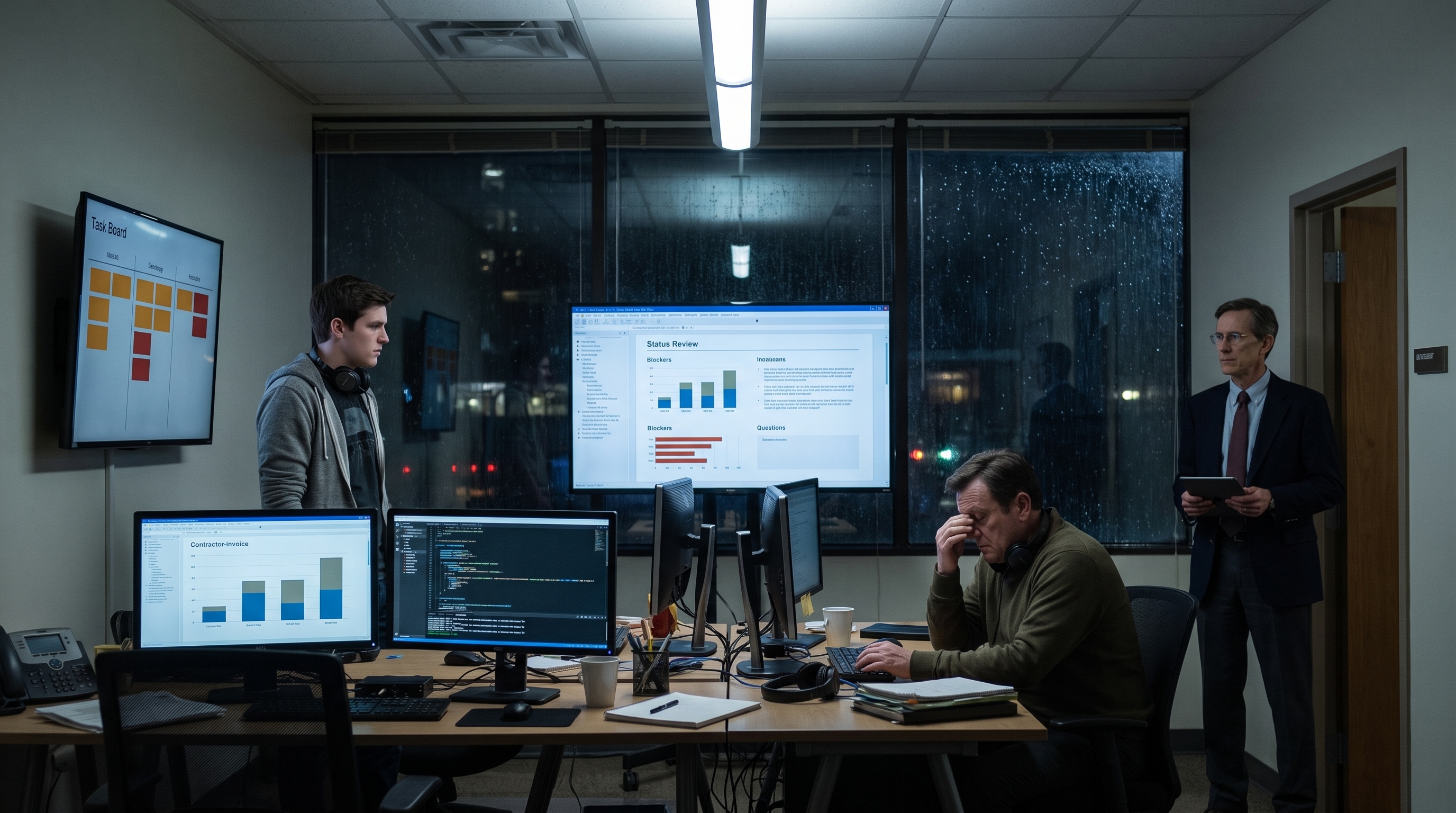
Three weeks later, the task board looked busier than the codebase.
That was Derek’s first private warning sign, though he did not experience it as a warning. He experienced it as an irritation with explanation. Too many blockers. Too many clarifying questions. Too many requests for environment details, data dictionaries, sample files, decision trees, reproduction steps.
In his mind the pattern meant the contractors were still acclimating and the internal team was still being overly precious about context.
In Caleb’s mind it meant the contractors had finally grasped the scale of the void and were professionally trying not to say, You cannot onboard us into a system that exists mostly as absences.
The invoices arrived weekly.
Not monstrous individually.
That was how bills get permission to become large.
Aamir’s team had spent 22.5 hours investigating the reporting export flow and produced a careful document explaining that several field definitions appeared to depend on upstream behaviors not visible in the current repository.
Priya had logged 14 hours reviewing the validation packet and translated three pages of prose into a decision table that immediately exposed six contradictions between Donna’s descriptions and observed outputs.
Bilal had spent 11 hours trying to launch the VB6 client on a provisioned virtual machine before concluding that one missing control library made the entire exercise mostly ceremonial.
None of this was useless work.
That was part of the tragedy.
The contractors were doing exactly what competent people did when they encountered ambiguity honestly: documenting it, asking for sharper boundaries, trying to move from symptom toward mechanism.
But honest ambiguity was the one input Whitaker’s leadership had trained itself not to metabolize.
At the Thursday status review, Derek stood at the wall monitor with the red and amber board behind him and tapped the line item labeled DELIVERABLE VELOCITY.
“We’re spending a lot of time in discovery,” he said. “At some point discovery needs to become execution.”
Aamir, joining remotely, answered with visible caution.
“Execution against what, exactly?” he asked. “The documents are incomplete, the runtime environment is inconsistent, and some of the rules appear to live only in human memory. We can continue mapping, but implementation confidence is low without source control clarity.”
Derek’s nostrils flared slightly.
Only slightly.
That was all his body ever permitted itself in public.
“I appreciate the thoroughness,” he said. “But from an accountability standpoint, we need to start converting hours into movement.”
Marcus looked down at the invoice sheet Derek had included in the weekly review packet.
Movement.
There it was again: the executive preference for verbs that sounded kinetic enough to substitute for progress.
Caleb spoke before he could stop himself.
“They’re moving,” he said. “They’re discovering we don’t know what system we’re asking them to fix.”
Silence.
Rain streaked the window behind the task board.
Derek turned toward him.
“Comments like that are not helpful,” he said.
Caleb’s pulse kicked once in his throat.
He was not trying to be brave anymore. Bravery implied aspiration. What he felt now was the crude reflex of a body that had watched too many true statements be treated as manners problems.
“They’re accurate,” he said.
Marcus closed his eyes for a second.
Across the screen, Priya said nothing. Bilal adjusted his headset. Aamir lowered his gaze to something on his desk. All three contractors had learned quickly what the Whitaker room rewarded: not precision, not even agreement, but the ability to survive other people’s need for optimism.
Derek ended the call three minutes early and announced a follow-up process review for Monday.
After he left, Marcus opened the shared invoice summary again, then the customer support queue Derek had been using as proof of “movement.”
Numbers rising.
Code not meaningfully advancing.
Customer support tickets were beginning to carry a different tone: not routine confusion, but annoyance sharpened by repetition.
The connection was plain if you were willing to look at it without managerial anesthesia. The contractors were spending paid hours uncovering contradictions in report logic, validation rules, and environment behavior. Those discoveries were not turning into reliable fixes. Support still needed something to tell clients, so dates got implied, reassurance got over-issued, and the same unresolved problems kept coming back through the queue with sharper language each time.
“We are paying people to find the edges of a hole,” Caleb said.
Marcus nodded.
He thought of Beth filling her pill organizer at the kitchen counter.
“Yeah,” he said. “And pretending the hole is a roadmap.”
Mid-November — The Untouched Part
By mid-November, the phrase year-end had started appearing in every meeting without changing anyone’s behavior.
That was how dread often entered institutions: first as a calendar item, then as a recurring noun, then as weather nobody had yet agreed to fear.
Whitaker Payroll’s year-end processing was not decorative work.
W-2 season was the sacred period, the part of the business clients actually remembered when judging whether the company deserved to exist. People tolerated a mediocre interface, a clumsy support call, a weird report export. They did not tolerate tax forms arriving wrong.
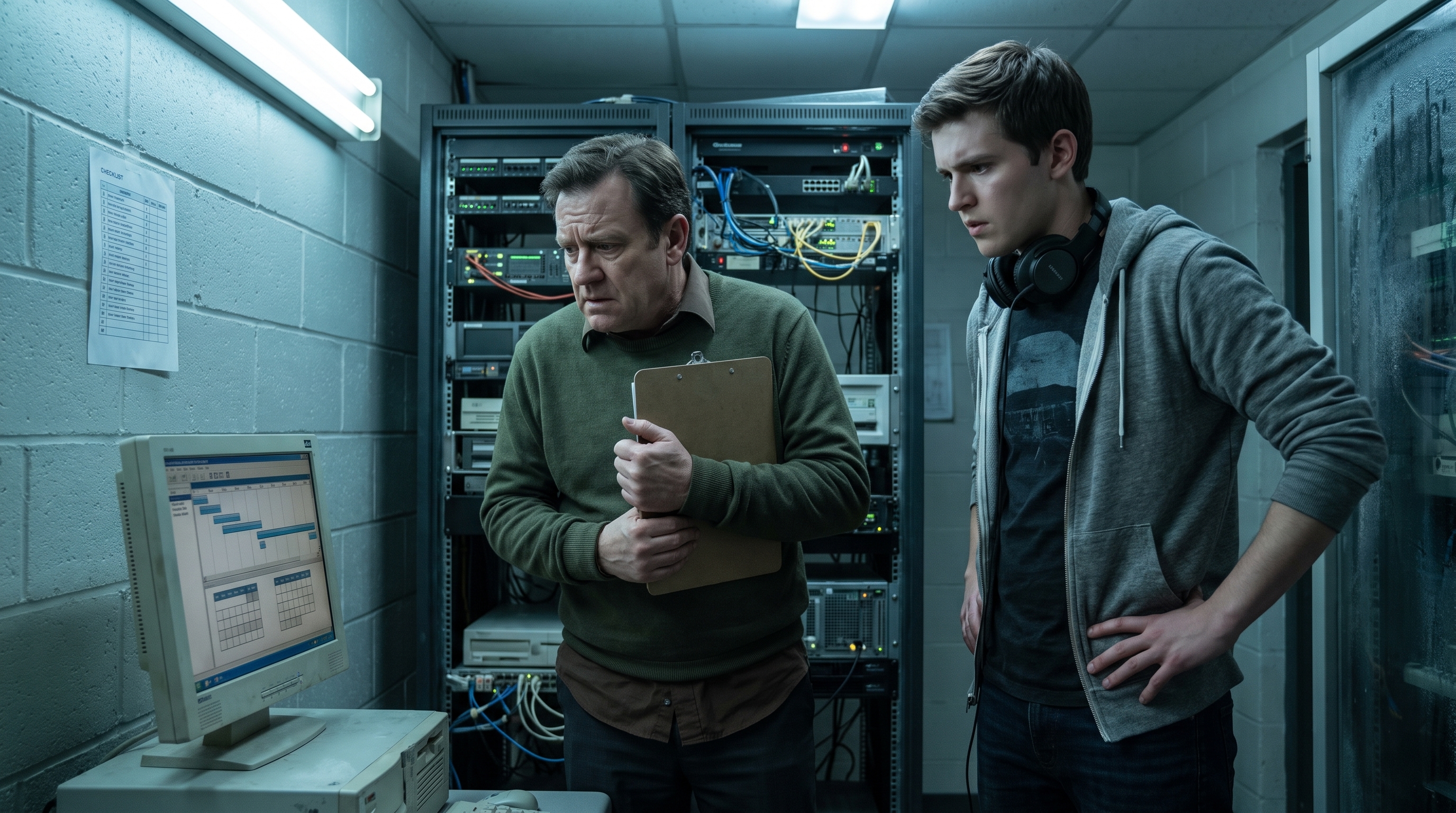
In the operations nook beside the server room, Marcus pulled up the year-end checklist Nathan had revised annually for the last decade.
It was a plain text file.
No branding. No template. Just a sequence of terse reminders written by a man who had known exactly which parts of the system could kill the company and had not needed a packet to remember them.
VERIFY municipal withholding table updates.
RUN pre-year-end exception comparison.
CHECK W-2 output alignment on sample clients.
RECOMPILE batch after tax table adjustment if state updates touch calculation path.
Marcus stared at that last line until it blurred slightly.
Recompile batch.
That was the untouched part.
The offshore team could document around it. Derek could build milestones around it. Linda, Sharon, and Donna could surround it with packets, review loops, historical caveats, and highlighted exceptions from 1987. None of that altered the simple mechanical fact that if something in the COBOL calculation path needed changing, nobody at Whitaker Payroll currently possessed a safe way to do it.
Caleb stood beside him reading over his shoulder.
“We haven’t touched any of this,” he said.
It came out quieter than Marcus expected.
The fear was changing his voice. Making it more careful. More legible inside the grammar of the place that had punished every earlier version of plain speech.
Marcus clicked open the batch schedule.
Jobs queued. Last successful runs. Runtime durations. Familiar green.
The system still looked healthy in the operational sense, which was another way legacy systems lied to the people keeping them alive. They could be moments from catastrophe and still emit the visual grammar of routine.
“We should tell Graham directly,” Caleb said.
Marcus did not answer at first.
He thought about every other direct statement that had traveled upward through this company and returned as a personnel problem.
He thought about Nathan.
About Ethan.
About the word disloyal.
“We can tell him,” Marcus said finally. “I just don’t think that changes what he hears.”
Caleb’s hands went to his hips.
“So what, we just stand here and wait for tax season to happen to us?”
Marcus felt the question in his teeth.
In the server room beyond the glass, fans hummed with the calm indifference of machines that did not know their keepers had already been replaced with process.
“No,” he said. “We document what we can. We surface the risk. We keep the batch stable.”
Caleb looked at him.
“That’s not a plan.”
Marcus gave a short, tired shrug that felt too close to surrender.
“I know.”
Later that afternoon they surfaced the risk in a meeting.
Derek took notes. Graham frowned in what he probably believed was concentration. Linda said year-end had always felt intense and maybe some of the concern came from the programmers not yet trusting the new workflow. Sharon said the checklist had historically contained conservative language. Donna said perhaps a focused review packet could be produced specifically for year-end scenarios.
No one said the sentence.
No one said: If the batch needs to be changed, we cannot safely change it.
The sentence moved around the room as pressure without becoming sound.
That was how Whitaker still functioned. Through distributed knowledge and centralized refusal.
When the meeting ended, Graham used the phrase “ongoing readiness alignment,” and Derek scheduled another review for the following week.
Caleb and Marcus walked back to the development room under fluorescent lights that made everyone look slightly posthumous.
On Marcus’s desk sat a printout of the new contractor invoice Derek had forwarded for the next review.
On Caleb’s monitor, three unanswered questions from Priya about tax-rule inheritance in the reporting layer.
Outside, Ohio moved toward winter.
Inside, the one part of the system nobody could touch kept drawing nearer.
Friday, 16:42 — Governance Weather
Customer complaints arrived before catastrophe the way wind arrives before snow.
Not as the event itself.
As a change in pressure.
A county exception misapplied on a report export. A validation rule documented one way and behaving another. A client call escalated because support had promised a patch date nobody in development had ever authorized. A larger customer asking, with new frost in the wording, whether Whitaker was still adequately staffed for year-end.
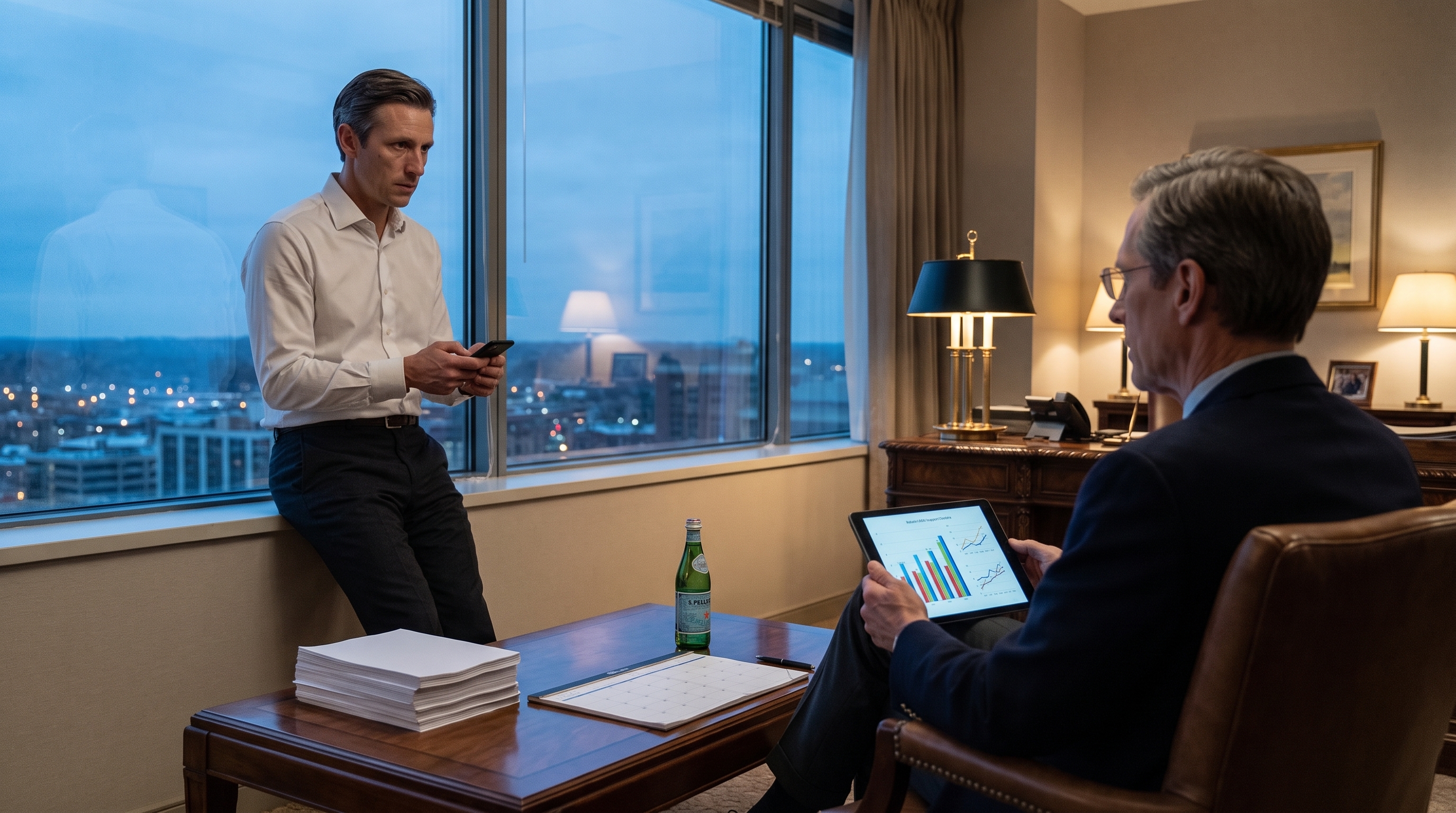
Graham stood by the window with his phone in his hand and read each message as if tone itself were the first operational indicator he could reliably interpret.
He was frightened now.
Not in the clean, clarifying way fear sometimes improved people.
In the opposite way. The way fear made him more attached to the forms of composure that had failed him already. He wanted tighter reporting, cleaner reassurance, better talking points for clients, fewer blunt statements from Caleb, more evidence that Derek had the contractor process under control.
He wanted signs.
Not solutions.
Derek sat on the sofa with his tablet and spoke in a measured voice that had begun to fray only at its absolute edges.
“The offshore team is engaged,” he said. “The challenge is not commitment. It’s translation overhead. We need stricter work package boundaries and cleaner client expectation management.”
Translation overhead.
Graham nodded because the phrase had enough abstraction in it to feel executive.
“And year-end?”
Derek hesitated.
Only a fraction.
But Graham saw it, and because he saw it, he immediately started helping Derek hide it.
That was the intimacy at the center of their working relationship now: two men collaborating, mostly without speaking the fact, in the maintenance of each other’s ability not to say the worst thing aloud.
“We’re monitoring readiness closely,” Derek said. “The core batch remains stable. The risk sits in exception handling and undocumented pathways. But that’s precisely why the additional support matters.”
Graham looked at the W-2 calendar on the table.
The dates had started to feel accusatory.
He thought of his father then, not as he had actually been, but as the internal figure Graham now kept revising whenever he needed inheritance to excuse avoidance. His father would have hated chaos. His father would have demanded steadiness. His father would not have let technical people use complexity as social leverage.
Maybe some of that was true.
Maybe none of it was.
The utility of the fantasy lay in its emotional timing, not its accuracy.
“We stay the course,” Graham said.
Derek nodded too quickly.
He needed the sentence as badly as Graham did.
The alternative was to admit that months of process, packets, consultants, offshore contracts, and status rituals had not restored capability. They had only built a more sophisticated shell around its absence.
The phone on Graham’s desk lit up again.
Another client email.
He didn’t open it immediately.
“We need communications discipline,” he said. “No panic language. No loose talk internally. If customers sense instability, they amplify it.”
Derek made a note.
Communications discipline.
That was the Whitaker reflex at its purest: when reality grew more expensive, manage the language first.
In the development room down the hall, Caleb was answering Priya’s latest question with a reply that amounted to we don’t know, trimmed into a form that might survive being forwarded. Marcus was reviewing a batch log with the sick concentration of a man reading weather by candlelight. Linda, Sharon, and Donna were assembling a year-end review packet thick enough to feel like protection if you did not ask protection from what.
In spare bedrooms and rented offices thousands of miles away, contractors were logging hours trying to map a system no one had actually handed them.
No one in the story felt themselves to be a villain.
That was what made the disaster modern.
A room full of sincere professionals, each preserving self-respect through a different vocabulary, together producing an outcome no one would have endorsed in plain language.
By five thirty the office had thinned.
Lights clicked off in support. Sales drifted out with scarves and laptop bags. Someone laughed near reception with the artificial brightness of people committed to normalcy because normalcy still paid.
The COBOL batches would run again at two in the morning.
For now they still knew what to do.
But they were moving toward year-end untouched, untested in the places that mattered most, surrounded by documentation, meetings, offshore invoices, client reassurance, and managerial faith.
The old machine kept traveling toward the cliff on the momentum of past competence.
Everyone still called that stability.
🎭 This Week's Episodes
Telenovelas show what we can't say in client meetings. The drama is heightened, but the patterns are real.
 Three Ways to Understand a Country
Stefan drives Sophie to the Pacific for two days. The beach is big enough to make her feel appropriately small. Back at the finca the rain keeps th...
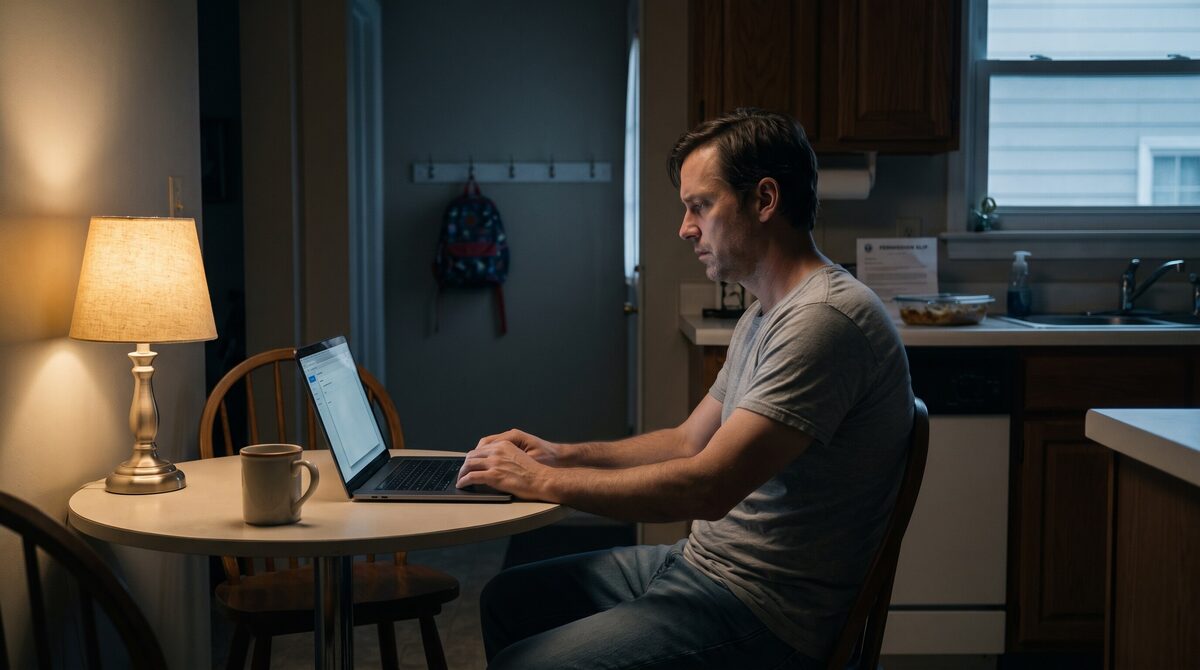 The Resignations
Nathan Cole resigns on a Monday morning with two sentences and no argument left in his body. By Tuesday his desk is empty and the company's institu...
Technical Consultancy
Embedded Delivery Partner
Embedded into your team as an active contributor, reducing delivery friction and helping important work move cleanly.
Technical Advisor
Peer-style technical assessments before far-reaching decisions; reduce architectural and product risk early.
Product & Delivery
Ship working software to real users earlier. Measure impact and adapt based on evidence rather than assumption.
Custom Software Development
High quality, maintainable software. Short-term augmentation that leaves lasting capability in your own team.
Recent Articles
- When Everything Is Finally Under Control (28.09.2026)
- AI Makes Technical Execution Cheap. Judgment Stays Scarce. (24.09.2026)
- The LLM Will Not Come Back Tomorrow (19.09.2026)
- The One-Person AI Company Is a Greed Fantasy (15.09.2026)
- Test Production Without Leaving a Mess (10.09.2026)