Stefan's Progress, Klaus's Report
Stefan turns the radio team into a small, disciplined island: test first, flash fast, prove it on real hardware. The work starts to sing. Then Klaus sends his report to Stuttgart, and the numbers hit like a punch. AutoConnect is failing in two languages at once: the code and the accounting.
The Smallest Rebellion
[Image: A circle of developers around a whiteboard covered in red/green markers and sticky notes. Stefan: rumpled black t-shirt, jeans, sleeves rolled up, wedding ring visible, laptop open. Adriana: fitted dark blouse, jeans, hair in tight curls, arms crossed, skeptical. Radio team: casual t-shirts, one in a Flamengo jersey, coffee cups everywhere. São Paulo morning light through office windows.]
São Paulo didn’t wake up gently.
At 08:12 the air already felt used. Exhaust and heat and the smell of breakfast pastries from the lobby café seeped through the building as if the city itself had decided AutoConnect didn’t deserve clean oxygen.
Stefan stood by the radio team’s whiteboard with a marker in his hand, watching twelve faces try to decide whether they should trust him.
They’d been trained not to.
The radio team had the posture of people who knew how to work but had learned to do it quietly. Eyes down. Voices careful. Humor deployed like camouflage.
A developer with close-cropped hair and a BergMotor hoodie leaned against a desk and said what everyone was thinking.
“So.” He nodded at Stefan’s marker. “Are we doing the consultant thing now?”
Stefan looked at him. “What’s the consultant thing?”
“Words.” The man smiled without warmth. “Framework words. Slides. New rules. And then you leave.”
A woman next to him, long nails tapping her mug, added: “And we get blamed when it still doesn’t work.”
Stefan nodded once. “Fair.”
He wrote on the whiteboard in big letters:
RED → GREEN → REFACTOR
Then, under it, smaller:
FLASH
Adriana watched from the side of the circle, arms crossed, expression sharp. She had the same look she’d had yesterday when she made him show his hands.
Prove it.
Stefan capped the marker and pointed at the first line.
“This is the only loop I care about today.”
The BergMotor-hoodie developer snorted. “We don’t have time for tests.”
“You don’t have time not to.” Stefan’s voice stayed calm. He didn’t argue like a teacher. He argued like someone who’d paid for mistakes personally. “You have a radio that plays music. That’s the only thing in this company that consistently works. Why?”
Silence.
A developer in a faded t-shirt finally said it. “Because it’s simple.”
“Because it’s isolated,” another added, almost reluctant.
“And because we can flash it to a test head unit without waiting for three approvals from people who’ve never touched the code,” the woman with the nails said.
Stefan nodded. “Good. So you already know the answer. You’ve been surviving by keeping the work small, isolated, and testable.”
The hoodie developer frowned. “Testable?”
Stefan pointed at a corner of the board where someone had scribbled a list.
“Those are test cases.”
The hoodie developer glanced back. “That’s a checklist.”
“It’s the beginning of a test.” Stefan kept his tone light, almost gentle. “You wrote what you care about. Now we make the computer scream if it’s broken.”
He turned to the board again.
“Pick something you can flash to a test unit today.”
The team traded looks. The kind of looks developers trade when they’re about to admit something embarrassing in public.
Finally, the woman with the nails spoke.
“Volume control.”
Stefan blinked. “Volume control?”
“It works,” she said quickly, defensive. “Mostly. But it jumps. Sometimes it overshoots. Sometimes it… sticks.”
“And the bug report says it’s ‘random’,” the hoodie developer added, rolling his eyes.
Stefan smiled. “Perfect.”
Adriana’s eyebrows rose. “Perfect?”
“Perfectly small,” Stefan said. “Perfectly humiliating. Perfectly real.”
He drew a box on the board and wrote:
GIVEN → WHEN → THEN
“Acceptance test,” he said. “Not unit test poetry. Not a developer fantasy that pretends the world is clean. A test that describes what a driver experiences.”
The hoodie developer crossed his arms. “In what language?”
“The one your brain uses,” Stefan said. “We can translate it to code after.”
He pointed at the woman with the nails. “Tell me the driver story.”
She hesitated, then spoke as if she were reading a complaint she’d already heard too many times.
“Driver turns the knob up two clicks.”
Stefan wrote it.
“Audio gets louder by the expected amount.”
Wrote it.
“UI shows the right number.”
Wrote it.
“And it doesn’t jump,” she added, eyes narrowing. “It doesn’t jump from 12 to 24 because someone else’s thread got bored.”
A laugh moved through the circle. Not happy. Not free. But real.
Stefan tapped the board.
“Good. That’s the test. Now we make it fail.”
The hoodie developer stared. “Why would we make it fail?”
“Because right now it fails in customer vehicles,” Stefan said. “Better that it fails in the office, loudly, where you can hurt it back.”
He heard Helena’s voice in his head, dry as paper: show evidence, not opinions. A failing test was evidence. A driver cursing in traffic was evidence too, but by then it was too late and too expensive.
He looked around the circle.
“Who owns this bug?”
A guy with a shaved head raised his hand halfway, like a student.
“I touched the volume smoothing code. But it’s… it’s everywhere.”
“Great,” Stefan said. “You and I will pair. Everyone else: watch. Ask questions. Interrupt me when I bullshit.”
Adriana’s mouth twitched, almost a smile.
“Good luck,” she said. “They’ll interrupt you.”
“Perfect,” Stefan said.
They moved to the developer’s desk. The office noise swallowed them, that constant low hum of people typing, breathing, trying to pretend they weren’t drowning.
Stefan pulled up the radio module.
The monitor’s blue light made everyone look exhausted. Somewhere behind them, a printer coughed out pages no one would read. Someone laughed at a meme in another cluster, too loud, too brittle, and then the floor dropped back into that familiar anxious hum.
The code was worse than he’d hoped.
Not because it was written by bad developers.
Because it was written by exhausted developers, under pressure, in the kind of environment that punished cleanup.
He scrolled. Found the knob input handler. Found the audio thread. Found a comment in Portuguese:
// NÃO TOCA NISSO, QUEBRARÁ TUDO
Don’t touch this, it’ll break everything.
He pointed at the comment and looked at the developer.
“How do you feel when you read that?”
The developer didn’t laugh.
“Like I want to quit,” he said.
Stefan nodded. “Yeah. Me too.”
He opened a new file.
“Let’s make the computer say it out loud,” Stefan said. “Let’s make it fail, and then we’ll take that failure apart.”
The developer leaned in.
“What framework?”
“Whatever you already use,” Stefan said. “If you don’t use one, we’ll use the simplest thing that runs in your build-and-flash path.”
The developer blinked. “We don’t have a build-and-flash path.”
Stefan held the pause just long enough for it to sting.
“Then we’ll start with a script,” he said. “Not because it’s perfect. Because it’s real.”
At 09:47 the first test existed.
Not a unit-test toy. A narrow integration test around the real knob handler and the real audio-state reducer, with hardware noise faked but timing preserved.
The hoodie developer dragged a chair over and dropped into it beside the shaved-head developer. “We don’t have the actual rotary encoder hardware on a dev machine.”
“We fake it,” Stefan said. “A function that publishes ticks at whatever interval we want. You control the knob. The code doesn’t know the difference.”
The shaved-head developer’s fingers were already moving. He typed the encoder stub in under three minutes, a tight little function that spat out rotation events on command.
Stefan pointed at the system clock call buried in the smoothing logic. “That has to go. Replace it with a clock you can advance by hand. Millisecond by millisecond. Otherwise you’re testing the weather, not the code.”
The hoodie developer had already pulled up yesterday’s trace logs on his own screen. “I’ve got real timing values from the field,” he said, scrolling through columns of numbers. “Actual intervals between knob clicks from the test vehicle. We don’t need to guess.”
“Use those,” Stefan said. “Exactly those.”
The woman with the nails leaned forward between them and spoke the acceptance rule like she was reading a verdict. “When the driver turns two clicks, volume moves in two clean steps. Never jumps. Never skips. Never sticks.”
The shaved-head developer translated her words into an assertion, typing it at the bottom of the test. One line. Plain enough that everyone in the circle could read it and nod.
Adriana hadn’t moved from behind them, but her voice cut through the typing. “What happens when the driver turns fast, then stops?”
Silence.
“Add that,” Stefan said quietly.
At 09:48 it failed.
Every single run.
The failure output was ugly and glorious:
expected sequence: 12 -> 13 -> 14
actual sequence: 12 -> 14 -> 15
No mystery. No random curse. A reproducible wound.
They traced it together.
The shaved-head developer scrolled to the input handler. “This thread updates the target after debounce,” he said, pointing at the screen.
Stefan nodded. “And the audio thread?”
The hoodie developer had already found it. “Applies smoothing against the current volume. Over here.” He tapped his monitor.
“Both of them touch the same variable,” the woman with the nails said, her voice dropping the way it did when something clicked. “There’s no boundary. Nobody owns it.”
The shaved-head developer leaned back and pressed his palms against his eyes. “Under the right timing, one tick gets applied twice. That’s the jump.”
The circle went quiet. Not confused quiet. The kind of quiet that follows a diagnosis you’ve been afraid to say out loud.
Stefan didn’t take the keyboard. He stood behind the chair and narrated while the owner typed.
“One writer,” Stefan said. “Pick one thread that owns volume state. Everyone else sends intent. That’s it.”
The shaved-head developer’s hands hesitated over the keys. “So the knob handler just… puts a message on a queue?”
“A delta. Plus one, minus one. That’s all it’s allowed to say.”
“And the audio thread reads the queue and does the math?”
“It’s the only one allowed to touch current volume. Debounce stays at the edge, before the message goes in. Smoothing happens in one place, after dequeue, in strict order.”
The hoodie developer was already sketching the flow on a scrap of paper, arrows and boxes, the kind of diagram that looked ugly and meant everything.
They refactored. It took forty minutes. The shaved-head developer typed while Stefan narrated and the woman with the nails read every line change back to the group like a translator making sure nothing was lost.
When they finished, Stefan pointed at the test. “Run it.”
The hoodie developer grinned. “Stress case first. Let me add something mean.” He pulled timing data from the field logs and fed it into a loop that hammered the handler with ten thousand rapid tick sequences, the kind of jittery input a nervous driver produces in traffic.
Green.
Green again.
Green until the room went quiet.
The bug wasn’t chaos.
It was a pattern.
And patterns, Stefan knew, were the only kind of enemy you could beat.
The Parking Lot Orchestra
[Image: A BergMotor test vehicle parked in a concrete garage. A laptop balanced on the hood. Stefan and two radio team developers leaning in, grinning. Adriana in the background, arms crossed but watching. Security guard nearby pretending not to care. Everyone in casual office clothes, sweaty in the garage heat.]
By 11:23 the radio team had a fix they could explain to each other without hand-waving.
Not a heroic fix. Not a rewrite. The kind of small, boring change that made the world slightly less stupid and much more predictable. They’d drawn one line through the code and said: this side speaks, that side listens, nobody crosses.
Boring was the goal.
If volume control was exciting, the team had failed.
The developer with the shaved head leaned back in his chair and stared at the green output like it was a religious experience.
“It’s… stable,” he said.
Stefan nodded. “Run it again.”
They ran it again.
Green.
The woman with the nails let out a breath she’d been holding for months.
“Okay,” she said. “Now what?”
Stefan looked at the group.
“Now we flash it.”
The hoodie developer barked a laugh. “To where?”
Stefan pointed with his chin toward the window.
“To a car.”
The team froze. The idea sounded forbidden.
AutoConnect talked about cars constantly.
But most of them lived in the codebase, not in steel.
Adriana stepped forward. “You’re not plugging dev builds into the test vehicle without telling me.”
Stefan met her eyes. “I’m telling you. I want you there.”
She studied him for a beat, then nodded.
“Fine,” she said. “If the dashboard catches fire, I’ll let you explain it to Helena.”
They took the elevator down, then the service corridor, then out into the concrete garage where the air smelled like oil and sun-baked dust.
A BergMotor prototype sat under a cover like something sacred.
The hoodie developer pulled the cover back with a kind of reverence.
“Budget line,” he said. “They call it the Sparrow.”
Stefan walked around the car and touched the door frame.
Metal.
Real.
This was the thing they were failing to deliver.
Not a JIRA board.
Not a status report.
A physical object that a human would sit inside and trust with their attention.
The woman with the nails slid into the driver’s seat, laptop open, cable running to the head unit.
The shaved-head developer hovered behind her shoulder, nervous.
Adriana stood back, arms crossed, pretending she wasn’t interested.
Stefan leaned against the fender and watched.
Heat radiated off the concrete and climbed into his shirt. Oil, rubber, hot metal. The smell sat in his throat like a warning. This was where software stopped being theory.
“Flash it,” the woman said.
The script ran.
The build installed.
The head unit rebooted.
Three seconds felt like thirty. Nobody blinked.
The radio UI came back, familiar and slightly ugly.
The woman reached for the physical knob.
One click.
The volume increased.
The audio grew louder.
The number on the UI changed by one.
No jump.
Two clicks.
Three.
Still stable.
She turned it down.
Stable.
She looked up at Stefan.
Her eyes were bright with something that scared her.
Hope.
“It works,” she said.
She said it like she didn’t trust her own voice, like the system might punish her for hope if she said it too loudly.
The shaved-head developer laughed, sharp and disbelieving.
“It actually works,” he said.
The hoodie developer exhaled hard. “We flashed something that actually works.”
Adriana’s arms stayed crossed, but her posture changed.
Less armor.
More attention.
She stepped closer and looked at the head unit.
“How fast did you do this?” she asked.
Stefan didn’t answer.
He’d learned that lesson years ago: when teams recover trust, let them own the sentence.
He let the team answer.
The shaved-head developer looked at her. “We wrote the test. It failed. We fixed it. We flashed it to the head unit. That’s… that’s it.”
Adriana stared at him.
No lectures.
No blame.
Just the raw fact.
“So it can be done,” she said quietly.
Stefan nodded. “It can be done.”
The woman in the driver’s seat turned the knob again like she couldn’t stop herself.
Click.
Click.
Click.
Stable.
A tiny victory.
In a building full of failure.
And Stefan knew exactly what happened next.
Someone would hear.
And the wrong people always heard first.
Klaus Writes the Truth
[Image: Klaus alone in a glass conference room. Laptop open to a spreadsheet. His suit jacket off, sleeves rolled up, tie loosened, sweat on his temple. A São Paulo skyline behind him through the window. A printed report with highlighted numbers on the table.]
Klaus Hartmann didn’t celebrate small victories.
He didn’t know how.
At 13:06 he sat in a conference room two floors above the developers, staring at a spreadsheet that refused to become less obscene.
His hands smelled faintly of printer ink.
He’d printed everything.
He trusted paper more than people.
Ninety-two developers.
Eighteen months.
Eight million euros.
And the product still behaved like a prototype duct-taped together the night before a demo.
The numbers weren’t just bad.
They were insulting.
Klaus rubbed his eyes and opened a new document.
His neck ached from staring at variance columns. The air conditioner hummed above him and still couldn’t cut the humidity. Sweat gathered under his collar, then cooled, then gathered again.
Subject:
BergMotor AG — AutoConnect Brasil Delivery & Financial Status
He typed the first sentence, deleted it, typed it again.
He wanted to sound calm.
He wanted to sound professional.
He wanted to sound like this wasn’t his fault.
Because in Stuttgart, when a project failed, someone needed to be blamed.
He typed:
“AutoConnect Brasil has not delivered functional infotainment integration within the contracted timeframe. Current expenditure exceeds projections and does not correlate with measurable output.”
Too cold.
He tried again.
“The current state of delivery is unsustainable. Without immediate change, BergMotor risks putting vehicles on the road with a non-functional infotainment system beyond basic radio functionality.”
Too dramatic.
He leaned back and stared out the window.
São Paulo looked like money.
Glass towers and endless traffic.
A city built on appetite.
He thought of Stuttgart.
Order.
Systems.
The illusion that discipline made the world safe.
His phone buzzed.
A message from Dr. Hoffmann.
Dr. Hoffmann We need your report before 17:00. Board session tomorrow. No surprises.
No surprises.
Klaus almost laughed.
The entire project was a surprise.
He typed anyway.
He described the burn rate.
He described the consulting spend.
He described the absence of a repeatable build-and-flash path to test head units and vehicles.
He described the test coverage numbers Stefan had shown him.
He described the way the organization behaved like a body with a fever.
Symptom.
Symptom.
Symptom.
And no diagnosis that anyone wanted to hear.
At 14:02 someone knocked on the glass.
Klaus looked up.
And forgot what he’d been typing.
She stood in the doorway holding a tablet against her chest, but nothing else about her suggested defense. Natural afro that framed her face like it had its own gravity. Large hoop earrings catching the fluorescent light. A short kente-print dress in geometric orange and teal and purple that hugged athletic curves and stopped mid-thigh, showing legs that looked like they ran or danced or both. A colorful bracelet on one wrist. The kind of posture that didn’t ask permission to exist in glass rooms.
Klaus’s mouth went dry.
In Stuttgart, women in offices wore blazers. Structured fabrics. Colors that whispered. This woman’s dress shouted, and his eyes followed every line of it before his brain could intervene. He felt heat rise from his collar. His protocol training — twenty years of German conference rooms, hierarchies, appropriate distances — returned a blank screen.
Concentrate. She’s here about the interface.
She smiled politely, and the smile didn’t reach for approval.
“Excuse me. Are you Klaus Hartmann?”
He stood too fast. The chair scraped the floor like an accusation. His hands didn’t know where to go. He clasped them behind his back, realized that looked military, then let them drop to his sides where they felt enormous and useless.
“Yes,” he managed. “And you are?”
Two words without stuttering. Progress.
“Thaís Oliveira,” she said, and extended her hand.
Her handshake was warm and firm. Her skin was soft and her grip wasn’t. Klaus held on a fraction of a second too long before his brain sent the release signal. He smelled cocoa butter, or some lotion that didn’t exist in Stuttgart pharmacies, and the scent settled somewhere behind his ribs where it had no business being.
Let go of her hand, Klaus.
He let go.
“UX,” she said. “I’ve been asked to answer any questions about the interface.”
She didn’t seem to notice the handshake. Or she noticed and chose not to make it awkward. Either way, she owned the room now, and Klaus felt his carefully constructed authority evaporate like moisture off a windshield.
He’d expected someone defensive. A mid-level designer who’d walk in with apologies and PowerPoint slides. Someone he could interview with his usual precision, extracting facts like a surgeon.
What he got was a woman who looked like she’d already decided he was worth her time, and the decision had nothing to do with his title.
This is a business meeting. Act like it.
“I do have questions,” he said, and heard his voice slip into its Stuttgart uniform: careful, formal, looking for ground that couldn’t move. The voice sounded ridiculous in this room, in this city, in front of this woman. He knew it. She probably knew it too.
Thaís stepped past him and glanced at his screen. She leaned slightly, and the dress shifted against her thigh. Klaus stared at his spreadsheet with the intensity of a man defusing a bomb.
Numbers. Stay with the numbers.
She let out a small breath that might have been a laugh if it had any joy in it.
“That’s the part you Germans love,” she said.
Klaus felt heat crawl up his neck and settle behind his ears. He was blushing. He knew he was blushing. His skin advertised every emotion like a Leuchtreklame on the Reeperbahn, and there was no blazer, no protocol, no Stuttgart formality that could hide it from a woman standing close enough for him to smell her lotion.
“It’s not love,” he said. “It’s… responsibility.”
Thaís tilted her head. The hoop earring swayed. Klaus tracked it, then caught himself, then looked at a spot on the wall behind her left ear.
“Responsibility for what?”
He could have said the official answer. Budget. Variance. Governance.
He hated all three words in that moment. They sounded clean and German and completely inadequate for a conversation with a woman who wore color like a language he didn’t speak.
Instead he said the only version that didn’t make him hate himself.
“Responsibility for not lying to ourselves,” he said.
Her expression softened. Not a lot. A fraction. But Klaus felt it in his chest like someone had unclenched a fist he didn’t know was closed.
She’s looking at you like you’re a person. Not a title. When was the last time anyone in this building did that?
“That’s rare here,” she said.
Klaus gestured at the chair opposite him. “Please. Sit.”
He tried not to watch her sit. He failed. She moved with the calm of someone who had spent years being ignored in meetings, then learned to stop waiting for anyone’s permission. She crossed one leg over the other. The kente-print caught the light.
Klaus looked at his hands.
You are forty-six years old. You have audited fourteen multinational projects. You have a mortgage in Baden-Württemberg. Stop behaving like this.
She placed the tablet on the table, screen down, as if to make it clear she wasn’t here to perform.
“Ask,” she said.
Klaus cleared his throat. Twice.
“The radio works,” he began.
Thaís nodded once. “Barely.”
“It’s the only thing that reliably works,” Klaus said, and heard the bitterness in it.
Thaís leaned forward slightly. “Because radio doesn’t have to negotiate with the car.”
Klaus frowned. “Negotiate?”
She lifted a shoulder. “Everything else is a conversation. Climate, navigation, diagnostics. The car says no, the software panics, and then your screen freezes while a driver is trying to find a street.”
Klaus had read the bug reports. He’d read the incident logs. He’d read the euphemisms.
Hearing it spoken like this made it feel physical.
“How bad is it?” he asked.
Thaís didn’t soften it, didn’t cushion him from his own question.
“It’s humiliating,” she said. “The UI looks like it’s drunk. Buttons lag. The map crashes. Climate control shows temperatures that aren’t real.”
Klaus felt his stomach tighten, that quiet nausea numbers sometimes produced when they turned into consequences.
“And yet,” Thaís continued, voice lower now, “the developers down there still care. You can feel it. They hate that it’s broken.”
Klaus thought of Stefan, talking about tests like they were a weapon and a promise.
“You’ve met Stefan Richter,” Klaus said.
Thaís’s mouth twitched. “The German who actually sits with developers?”
Klaus nodded. “Yes.”
“I saw him today,” she said. “In the garage. With the radio team. They looked… happy.”
Happy. In this place.
Klaus heard the word like a swear.
“How do you know?” he asked.
Thaís lifted her chin. “You can tell when developers are alive.”
The sentence landed somewhere Klaus didn’t have a category for.
She stood. Picked up the tablet. Didn’t smooth her dress or adjust her earrings or perform any of the small rituals people used to signal a meeting was over. She just rose, the way someone rises who knows their time is worth something and has decided to spend it elsewhere now.
“If you need anything else,” she said, “you know where UX sits.”
Klaus nodded. His throat was dry.
He watched her walk to the door. The kente-print caught the light one last time. Her hand touched the glass, and she was gone.
The conference room felt larger. Emptier. The air conditioner hummed against silence that suddenly had weight.
She was in this room for twelve minutes. Get a grip.
Klaus looked at his report.
He looked at his numbers.
He looked at the door she’d walked through.
You can tell when developers are alive.
He scrolled back to his summary. The sentences sat there like a coroner’s verdict. Burn rate. Consulting spend. Absence of a repeatable build-and-flash path. Every paragraph a nail in a coffin, and every nail deserved.
But it wasn’t the whole truth.
Klaus’s fingers hovered over the keyboard. He could feel the report pulling toward its natural conclusion: catastrophe, blame, recommend external intervention. The Stuttgart playbook. The shape every report wanted to take because blame was a language German boards understood.
They looked happy.
He heard her voice saying it. Not the words. The voice. That particular mix of exhaustion and wonder, as if happiness in this building was a species she’d assumed was extinct.
His hands moved before his protocol training could stop them.
He added a new section.
Positive Developments — Developer Advocate Impact
He stared at the heading. It looked wrong. Too corporate. He deleted it and typed again.
One Thing That Works
Better. Honest. The kind of heading that would make Dr. Hoffmann frown, which meant it was probably true.
He typed:
“The Developer Advocate engaged by BergMotor (Stefan Richter) has achieved measurable progress with the radio integration team. Within days of embedding with the radio team, developers have adopted test-driven development practices and established a functioning build-and-flash cycle to test hardware. The radio team is now shipping working software to bench units and test vehicles.”
Klaus paused.
The sentence was accurate. It was also bloodless.
They looked happy.
He thought of Thaís tilting her head, the hoop earring swaying. The way she’d said “alive” like it was a diagnosis, not a metaphor. The way her hand had felt in his and the cocoa butter scent that was still, even now, doing something irresponsible to his concentration.
Stop. Write the report.
He typed:
“This progress stands in sharp contrast to the integration teams, where eighteen months of activity have produced no shippable output. The difference is methodological, not personnel. Richter’s approach prioritizes working software verified on actual hardware over planning documentation. Recommend allowing this approach to continue without interference.”
Without interference.
Klaus knew what that sentence meant. It meant: don’t send more consultants. It meant: the one person doing something real is doing it without process theater. It meant: leave him alone.
He’d never written a sentence like that in fourteen years of multinational audits.
He scrolled through the complete report. Twelve pages. Eleven of them were catastrophe. One page — the last page, the page Thaís had put there without knowing it — said something worked.
You’re writing this because a woman in a kente-print dress told you developers were alive, and you believed her because she smelled like cocoa butter and didn’t need your approval.
So what.
She was right.
He saved the document.
He sat with it for eleven minutes, staring at the São Paulo skyline, listening to the air conditioner labor against heat it couldn’t defeat. He thought about Stuttgart. About board members who would skip to the summary. About Dr. Hoffmann, who would read the burn rate and stop breathing.
And about one page at the end that said a German who sat with developers had made something work.
He knew what the report would do. It would attract attention. And attention, in broken organizations, was rarely help.
But he couldn’t delete the last page.
Because she’d been right. And the numbers man in him, the one who trusted paper more than people, had to admit that “developers are alive” was a data point too.
At 16:38 he attached the document.
He stared at the email address.
He hit send.
The truth left the room. All of it. The catastrophe and the one bright thing.
And Klaus sat very still, listening to his own heartbeat, smelling cocoa butter that wasn’t there anymore, waiting for the consequences.
Lunch, and the Real Question
[Image: Stefan and Júlia at a small street-side restaurant near Avenida Paulista, deep in conversation over technical work. Plastic chairs, metal table, bottles of Guaraná and water. Júlia: burgundy bandeau crop top (tube top, midriff fully exposed), tight jeans, white sneakers, gold layered necklaces, natural curly afro, leaning forward with intensity, gesturing with both hands. Stefan: black t-shirt, jeans, tired eyes, wedding ring visible, listening carefully. A phone with code on screen between them. Street traffic behind them, hot afternoon light, a hint of sweat on skin.]
Stefan walked back from the garage with Adriana, his shirt sticking to his back from the heat and something else, the kind of energy that comes from watching something work for the first time. The radio team had flashed a working build into an actual car. Not a simulation, not a test bench. A car. A steering wheel, four doors, a dashboard that responded. His body was running on that victory the way a body runs on sugar: fast, bright, unsustainable.
Adriana didn’t congratulate him. She pressed the elevator button and said, “Don’t get drunk on this.” Her voice carried the particular flatness of someone who’d watched too many small victories get crushed by the next management decision. Not São Paulo. Not Brazil. This building. This company. Eighteen months of promises that evaporated had taught her to keep celebration at arm’s length.
“You think I will?” he asked.
“This place punishes optimism.”
He didn’t argue. He’d been here ten days and already felt the gravitational pull of failure. Small wins made the air change. People noticed. The wrong kind of curiosity started to orbit.
When the elevator opened on the development floor, Júlia Nascimento was leaning against a column near the coffee corner with her arms crossed and her chin tilted up like someone who’d been waiting and didn’t mind admitting it. She wore a burgundy bandeau crop top that left her midriff bare without comment, tight jeans, white sneakers, gold necklaces layered against her collarbone. Her natural curly afro framed her face like she’d stopped apologizing for taking up space a long time ago. She radiated that particular Brazilian confidence that had nothing to do with arrogance and everything to do with inhabiting your own body without apology.
“You promised you’d come back to climate control,” she said.
“I did.”
“Good. Lunch first.” She said it the way she said most things: as a fact, already decided, requiring no further discussion. “You need to eat. You look like a person who forgets he has a body when there’s code to think about.”
Stefan felt himself smile before he could stop it. “Is it that obvious?”
“Germans.” She shook her head with theatrical despair. “Come on.”
They walked out into the midday heat and found a small restaurant near Avenida Paulista where the menu didn’t pretend to be anything other than what it was. Rice, beans, meat, salad, cold drinks. Plastic chairs and metal tables that wobbled on uneven pavement. Júlia ordered for both of them in Portuguese without asking, and Stefan let her, partly because his fluent Spanish was useless against a São Paulo waiter’s Portuguese and partly because she was already halfway through the order before he’d opened his mouth.
The food arrived steaming. Garlic, salt, something sweet from caramelized onions. Júlia ate with the same directness she brought to everything, and Stefan picked at his plate while the adrenaline from the morning slowly burned off and real hunger crept in to replace it.
“So,” Júlia said, watching him over her fork. “The radio team. Is it true you flashed it into a car?”
“Who told you?”
She smiled with all her teeth. “São Paulo.”
Stefan shook his head. “Yes. We did. And now they know the whole cycle. Write the test, write the code, flash it, validate it in hardware. The same thing I want to do with climate control.”
The smile left her face and was replaced by something harder and more interesting: the expression of a developer who has been carrying frustration for months and just heard someone describe the exit. She leaned forward, elbows on the table, and dropped her voice as if the traffic noise might carry trade secrets.
“I wrote two tests last night.”
Stefan set down his fork. “After we left?”
“After you left. I stayed until one in the morning.” She said it without self-pity, as a simple accounting of hours. “User adjusts temperature. CAN bus receives the command. That’s one test. Second test: UI reflects the new setpoint after the CAN response comes back.”
“And?”
“Both failed.” Her eyes went bright. “And I felt good. First time in months I felt good about a failure, because I knew why it failed. The protocol handler drops the response frame when the queue is full. I could see it. I could point at it.” She jabbed her finger at the table as if it were a log file. “Before you came, I would have spent three days guessing. Now I know exactly where the bug lives.”
Stefan nodded slowly. This was the moment he lived for, the moment a developer stopped fighting the method and started fighting the actual problem. “What did you do next?”
“Went home. Slept two hours. Came back.” She took a swig of Guaraná. “I want to pair with you on the fix this afternoon. I think the queue overflow is in the CAN driver layer, but I’m not sure if the test should mock the hardware response or if we need the integration rig.”
Stefan felt the conversation shift from lunch to work, and he welcomed it. The technical question was real and the answer wasn’t obvious. “Don’t mock it,” he said. “Not yet. The whole point of the integration rig is that you validate against real CAN traffic. If you mock the hardware response, you’re testing your assumptions about the protocol, not the protocol itself.”
Júlia frowned, processing. “But the rig is slow. Five minutes per flash cycle.”
“Five minutes is fast. Trust me. BergMotor’s standard validation cycle in Stuttgart is forty-five minutes. Five minutes is a gift.” He leaned back and watched her face as the implications landed. “Write the test. Make it fail on the rig. Fix the driver. Make it pass on the rig. Flash to a head unit. If it works on the rig and on the head unit, you have something you can demonstrate. Something real.”
“You’re different from what I expected,” Júlia said.
The sentence came out of nowhere, or maybe it had been building since yesterday when he’d sat beside her at the climate control bench and written that first test with her instead of telling her to write it. Stefan looked at her, unsure how to respond. Her expression wasn’t flirtatious. It was the look of someone recalibrating an assumption.
“How so?” he asked.
“You actually write code.” She said it like an accusation, but the target was every consultant who’d come before him. “We’ve had people here. Process people. They make slides. They run workshops. They reorganize our board. They never once opened a terminal.” She pointed at him with her fork. “You sat down and wrote a test. With your hands. On my machine.”
Stefan took a sip of water. The glass was sweating in the heat, leaving a wet ring on the metal table. “That’s the job. I don’t know another way to do it.”
Júlia studied him for a long moment, her head tilted slightly to one side. Then she reached across the table and squeezed his forearm, a gesture so natural and unselfconscious that Stefan almost flinched before catching himself. In Berlin, a colleague gripping your arm over lunch would mean something. Here, he was beginning to understand, it meant I hear you and nothing more. Or maybe everything, but not the everything he was trained to expect.
“The climate control team has eleven people,” she said, letting go as naturally as she’d reached. “Three of us are actual developers. The rest are doing integration paperwork for BergMotor’s compliance framework. Nobody writes tests because nobody believes tests are possible in embedded. You showed me in one afternoon that they are.” She set down her fork and looked at him with the particular intensity of someone who’d been carrying a question for months and had finally found the person to ask. “Can you teach the others?”
“That’s why I’m here.”
“No. I mean really teach. Not a workshop. Not a presentation with twelve slides about test-driven development. Sit with Rodrigo and show him how to test the sensor interface. Sit with Priya and show her how to test the CAN arbitration. The way you sat with me.”
Stefan heard what she was asking. It wasn’t just about tests. It was about presence. About someone who understood the code being physically next to someone who was drowning in it.
“I’ll need the integration rig reserved for afternoons,” he said. “And I’ll need your test bench. Not the shared one. The one you’ve been hiding under your desk.”
Júlia’s eyes went wide. “How do you know about that?”
“Leo told me.” Stefan almost smiled. “He said you built it yourself from spare boards because the official test environment has a three-day booking queue.”
“Two-day,” she corrected, then caught herself and laughed. It was a real laugh, the kind that starts in the belly and has no interest in permission. A passing waiter looked over and smiled. That was São Paulo too: laughter at a lunch table wasn’t an event. It was background music.
“Two-day queue,” Stefan conceded. “Still too slow. We’ll use your rig.”
Júlia nodded, and when she spoke again the humor was gone and something fiercer had replaced it. “Teach us. Make the tests real. Make the work real. Because right now half my team thinks testing embedded is something Germans do because they don’t trust Brazilians. And the other half thinks it’s a waste of time because management will ship untested code anyway.”
Stefan recognized the pattern. He’d seen it in Stuttgart, in Detroit, in Pune. The developers weren’t lazy. They were rational. They’d been trained by years of management decisions to believe that quality was optional and speed was mandatory. Writing tests in that environment felt like building a sandcastle at high tide. Beautiful and pointless.
“It’s not pointless,” he said, answering the thought she hadn’t spoken aloud. “But it only works if you have a way to show that tests catch real bugs before they reach the customer. That’s what the rig is for. That’s what the flash cycle is for. You write the test, you fail, you fix, you prove. Then you show the proof to someone who signs off on releases. If they can see the test, they stop arguing about the time it took to write it.”
Júlia considered this. Her phone sat on the table between them, and Stefan caught a glimpse of her lock screen: a samba school rehearsal, bodies in motion, blurred with joy. She noticed him looking and didn’t hide it or explain it. That was the thing about Júlia that kept catching him off guard. She didn’t partition her life. The developer who stayed until one in the morning chasing a CAN bus bug was the same person who danced samba on weekends, and neither version apologized for the other.
“You have a daughter,” she said.
Stefan blinked, caught off-balance by the subject change. His phone was face-down on the table, but yesterday he’d shown the radio team a photo of the working test output and the lock screen had been visible for a second. Sophie at seven on a swing in Volkspark Friedrichshain, her mouth open in a laugh that made his chest hurt to remember. The photo was a decade old. He’d never changed it.
“Your wallpaper,” Júlia said. “Yesterday. I’m not blind.”
“Sophie,” he said. “She’s seventeen. Old photo.”
Júlia nodded once, absorbing the name and the number with the same seriousness she gave a function signature. “You miss her.”
It wasn’t a question. Stefan didn’t answer it like one. He looked at the traffic crawling past on Avenida Paulista and felt the distance between São Paulo and Berlin in his sternum, a dull ache that caffeine and code could quiet but never cure.
“She calls me on Sundays,” he said, and that was enough.
Júlia accepted it without pushing. She finished her Guaraná, wiped her mouth with the back of her hand, and stood up from the plastic chair in one fluid motion. “Come on. CAN bus won’t fix itself. And I need you to look at the queue overflow before Rodrigo goes home at five and takes the only working logic analyzer with him.”
Stefan dropped cash on the table and followed her back toward the office. The heat wrapped around them like a second skin, and Júlia walked fast, already talking about the protocol handler’s buffer allocation and whether the test should assert on the dropped frame or on the sensor reading that never arrives. Tech. Pure tech. She was a developer with a problem, and she’d found someone who could help her solve it, and that was the whole story of this lunch.
At the crosswalk she turned and looked at him over her shoulder. “This afternoon. My bench. You, me, Rodrigo if he stops complaining. We fix the queue overflow, we run the test, we flash it. Deal?”
“Deal,” Stefan said.
And they walked back into the building where everything was still broken except, now, one small thing that wasn’t.
Germany Notices
[Image: Helena alone in her executive office. Phone to her ear. A folder of contracts open on the desk. São Paulo skyline behind her. Her posture rigid, controlled anger in her eyes.]
At 17:11 Helena Ferreira’s phone rang with the tone reserved for problems that arrived wearing suits.
She closed the document she’d been reading and answered without greeting.
“Yes.”
A voice from Stuttgart. German. Controlled. The kind of voice that believed control was the same as safety.
Helena listened.
The voice on the line kept its polished cadence, the one senior people used when they wanted obedience without saying the word.
Her face didn’t change.
But her hand tightened around the phone.
She glanced at the notes Klaus had sent the day before.
She thought of Stefan.
In the garage.
With developers.
Making something work.
She thought of what Klaus’s report would do once it landed in the wrong inbox.
The voice on the phone kept talking.
Helena interrupted once.
Then twice.
Then her voice sharpened.
“No,” she said. “You’re not hearing me. The developers are making progress. I’m watching it with my own eyes.”
Silence on the other end.
Then the voice resumed, colder.
Helena stared out at the skyline.
São Paulo didn’t care about German comfort.
It just kept moving.
Motorbikes cut between buses below like sparks through dry grass. Sirens wailed two avenues over. The city had no patience for boardroom theater.
“Yes,” Helena said finally. “I understand you want governance.”
She heard the word like a threat.
Governance.
Helena heard the word like a threat because it always arrived packaged as a virtue.
Governance meant control. Paper. Outsiders who didn’t write code telling people who did that reality was unacceptable.
Her jaw clenched so hard her teeth ached.
“Send me the recommendation,” she said.
There was a pause on the other end, the kind of pause meant to remind her who owned the budget.
Helena didn’t blink. “Yes,” she repeated, slower. “Send it.”
She ended the call and sat very still, phone in her hand like it weighed more than it should.
For ten seconds she let herself feel the rage cleanly, without strategy.
Then she stood.
If she screamed now, she’d scream at glass.
She walked to the window and watched Avenida Paulista crawl under the afternoon heat. The city didn’t care about Stuttgart’s comfort. It kept moving anyway.
Helena exhaled through her nose, picked up her phone again, and called Stefan.
He answered on the second ring.
“Helena,” he said. “Everything okay?”
“No,” she said. “But it was never okay.”
She heard him shift, the way developers did when they smelled a field incident coming.
“What happened?”
Helena didn’t waste time. “Klaus sent his report.”
Stefan exhaled. “He had to.”
“I know,” Helena said. She glanced at Klaus’s notes on her desk, the neat handwriting fighting chaos with structure. “And now Stuttgart is afraid.”
“Afraid enough to do something stupid,” Stefan said.
Helena closed her eyes. “Yes.”
“Who?” Stefan asked, voice flat now.
“QuantumMind Solutions.”
Silence.
Helena let him have it. She could almost hear the memories in it: framework sellers, methodology theater, clean suits in dirty problems.
“They’ll arrive soon,” she said. “Not because we need them. Because Germany needs the feeling of action.”
Stefan’s voice stayed controlled, but she could hear the edge under it. “What did you tell them?”
“I fought,” Helena said. “I told them you’re making progress. I told them developers are flashing working builds into test vehicles.”
She heard how desperate it sounded and hated that too.
“And?”
Helena’s mouth tightened. “And they said one consultant with a reputation is not sufficient.”
Stefan laughed once, empty. “Of course.”
Helena leaned back against her desk. The folder of contracts sat open like a wound.
“I got you in the door by offering them both approaches,” she said. “They think they’re balancing risk. They don’t understand they’re introducing it.”
Stefan’s voice softened, just a touch. “You didn’t have a choice.”
“I had choices,” Helena said. “I just didn’t have good ones.”
She pulled a pen toward her and rolled it between her fingers, something physical to keep her from smashing the glass.
“Stefan,” she said. “Listen to me carefully.”
“I am.”
“Keep doing what you’re doing,” Helena said. “Keep teaching. Keep flashing. Keep making reality undeniable.”
Stefan didn’t hesitate. “And when QuantumMind starts demanding documents?”
Helena’s eyes hardened. “Then we see who they really work for.”
There was another small pause.
Then Stefan said, quietly, “They work for whoever pays.”
Helena looked down at the open folder. Contracts. Numbers. Lies.
“Yes,” she said. “And Bernardo is smiling somewhere right now.”
Stefan’s voice dropped. “He’s the one who wants them.”
“Exactly.”
Helena heard Stefan breathe, controlled and tight. “What do you want from me?”
Her answer came without hesitation. “Keep the developers alive.”
She waited a beat, then added the second part, colder.
“And pay attention. Klaus sees the numbers. You see the code. Between you, we might see the truth.”
Stefan’s voice tightened. “You want me to investigate.”
“I want you to notice,” Helena said. “There’s a difference.”
Another beat.
“Understood,” Stefan said.
Helena ended the call and stared at the skyline again.
In Stuttgart, someone would be congratulating themselves for acting.
In São Paulo, she could already feel the cost.
Two Germans, One City
[Image: A nearly empty hotel bar at night. Stefan and Klaus at a small table. Two glasses: water and whiskey. Stefan: tired, sleeves pushed up. Klaus: tie loosened, notebook open. City lights outside the window.]
At 22:19 the hotel bar was quiet in the way only expensive hotels managed.
Soft music. Soft lights. Soft lies.
Stefan sat with a glass of water he kept forgetting to drink, watching condensation gather and slide down the glass like the city was sweating inside the hotel too.
Klaus arrived with his leather notebook and the expression of a man who’d just pushed a boulder off a cliff and was waiting to see who it hit.
He didn’t sit immediately. He placed the notebook on the table, as if the paper needed to be present before he could be.
“You sent it,” Stefan said.
Klaus nodded once. “I sent it.”
Stefan leaned back and studied him. Klaus looked like he’d been ironed, then crumpled. “How bad did you make it sound?”
Klaus’s mouth tightened. “I described it.”
That was Klaus. Not cruel. Not kind. Precise. A man who believed reality had a moral obligation to be stated cleanly.
Stefan let out a breath and decided to offer his own reality.
“The radio team flashed a working build today,” he said.
Klaus blinked, a fraction slow. “Flashed?”
“Into a car,” Stefan corrected. “Volume control. Stable. Tested. Proven on real hardware.”
Klaus stared at him as if Stefan had described a small miracle performed in a dirty kitchen.
“That’s…” Klaus searched for the word.
“Possible,” Stefan supplied.
Klaus nodded slowly. “Good.”
He held the pause too long, then cut the hope with the blade he always carried.
“And irrelevant,” he added.
Stefan’s jaw tightened. “Don’t say that.”
Klaus met his eyes. “It’s not irrelevant to the developers. It’s irrelevant to the board.”
Stefan felt anger rise, not at Klaus, but at the split-screen reality they were trapped in.
“It proves there’s a path,” Stefan said.
Klaus opened his notebook with a small snap. “There is a path. But a path isn’t a rescue.”
He tapped a page with his pen.
“Stuttgart will respond,” Klaus said. “Not by listening. By acting. They will bring in people who know how to write documents that make executives feel safe.”
Stefan’s mouth went dry. “QuantumMind.”
Klaus nodded once.
“I saw the contracts,” Klaus continued. “External consulting spend. Multiple line items. Separate from you.”
Stefan leaned forward, forearms on the table. “How much?”
Klaus hesitated, as if saying the number out loud would make it real.
Then he said it.
Stefan stared at him.
“That’s not consulting,” Stefan said quietly. “That’s extraction.”
Klaus didn’t disagree. He just turned the page, uncomfortable with the fact that the numbers were attached to people.
“I met Thaís Oliveira today,” he said, shifting topics with the abruptness of someone who didn’t know how to walk into personal territory without a spreadsheet.
Stefan blinked. “The UX designer?”
“Yes,” Klaus said, and for the first time his voice didn’t sound purely professional.
Stefan watched him carefully. Klaus kept his tone formal, but his eyes had changed. Interested. Human.
“She described the software as a conversation with the car,” Klaus said. “Negotiation. Panic. Freeze.”
Stefan nodded once. “That’s accurate.”
Klaus looked down at his notebook, then added, almost grudgingly, “She also said she saw the radio team in the garage. Happy.”
Stefan smiled without meaning to. “Yes. Happy.”
Klaus stared at him, then asked the question like it was an accusation.
“You think happiness fixes fraud?”
Stefan’s smile died. He looked out at the city lights stretching to the horizon like a circuit board. Infinite connections. Infinite failure points.
“No,” he said. “But it keeps people from giving up.”
Klaus’s pen hovered over the paper.
“We have two timelines,” Stefan said quietly. “The developers. And the executives.”
Klaus nodded. “And they are colliding.”
Stefan’s phone buzzed against the tabletop, a small angry insect in a room that pretended to be calm.
A message from Leo.
Leo Heard radio flashed a fix to a test car. People are talking. Adriana didn't murder you. That's progress. 😄
Stefan stared at the smiley.
He should have smiled.
Instead he thought of Júlia at lunch, the way she’d said don’t do something stupid like she was talking about a crash you couldn’t walk away from.
He typed back with his thumbs, too fast, the way he wrote when he was trying to outrun fear:
Stefan Small win today. Big trouble coming. We'll need allies.
Klaus watched him.
“What did he say?” Klaus asked.
Stefan set the phone down and rubbed his thumb along the edge of the glass, tracing the condensation ring without noticing.
“He thinks progress is a joke,” Stefan said.
Klaus shook his head. “No. He thinks progress is rare enough to celebrate.”
Stefan didn’t answer. He wasn’t sure which interpretation was worse.
Klaus closed his notebook with a quiet finality.
“Stuttgart already called Helena,” he said. “You know that.”
Stefan nodded. “She told me. QuantumMind.”
Klaus’s expression didn’t change. “Then you know what comes next. They will demand action.”
Stefan’s voice went hard. “Action that looks like meetings.”
Klaus nodded, as if agreeing with a diagnosis no one would treat.
“And,” Klaus added, “they will ask who is responsible.”
Stefan felt the air change. The bar music kept playing, the city kept glowing outside the window, but the conversation had stepped onto another layer of reality.
“Responsible for what?” Stefan asked.
Klaus held his gaze. “For the failure.”
Stefan’s stomach tightened.
Klaus didn’t soften the logic, because Klaus didn’t believe in comfort.
“If the product doesn’t reach vehicles, they will not blame systems,” he said. “They will blame people.”
Stefan stared at his water.
He thought of the radio team in the garage. The woman turning the knob like it was proof she could still trust her own hands. Adriana watching from the back, letting herself believe for one dangerous second.
“Then we make it undeniable,” Stefan said.
Klaus tilted his head, the way he did when he wanted details, not slogans. “How?”
Stefan looked up. His reflection in the dark window looked older than he felt.
“We flash again,” he said. “We make working software so visible they can’t replace it with documents.”
Klaus studied him, weighing whether that was courage or denial.
“And when they try anyway?” he asked.
Stefan’s voice dropped. “Then we’ll know this isn’t incompetence.”
Klaus’s expression didn’t change, but his eyes did. He understood the implication.
Fraud wasn’t a mistake. It was a choice.
Klaus nodded once, as if the conclusion had been sitting on his tongue for weeks.
“Sleep,” he said.
Stefan almost laughed. “Do you?”
Klaus stood and slid his notebook under his arm. “No. But I pretend. It keeps me functional.”
He paused, then added, voice quieter, “And Stefan… be careful.”
Stefan frowned. “With QuantumMind?”
Klaus shook his head. “With yourself.”
Stefan felt Júlia’s words again, sharp as sunlight: not what you’re running from.
He watched Klaus walk away, shoulders tight, a man carrying numbers like a secret.
Stefan finished the water in one swallow. At 23:04 he went back to his room, opened his laptop, opened the codebase, and wrote notes for tomorrow as if notes could hold back a board meeting.
Somewhere in the city, far below his window, AutoConnect’s numbers kept bleeding.
Not because the developers couldn’t build.
Because someone, somewhere, was getting paid for them not to.
🎭 This Week's Episodes
Telenovelas show what we can't say in client meetings. The drama is heightened, but the patterns are real.
 Three Ways to Understand a Country
Stefan drives Sophie to the Pacific for two days. The beach is big enough to make her feel appropriately small. Back at the finca the rain keeps th...
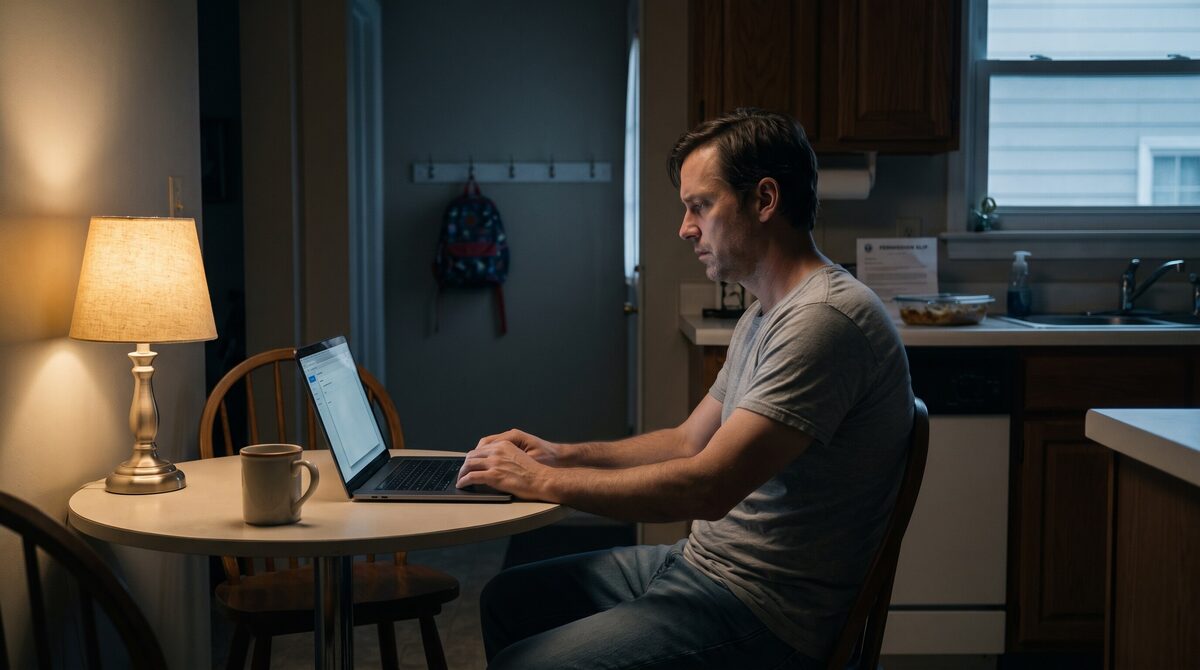 The Resignations
Nathan Cole resigns on a Monday morning with two sentences and no argument left in his body. By Tuesday his desk is empty and the company's institu...
Technical Consultancy
Embedded Delivery Partner
Embedded into your team as an active contributor, reducing delivery friction and helping important work move cleanly.
Technical Advisor
Peer-style technical assessments before far-reaching decisions; reduce architectural and product risk early.
Product & Delivery
Ship working software to real users earlier. Measure impact and adapt based on evidence rather than assumption.
Custom Software Development
High quality, maintainable software. Short-term augmentation that leaves lasting capability in your own team.
Recent Articles
- When Everything Is Finally Under Control (28.09.2026)
- AI Makes Technical Execution Cheap. Judgment Stays Scarce. (24.09.2026)
- The LLM Will Not Come Back Tomorrow (19.09.2026)
- The One-Person AI Company Is a Greed Fantasy (15.09.2026)
- Test Production Without Leaving a Mess (10.09.2026)
Explore More